CM Yogi targets Opposition over Ram Temple boycott
Synopsis
UP Chief Minister Yogi Adityanath accused Opposition leaders of skipping the Ram Temple foundation-laying and consecration ceremonies despite Trust invitations, saying they feared losing the Muslim vote bank — a sharp pre-election salvo ahead of the 2027 UP polls.
Key Takeaways
CM Yogi Adityanath posted on 27 September 2026 accusing unnamed Opposition leaders of skipping both the Ram Temple shilanyas (August 2020) and the pran-pratishtha (22 January 2024) despite formal invitations from the Trust.
He alleged the boycott was driven by fear of losing the Muslim vote bank , using the sharp phrase jaalidaar topi to illustrate the political calculation.
The Supreme Court's 2019 verdict cleared the path for temple construction; the Trust then managed both ceremonies, inviting leaders across the political spectrum.
The BJP has consistently used Opposition absenteeism at Ayodhya events as a Hindu-identity contrast argument in Uttar Pradesh's political discourse .
With the 2027 UP assembly elections approaching, the post signals the BJP's intention to keep the Ayodhya fault line central to its campaign.
With the 2027 Uttar Pradesh assembly elections drawing closer, Uttar Pradesh Chief Minister Yogi Adityanath has sharpened one of the BJP's most potent political lines — training his fire on Opposition leaders who skipped the two landmark events at the Ayodhya Ram Temple: the shilanyas (foundation-stone laying) and the pran-pratishtha (consecration) of Ram Lalla on 22 January 2024, even after formal invitations were extended by the Shri Ram Janmabhoomi Teerth Kshetra Trust.
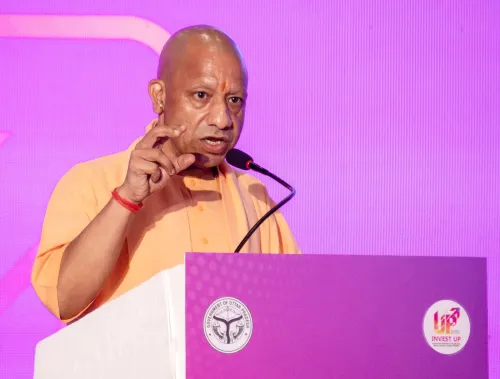
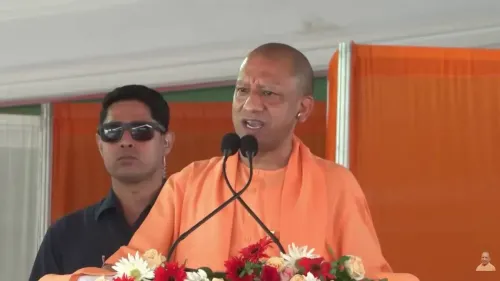
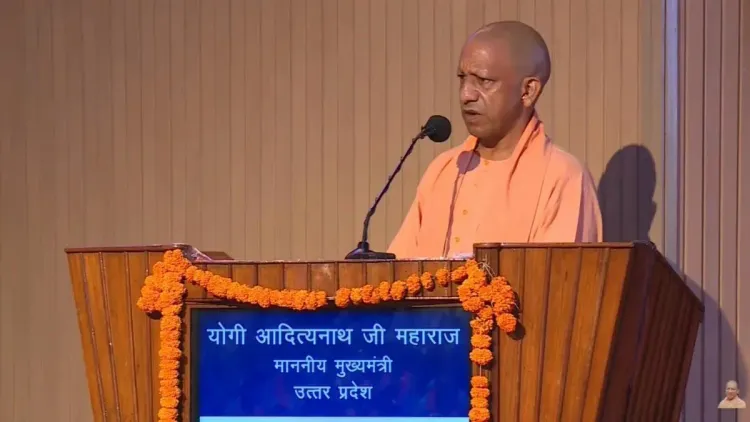
In a pointed post on Sunday, 27 September 2026, CM Yogi wrote that despite invitations from the Trust, 'ये लोग नहीं गए' — 'these people did not go.' His explanation was blunt: they saw vote-bank arithmetic and feared that attending would cause the 'jaalidaar topi' — a reference to the skullcap associated with Muslim identity — to slip away from them. The post carries a video, suggesting the remark was made in a public address or rally setting.
The two ceremonies these leaders stayed away from
The bhoomi pujan and shilanyas were performed by Prime Minister Narendra Modi in August 2020, nearly a year after the Supreme Court of India's landmark 2019 verdict that settled the decades-long Ayodhya title dispute and cleared the path for temple construction. The pran-pratishtha followed on 22 January 2024, when the consecrated idol of Ram Lalla — the infant form of Lord Rama — was installed in the newly built sanctum. Both events drew national attention and were broadcast live across the country. Several prominent Opposition parties declined their invitations, citing various reasons at the time.
The 'jaalidaar topi' charge and its political DNA
The jaalidaar topi phrase is not a throwaway line — it is a surgical political instrument. By invoking it, CM Yogi is explicitly framing the Opposition's absence as a calculated act of minority appeasement rather than a principled stand. The BJP has deployed this argument repeatedly since 2024, casting the Ram Temple as a resolved civilisational question and daring rivals to explain why they stayed away from a moment that tens of millions of Hindus regard as historic.
This framing has been a consistent feature of UP political discourse since the 2019 verdict. For the BJP, every retelling of the Opposition's boycott serves a dual purpose: it reinforces the party's Hindu-identity credentials and simultaneously puts rivals on the defensive about their relationship with Muslim voters — a community that forms a decisive share of the electorate in Uttar Pradesh's 403 assembly constituencies.
What the September 2026 timing signals
CM Yogi's post arrives roughly six months before the window in which the 2027 UP assembly election campaign is expected to peak. Reviving the temple-boycott narrative now is a classic pre-election ground-preparation move — seeding the contrast between the BJP's Ayodhya moment and the Opposition's absence deep into voter memory before the formal campaign even begins. Analysts watching UP politics will note that any public counter from Opposition leaders in the coming days will itself become a data point in this ongoing culture-war contest.
Whether the Opposition responds, stays silent, or pivots to governance issues, the Ayodhya fault line — set in stone since 2024 — is back at the centre of UP's political conversation, and CM Yogi has just made sure of it.
Point of View
Which is politically more damaging than accusing them of ideology alone. With the 2027 UP elections on the horizon, reviving this narrative now suggests the BJP intends to fight on identity terrain rather than cede ground to governance critiques. The absence of any named individual in the post is itself strategic — it implicates broadly without triggering targeted rebuttal.
NationPress
27 Sept 2026
Frequently Asked Questions
Who did CM Yogi Adityanath accuse of skipping the Ram Temple events?
CM Yogi did not name specific individuals, referring broadly to 'these people' — widely understood to mean Opposition political leaders who declined invitations from the Shri Ram Janmabhoomi Teerth Kshetra Trust for both the shilanyas in 2020 and the pran-pratishtha in January 2024.
What is the Shri Ram Janmabhoomi Teerth Kshetra Trust?
It is the body formed by the central government to oversee the construction and management of the Ram Temple in Ayodhya, following the Supreme Court's 2019 verdict that settled the decades-long title dispute over the site.
When was the Ram Lalla pran-pratishtha ceremony held?
The consecration ceremony — pran-pratishtha — of Ram Lalla was held on 22 January 2024 at the Ayodhya temple, with Prime Minister Narendra Modi presiding over the event.
What does 'jaalidaar topi' mean in CM Yogi's post?
'Jaalidaar topi' literally means a netted or perforated skullcap, commonly associated with Muslim religious identity in Indian political discourse. CM Yogi used the phrase to suggest that Opposition leaders skipped the Ram Temple events to avoid upsetting Muslim voters — implying their actions were driven by vote-bank considerations.
Why is CM Yogi raising this issue in September 2026?
The UP assembly elections are expected in early 2027, making late 2026 a key ground-preparation period. Reviving the Ram Temple boycott narrative allows the BJP to reframe the election around Hindu identity and the Ayodhya milestone, a contrast the party has used consistently since the 2024 consecration.