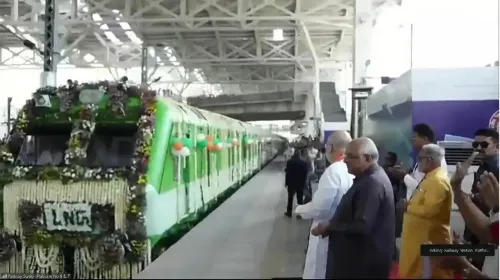
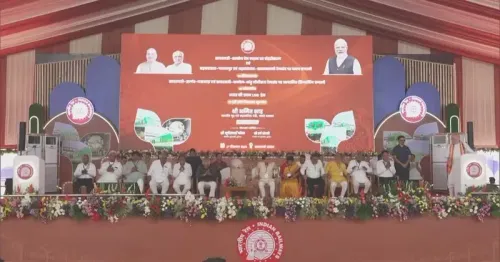
Puri hails LNG train launch from Ahmedabad's Sabarmati
Synopsis
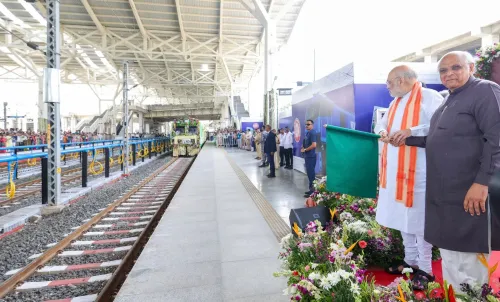
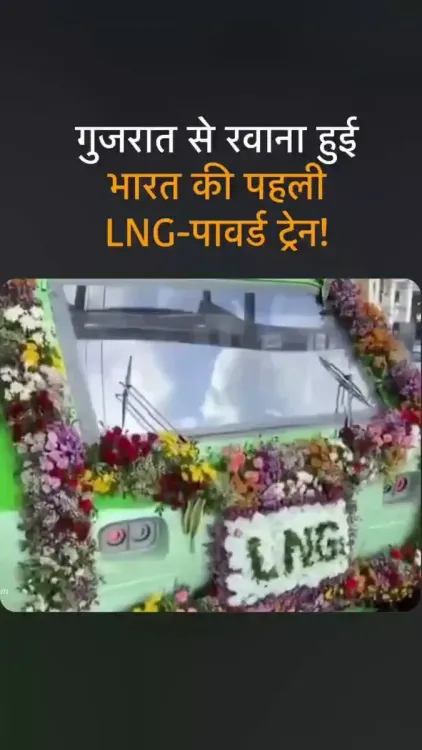
Union Petroleum Minister Hardeep Singh Puri endorsed the launch of an LNG-powered train from Sabarmati, Ahmedabad, on September 27, 2026, saying the move will cut diesel dependence, save foreign exchange, and advance India's green railway goals under PM Modi's guidance.
Key Takeaways
Union Petroleum Minister Hardeep Singh Puri publicly backed the launch of an LNG-based train from Sabarmati, Ahmedabad on September 27, 2026 .
LNG adoption in rail is positioned to reduce diesel dependence and generate foreign exchange savings by cutting crude oil imports.
Indian Railways has a stated target of achieving net-zero carbon emissions by 2030 , combining electrification with alternative-fuel adoption.
The Ministry of Petroleum and Natural Gas has been expanding LNG's role across heavy transport sectors, with rail now an active frontier.
The Sabarmati launch is framed as part of a broader, diversified clean-energy strategy — not a replacement for electrification, but a bridge for non-electrified corridors.
Further rollout of LNG or dual-fuel locomotives on other routes is the key metric to watch for real-world impact.
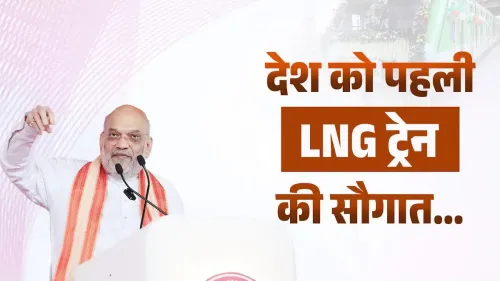
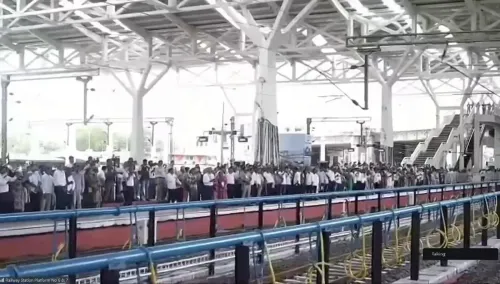
India's railways just got a greener gear. Union Petroleum Minister Hardeep Singh Puri on Sunday, September 27, 2026, championed the launch of an LNG-based train from Sabarmati, Ahmedabad — framing it as a critical step in India's push to wean its national rail network off diesel and cut crude oil import bills.
Posting in Hindi, Minister Puri wrote: 'रेल की रफ्तार अब Green Energy के साथ!' — 'The speed of the railway, now with green energy!' — crediting Prime Minister Narendra Modi's guidance for steering Indian Railways toward a cleaner, more environment-friendly future, not just a faster and more modern one.
Why LNG, and why Sabarmati
Liquefied Natural Gas (LNG) burns significantly cleaner than diesel, producing lower particulate matter and carbon emissions per unit of energy. For Indian Railways — one of the world's largest rail networks — even a partial shift from diesel traction on non-electrified corridors carries outsized environmental and economic weight. Sabarmati, the Ahmedabad railway hub, serves as a symbolically fitting launchpad: Gujarat has been at the centre of India's city gas distribution expansion and infrastructure push for over a decade.
Minister Puri specifically highlighted two advantages: reducing dependence on diesel — a refined petroleum product heavily tied to crude oil imports — and saving foreign exchange. Every barrel of crude oil India does not import is a direct relief on the current account, a pressure point that policymakers have flagged consistently as global energy prices remain volatile.
Green Rail and the 2030 net-zero target
Indian Railways has committed to achieving net-zero carbon emissions by 2030, a target that rests on two pillars: aggressive electrification of its route network and selective adoption of alternative fuels like LNG on corridors where overhead electrification is not yet viable. The LNG move fits squarely into the second pillar — a bridging strategy that delivers emission cuts without waiting for full electrification.
The Ministry of Petroleum and Natural Gas, which Puri heads, has been actively promoting LNG as a transport fuel beyond just passenger cars and trucking. Testing LNG on heavy-haulage rail — where diesel engines are large and fuel-hungry — represents a logical extension of that mandate, aligning the petroleum ministry's energy-security agenda with the railways ministry's green commitments.
What this means for India's energy transition calculus
India's broader transport decarbonisation strategy has never been a single-fuel bet. Electric traction dominates the long-term plan, but LNG, compressed natural gas, and eventually green hydrogen are positioned as parallel tracks for segments of the fleet that cannot be electrified quickly. The Sabarmati launch, if it expands to other routes, could accelerate the case for dedicated LNG refuelling infrastructure at major rail yards — a supply-chain build-out that would benefit domestic gas distributors and reduce the stranglehold of imported diesel.
The watch now is on whether additional LNG or dual-fuel locomotives roll out on other non-electrified corridors, and how swiftly the refuelling logistics can be standardised across the network. A pilot that stays a pilot changes little. One that scales rewrites the fuel map of Indian Railways.
Point of View
Championing this move is also a strategic alignment of the petroleum ministry's energy-security mandate with the railways' green commitments, reinforcing the government's narrative of simultaneous modernisation and sustainability. The foreign-exchange-saving angle is politically potent given persistent pressure on India's current account from crude import bills. The real test, however, is scale: a single pilot at Sabarmati matters far less than a documented plan to replicate LNG traction across dozens of diesel-dependent corridors in the next 24 months.
NationPress
27 Sept 2026
Frequently Asked Questions
What is the LNG train launched from Sabarmati, Ahmedabad?
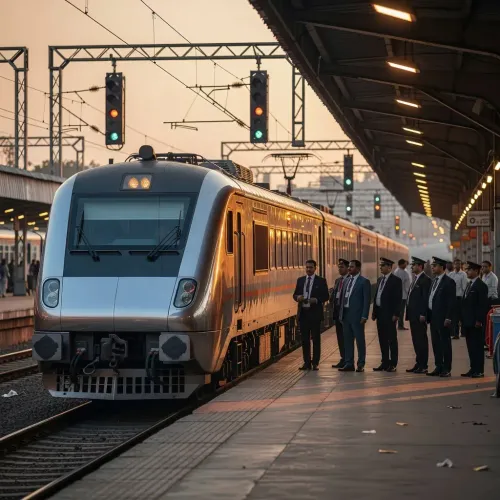
It is a train powered by Liquefied Natural Gas (LNG) instead of conventional diesel, launched from the Sabarmati railway station in Ahmedabad, Gujarat, as part of Indian Railways' push to adopt cleaner alternative fuels on its network.
Why is LNG being used in Indian Railways instead of diesel?
LNG burns cleaner than diesel, producing fewer emissions, and its use reduces India's dependence on imported crude oil, thereby saving foreign exchange. It also supports Indian Railways' target of net-zero carbon emissions by 2030.
What is Indian Railways' net-zero carbon emissions target?
Indian Railways has set a target to achieve net-zero carbon emissions by 2030, combining large-scale electrification of routes with selective adoption of alternative fuels like LNG on corridors not yet covered by overhead electric traction.
What did Petroleum Minister Hardeep Singh Puri say about the LNG train?
Minister Puri described the Sabarmati LNG train launch as an important step in making Indian Railways not just faster and more modern but also cleaner and environment-friendly, crediting PM Modi's guidance for driving this transformation.
Will LNG trains be expanded to other railway routes in India?
The government has indicated this is part of a broader strategy to diversify rail fuel use. Whether additional LNG or dual-fuel locomotives are deployed on other non-electrified corridors will be the key development to watch in the coming months.