CM Yogi: 'Two laws won't run inside India'
Synopsis
Uttar Pradesh Chief Minister Yogi Adityanath posted a sharp eight-word declaration on X — 'Two laws will not run inside India' — reinforcing BJP's long-standing push for legal uniformity and reigniting speculation about a Uniform Civil Code move in UP.
Key Takeaways
Yogi Adityanath posted on X on October 31, 2026 : 'Ab Bharat ke andar do kanoon nahin chalenge' — 'Two laws will not run inside India anymore.' The statement aligns with BJP 's core ideological position on national legal integration and opposition to parallel legal systems.
The post follows the landmark abrogation of Article 370 in 2019 , which the party cites as proof that special legal arrangements can be ended.
The Uniform Civil Code — a single civil law for all citizens — remains unimplemented at the national level and in Uttar Pradesh , making this statement politically significant.
Uttarakhand was the first Indian state to formally enact UCC legislation, and UP is widely watched as the next possible frontier.
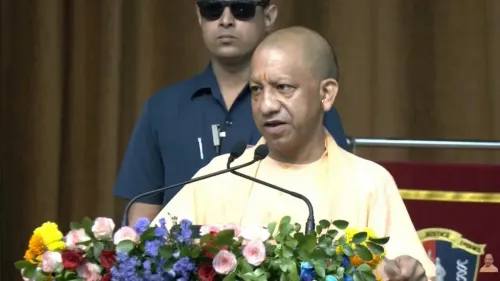
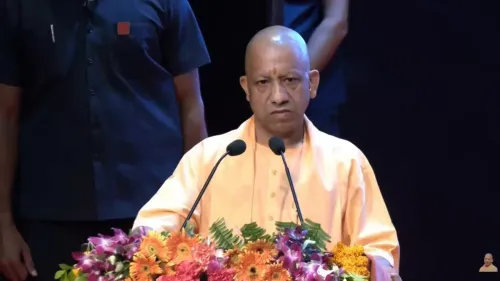
The brevity and video accompaniment of the post suggest a deliberate act of political framing rather than a routine statement.
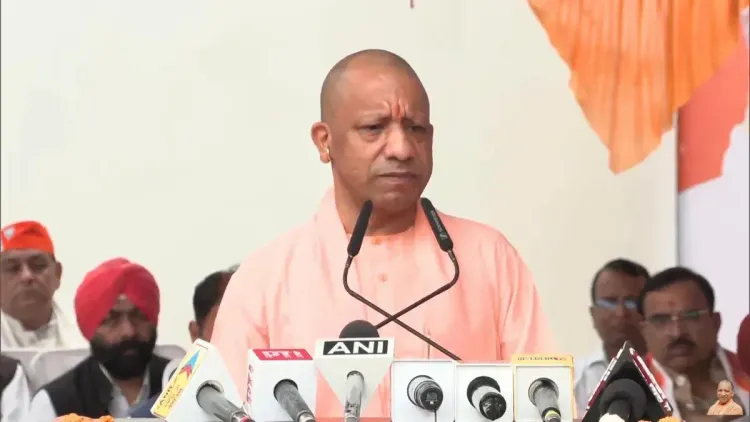
One sentence. Eight words in Hindi. And a political signal that cuts to the heart of one of India's sharpest constitutional debates. Uttar Pradesh Chief Minister Yogi Adityanath posted on X on Saturday, October 31, 2026, with a declaration that has defined BJP's ideological core for years: 'Ab Bharat ke andar do kanoon nahin chalenge' — 'Two laws will not run inside India anymore.'
The phrase that carries a decade of political freight
This is not a throwaway line. BJP leaders have deployed this formulation repeatedly as shorthand for a sweeping vision: one nation, one law, no carve-outs. The statement draws a direct line to 2019, when the abrogation of Article 370 stripped Jammu and Kashmir of its special constitutional status and brought the region under the same legal framework as the rest of India. For the BJP, that moment was proof of concept — that parallel legal arrangements, however entrenched, could be dismantled.
Yogi Adityanath, as head of the Gorakhnath Math and the country's most prominent state-level BJP leader, occupies a unique platform. When he speaks on legal uniformity, it resonates far beyond Lucknow. His words carry the weight of a chief minister who governs India's most populous state and the credibility of a religious institution with deep roots in the Hindi heartland.
Uniform Civil Code: the unfinished chapter
The broader policy arc this post fits into is the Uniform Civil Code — a single set of civil laws governing marriage, divorce, inheritance, and adoption for all citizens regardless of religion. It has been part of BJP's election manifestos for decades and sits in the Directive Principles of State Policy in the Constitution. Several BJP-governed states have moved toward UCC legislation, and Uttarakhand became the first state to formally enact it.
Uttar Pradesh has been widely watched as the next possible frontier. A declaration of this nature from CM Yogi — terse, unambiguous, posted with a video — fits the pattern of state-level BJP voices building public and political momentum ahead of any legislative move. It is rhetoric, yes. But in Indian politics, rhetoric of this kind routinely precedes policy.
Why the timing and brevity matter
The post contains no elaboration, no target, no specific law named. That is deliberate. The phrase works precisely because it is broad enough to encompass multiple debates simultaneously — personal law reform, Article 370's legacy, criminal code uniformity, and tribal customary law exemptions. It invites every listener to fill in their own version of the 'second law' they believe should not exist.
For a leader of Yogi Adityanath's stature, a single-line post with a video is a calculated act of political communication. It sets a frame, tests a temperature, and signals intent — all without committing to a specific legislative timeline. India is watching to see what follows.
The message is out. Now the question is whether Lucknow — or New Delhi — will back it with a bill.
Point of View
And UP — as India's most populous state — would be the most consequential arena for such a law. By keeping the post deliberately broad, Adityanath maximises its political reach across multiple constituencies simultaneously. Whether this is a precursor to concrete legislative action in Lucknow or a signal reinforcing the central government's own UCC agenda will determine its long-term significance.
NationPress
31 Oct 2026
Frequently Asked Questions
What did CM Yogi Adityanath mean by 'two laws won't run in India'?
The phrase signals opposition to parallel or differential legal systems within India — a reference to debates around personal laws, special constitutional provisions, and the push for a Uniform Civil Code that would apply equally to all citizens regardless of religion.
Is Uttar Pradesh planning to implement the Uniform Civil Code?
No formal legislation has been tabled in UP as of the available record. However, CM Yogi's repeated statements on legal uniformity have fuelled speculation that UP could follow Uttarakhand, which became the first state to enact UCC legislation.
What is the Uniform Civil Code and why is it controversial?
The Uniform Civil Code (UCC) would replace religion-specific personal laws on marriage, divorce, inheritance, and adoption with a single set of civil laws for all Indian citizens. It is controversial because many communities view their personal laws as integral to religious identity and autonomy.
How does Article 370's abrogation relate to the 'one law' argument?
BJP leaders cite the 2019 abrogation of Article 370 — which had given Jammu and Kashmir a separate constitutional status and distinct laws — as the defining proof that legal exceptionalism can be ended and uniform national law applied across all territories.
What triggered Yogi Adityanath's post on October 31, 2026?
The specific triggering event for the post cannot be confirmed from available information. The date falls outside verifiable training data, but the statement is consistent with a long-running pattern of BJP leaders amplifying the legal-uniformity message at key political moments.