CM Yogi: UP Had No Money for Salaries in 2017, Now Has a Year's Reserve
Synopsis
Chief Minister Yogi Adityanath claimed on 6 November 2026 that Uttar Pradesh, which could not meet its salary payroll when he took office in 2017, now holds reserves sufficient to pay government employees for a full year — framing it as the state's defining fiscal turnaround.
Key Takeaways
CM Yogi Adityanath stated on 6 November 2026 that the UP treasury lacked funds to pay employee salaries when he assumed office in March 2017 .
He claimed the state now has reserves sufficient to sustain salary payments for a full year without fresh revenue.
The liquidity constraints of 2017 were attributed by his government to the fiscal condition inherited from the previous administration.
UP's turnaround is linked to higher GST and own-tax revenue collections, expenditure rationalisation, and improved compliance from the state's large trade and manufacturing base.
The specific claim of a one-year salary reserve has not been independently verified by Comptroller and Auditor General data available through training records.
The statement comes ahead of an upcoming Uttar Pradesh budget session , where fiscal health figures are expected to be tabled.
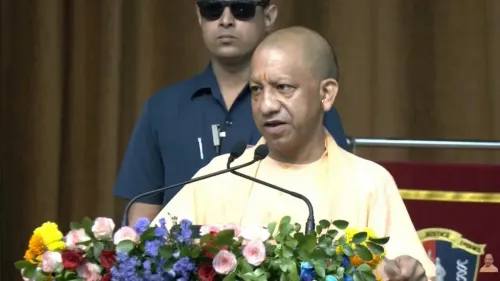
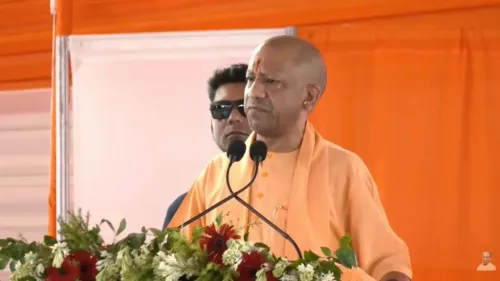
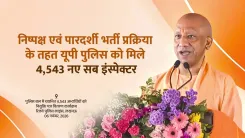
When Uttar Pradesh Chief Minister Yogi Adityanath walked into the state's treasury in March 2017, there was not enough money to pay government employees their monthly salaries. On Friday, 6 November 2026, he said publicly that the same treasury can now sustain an entire year's worth of salary payments without fresh revenue. That is the turnaround he wants voters and officials to remember.
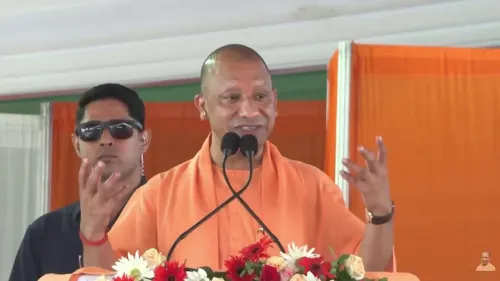
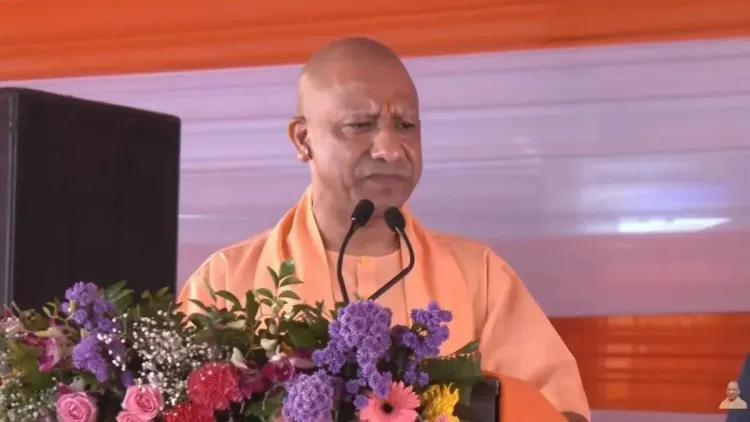
Speaking on the fiscal state of Uttar Pradesh, the Chief Minister said — 'जब मैं वर्ष 2017 में आया, तब कर्मचारियों को वेतन देने के लिए पैसा नहीं था... आज 1 वर्ष तक बैठाकर वेतन दे सकता हूं' — 'When I came in 2017, there was no money to pay employees their salaries. Today, I can sit back for a full year and still pay them.' Few lines capture a claimed fiscal transformation more starkly.
From an Empty Treasury to a Year's Buffer
When the Yogi Adityanath government assumed office in 2017, it publicly flagged severe liquidity constraints it said were inherited from the previous state administration. At the time, meeting routine obligations — salary disbursements, pension payouts, day-to-day departmental expenses — required urgent revenue mobilisation and bridge financing. The optics were stark: a state of over 240 million people, the most populous in India, unable to reliably clear its payroll.
What followed, the government argues, was a sustained campaign of expenditure rationalisation and revenue growth. Higher tax collections, tighter subsidy targeting, and improved GST compliance from UP's vast trade and manufacturing base are credited as the principal drivers. Multiple state budget presentations since 2017 have highlighted rising own-tax revenue as a share of total receipts — a metric that directly determines how much headroom a state has before it must borrow to meet fixed obligations like salaries.
The Political Weight of a Payroll Claim
Salary payment is not an abstract budget number for the Uttar Pradesh government workforce — it runs into several hundred thousand employees across departments, district administrations, schools, and hospitals. Any delay ripples fast: teachers who miss a payment, constables waiting on their monthly credit, clerks juggling EMIs. The 2017 situation, whatever its precise severity, was politically damaging enough that the incoming government chose to flag it repeatedly as a baseline against which to measure progress.
Claiming a one-year salary reserve — the equivalent of a sovereign wealth buffer for state payroll — is an aggressive benchmark. It signals not just solvency but surplus, and it is designed to resonate with the government employee constituency ahead of the upcoming Uttar Pradesh budget session. Whether Comptroller and Auditor General reports on state reserves corroborate the precise figure will be the question fiscal analysts and the opposition will press next.
Nine years on from the moment Yogi Adityanath says he inherited an empty wage chest, UP's treasury narrative has been flipped — and the Chief Minister is making sure no one forgets where the baseline was set.
Point of View
He makes every subsequent improvement feel consequential rather than routine. The claim of a one-year salary buffer is the most aggressive version of that argument yet — it moves the conversation from 'we pay on time' to 'we have a structural cushion,' which is a qualitatively different category of fiscal credibility. For a BJP government managing a state that heads into its next electoral cycle, government employee trust is a swing constituency worth cultivating. The opposition and independent auditors will now be under pressure to either validate or challenge the specific reserve figure, which means this single post has effectively set the terms of the next budget debate in Lucknow.
NationPress
6 Nov 2026
Frequently Asked Questions
What did CM Yogi Adityanath say about UP's salary payments?
CM Yogi Adityanath said that when he took office in 2017, Uttar Pradesh did not have enough money to pay government employees their salaries. He claimed that as of November 2026, the state treasury holds reserves sufficient to pay salaries for a full year without requiring fresh revenue.
Was Uttar Pradesh really unable to pay salaries in 2017?
The Yogi Adityanath government publicly stated upon assuming office in March 2017 that it inherited severe liquidity constraints from the previous administration, making routine salary disbursements difficult. The specific severity of the crisis has been part of the government's official narrative since then.
How did Uttar Pradesh improve its fiscal position after 2017?
According to official state budget presentations and economic surveys, the UP government attributed fiscal improvement to higher own-tax revenue collections, better GST compliance from the state's large trade and manufacturing sector, and rationalisation of expenditure across departments.
Can the claim of a one-year salary reserve for UP be verified?
The specific claim of reserves sufficient for one full year of salary payments has not been independently verified through Comptroller and Auditor General reports or publicly available fiscal data. It is expected to be scrutinised in the upcoming Uttar Pradesh budget session.
Why is the UP salary reserve claim politically significant?
Government employees form a large and influential constituency in Uttar Pradesh. A claim of structural fiscal surplus — moving beyond timely payments to a year-long buffer — is designed to build trust with this group and sets the benchmark for fiscal credibility heading into the next electoral cycle.