CM Yogi calls UP expressways gateways to prosperity
Synopsis
Chief Minister Yogi Adityanath declared on 13 July 2026 that Uttar Pradesh's expressways are not mere roads but corridors accelerating development and opening doors to prosperity, reinforcing his government's multi-year infrastructure push across India's most populous state.
Key Takeaways
The Chief Minister's Office of Uttar Pradesh quoted CM Yogi Adityanath on 13 July 2026 , framing expressways as engines of economic development.
The statement was tagged #YogiInfraDrive , indicating a sustained public communication campaign around infrastructure projects.
The Agra-Lucknow Expressway (completed 2016 ) and the 341-km Purvanchal Expressway (inaugurated 2021 ) are the flagship corridors of the state's programme.
The Purvanchal Expressway cut Lucknow-Ghazipur travel time from 12 hours to under six .
UP's expressway expansion is part of the national Bharatmala framework and mirrors similar state-level programmes in Gujarat , Maharashtra , and Tamil Nadu .
Further expressway phases and PPP announcements are expected in the 2026-27 budget cycle.
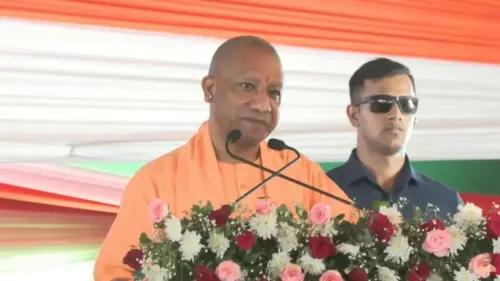
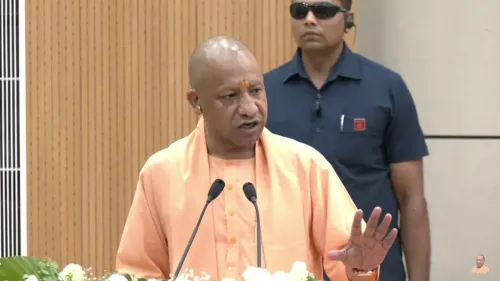
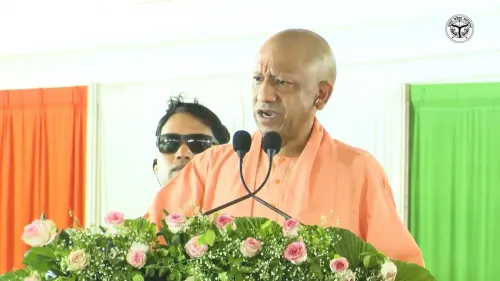
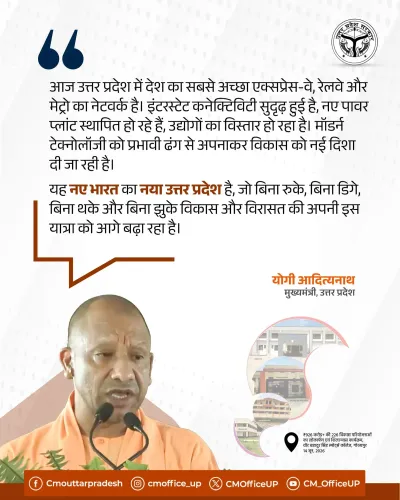
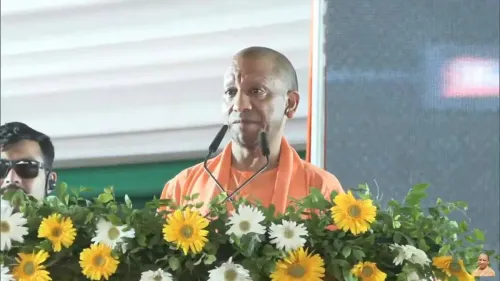
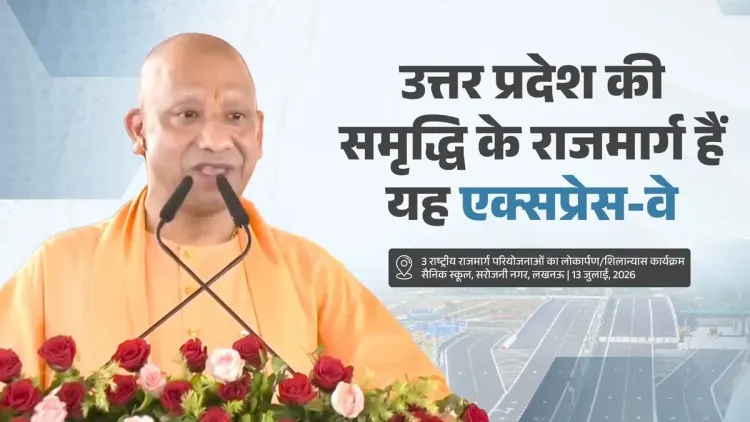
The Chief Minister's Office of Uttar Pradesh, on behalf of Chief Minister Yogi Adityanath, shared a statement on Monday, 13 July 2026, framing the state's expanding expressway network not merely as road infrastructure but as corridors of economic transformation and regional development.
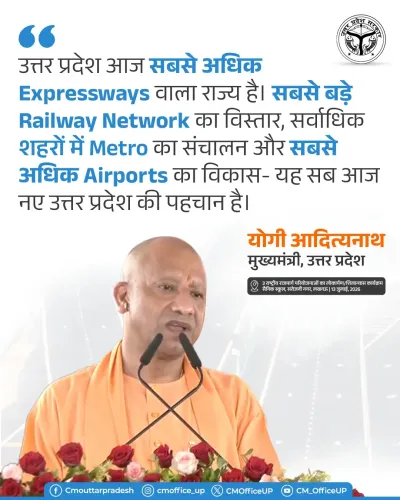
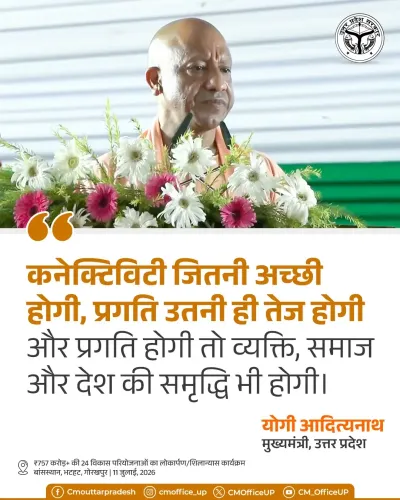
The post, tagged #YogiInfraDrive, carried a direct quote attributed to the Chief Minister: 'यह केवल एक्सप्रेस-वे नहीं, बल्कि विकास की गति को बढ़ाने और समृद्धि के द्वार खोलने वाले राजमार्ग हैं' — 'These are not merely expressways, but highways that accelerate the pace of development and open the doors to prosperity.'
Context
Uttar Pradesh has been among the most active states in India in building access-controlled highway corridors over the past decade. The Agra-Lucknow Expressway, completed in 2016, set the template for high-speed corridors in the state, demonstrating that large-scale road projects could be delivered within defined timelines. That project became the reference point for subsequent expressway planning under successive administrations.
When Yogi Adityanath assumed office in 2017, his government announced an expanded expressway programme aimed at connecting all regions of the state, including historically underserved eastern and Bundelkhand districts. The Purvanchal Expressway, a 341-kilometre access-controlled corridor linking Lucknow with eastern districts, was inaugurated in 2021 and cut travel time between Lucknow and Ghazipur from approximately 12 hours to under six.
Policy Backdrop
The state's expressway drive sits within the broader national Bharatmala framework, under which states supplement central highway projects with their own corridors. Uttar Pradesh's approach mirrors similar state-level programmes in Gujarat, Maharashtra, and Tamil Nadu, where improved road connectivity has been treated as a lever for reducing logistics costs and attracting manufacturing investment.
For Uttar Pradesh — India's most populous state — the stakes are particularly high. Policymakers and economists have long argued that poor road infrastructure was a structural drag on the state's economic output. The expressway programme is explicitly positioned by the Yogi administration as a response to that historical deficit, with connectivity seen as a prerequisite for industrial growth and employment generation.
Stakeholders and Impact
The primary beneficiaries of the expressway expansion are UP commuters who gain faster inter-district travel, and industrial investors who require reliable logistics corridors to set up or expand manufacturing units. Reduced travel times lower freight costs and improve supply-chain efficiency, which in turn can make the state more competitive in attracting investment relative to western and southern states.
Agricultural communities in districts newly connected by expressways also stand to benefit through faster movement of perishable goods to urban markets, reducing post-harvest losses. The government has repeatedly cited this rural-to-market connectivity as a social equity argument for the infrastructure push, alongside the economic rationale.
What's Next
Further phases of Uttar Pradesh's state expressway network are expected to be a focal point in the 2026-27 budget cycle, with potential new public-private partnership announcements on the horizon. The #YogiInfraDrive tag signals that the administration intends to sustain public communication around these projects, likely ahead of ground-breakings or completion milestones. How quickly new corridors translate into measurable economic indicators — investment inflows, employment numbers, freight movement data — will determine whether the political narrative around expressways as 'gateways to prosperity' gains empirical grounding.
Point of View
At their core, capital-intensive infrastructure projects — converting concrete and asphalt into a political identity. The #YogiInfraDrive tag suggests the administration is building a sustained communications arc, likely timed to upcoming project milestones or election cycles. This mirrors a broader pattern across Indian states where highway corridors have become the most visible symbol of governance, even as critics ask whether softer infrastructure — health, education, urban services — receives equivalent attention. The real test will be whether expressway connectivity translates into the investment and employment numbers needed to substantiate the prosperity claim.
NationPress
12 Oct 2026
Frequently Asked Questions
What did CM Yogi Adityanath say about UP expressways?
CM Yogi Adityanath said that Uttar Pradesh's expressways are not merely roads but highways that accelerate the pace of development and open the doors to prosperity, as quoted by the Chief Minister's Office on 13 July 2026.
Which expressways has Uttar Pradesh built under the Yogi government?
The most prominent project under the Yogi administration is the Purvanchal Expressway, a 341-kilometre corridor inaugurated in 2021. The earlier Agra-Lucknow Expressway, completed in 2016, set the template for the state's high-speed corridor programme.
What is the Purvanchal Expressway and what is its impact?
The Purvanchal Expressway is a 341-km access-controlled highway linking Lucknow with eastern Uttar Pradesh districts. It cut travel time between Lucknow and Ghazipur from around 12 hours to under six, improving connectivity for commuters and freight movement.
What is #YogiInfraDrive?
#YogiInfraDrive is a hashtag used by the Chief Minister's Office of Uttar Pradesh to highlight the Yogi Adityanath government's infrastructure projects, particularly its expressway construction programme.
How does UP's expressway programme fit into national infrastructure plans?
Uttar Pradesh's expressway push is part of the national Bharatmala framework, under which states build their own corridors to complement central highway projects. Similar programmes are active in Gujarat, Maharashtra, and Tamil Nadu.