CM Yogi Highlights UP's Forest Cover Growth Amid Development Push
Synopsis
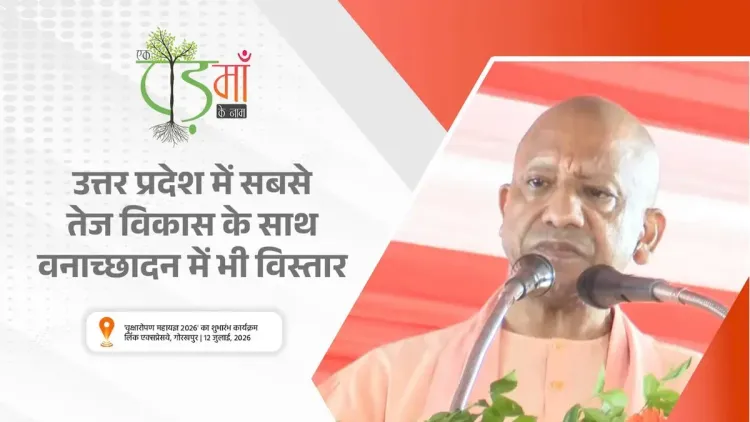
The Chief Minister's Office of Uttar Pradesh quoted CM Yogi Adityanath saying the state has expanded its forest cover even while achieving high physical development, amplifying the 'Ek Ped Maa Ke Naam' plantation campaign under the 'Pragati Bhi Prakriti Bhi' message.
Key Takeaways
The Chief Minister's Office of Uttar Pradesh on 12 July 2026 quoted CM Yogi Adityanath stating the state has expanded forest cover among large Indian states.
The claim is framed under the dual message of 'Pragati Bhi, Prakriti Bhi' — simultaneous physical development and ecological progress.
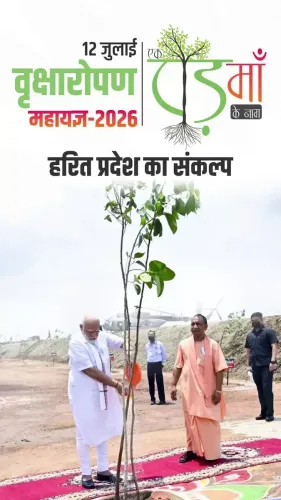
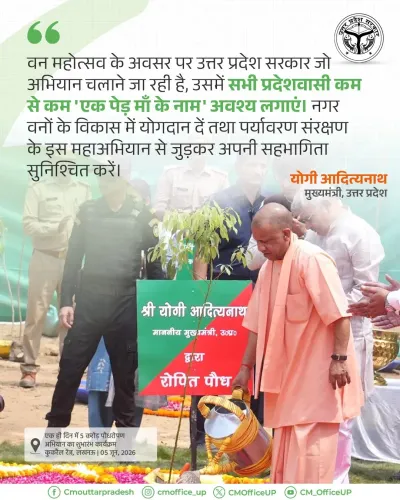
The Ek Ped Maa Ke Naam ('One Tree in Mother's Name') campaign is the flagship community-participation initiative driving UP's afforestation push.
India's National Forest Policy 1988 targets 33 percent forest and tree cover nationally, providing the long-term policy frame for state-level efforts.
Independent verification of UP's forest cover gains will rest with the Forest Survey of India's next biennial State of Forest Report.
Uttar Pradesh is India's most populous state, making any documented greening gains significant for national carbon and land-use accounting.
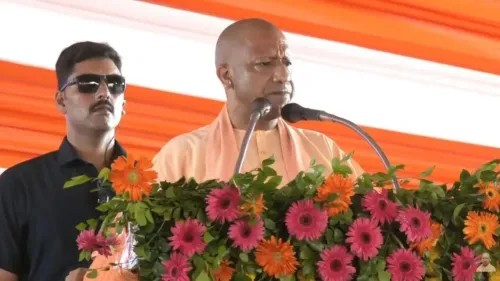
The Chief Minister's Office of Uttar Pradesh, citing Chief Minister Yogi Adityanath, declared on Sunday, 12 July 2026 that Uttar Pradesh has succeeded in expanding its forest cover even as the state records high levels of physical infrastructure development — positioning it as one of the leading large states on the environment front.
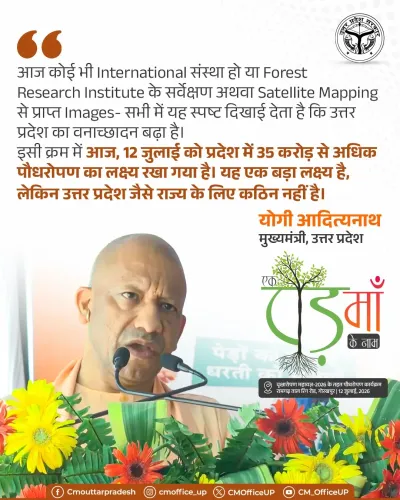
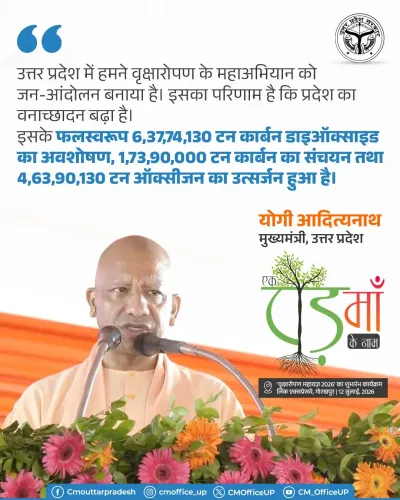
The post, shared under the hashtags #एक_पेड़_माँ_के_नाम ('One Tree in Mother's Name'), #PragatiBhiPrakritiBhi ('Progress as well as Nature'), and #GoGreen_UP, quoted CM Yogi Adityanath as saying: 'Along with the highest level of physical development, Uttar Pradesh has also succeeded in expanding its forest cover among large states from an environmental perspective.'
Context
Uttar Pradesh is India's most populous state and has in recent years pursued an aggressive infrastructure expansion — covering highways, expressways, industrial corridors, and urban development projects. The state government has simultaneously positioned itself as a champion of ecological responsibility, a messaging balance that this post explicitly reinforces with the phrase 'Pragati Bhi, Prakriti Bhi' ('Both Progress and Nature').
The statement comes against the backdrop of India's broader climate commitments, under which states are expected to contribute to national targets on forest and tree cover. India's National Forest Policy of 1988 set a long-term goal of bringing 33 percent of the country's geographical area under forest and tree cover.
Policy Backdrop
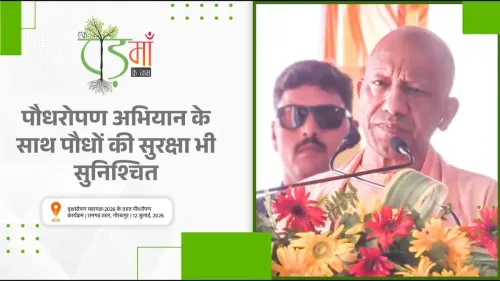
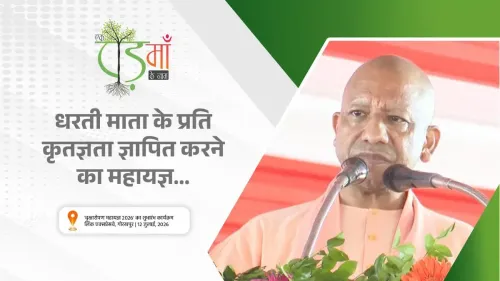
The #एक_पेड़_माँ_के_नाम campaign — 'Ek Ped Maa Ke Naam' — is an Uttar Pradesh government initiative that encourages citizens to plant trees as a tribute to their mothers, embedding public participation into the state's afforestation agenda. The campaign is part of a wider effort to make greening drives community-owned rather than purely administrative exercises.
At the national level, the Green India Mission, launched in 2014 under the National Action Plan on Climate Change, laid the policy groundwork for states to pursue afforestation alongside livelihood support for rural communities. UP's current messaging aligns with this framework, framing tree plantation as both an ecological and a social imperative.
The Forest Survey of India, the central government agency that publishes biennial State of Forest Reports, is the authoritative source for tracking changes in forest and tree cover across states. Its periodic assessments form the evidentiary basis for any state's claims on forest expansion.
Stakeholders and Impact
The beneficiaries of sustained afforestation in Uttar Pradesh span both rural and urban populations. Rural communities stand to gain from improved soil health, groundwater recharge, and livelihood opportunities linked to forest resources, while urban residents benefit from reduced heat-island effects and improved air quality in rapidly expanding cities.
Large-scale plantation campaigns also carry significance for India's international climate reporting, particularly under commitments related to land-use change and carbon sequestration. A documented increase in tree cover in a state the size of UP would carry measurable weight in national-level carbon accounting.
What's Next
The key test for the state's afforestation claims will come with the release of the next Forest Survey of India State of Forest Report, which will provide independently verified data on changes in Uttar Pradesh's recorded forest and tree cover. Observers will also watch for state-level disclosures on plantation survival rates and the total area brought under the Ek Ped Maa Ke Naam campaign.
As India approaches its next cycle of international climate reviews, state-level performance on afforestation is expected to receive closer scrutiny — making UP's ability to substantiate its green credentials with verified data increasingly consequential.
Point of View
Prakriti Bhi' framing is a deliberate attempt to neutralise a common critique of high-growth states — that infrastructure expansion comes at the cost of ecological degradation. By anchoring the message to the community-facing 'Ek Ped Maa Ke Naam' campaign, the administration also seeks to give afforestation a cultural and emotional resonance beyond bureaucratic targets. The timing, ahead of India's next international climate reporting cycle, suggests the state is building a narrative that could be deployed in both domestic political and global diplomatic contexts. The credibility of these claims will ultimately hinge on what the Forest Survey of India's next report shows for UP's verified tree and forest cover numbers.
NationPress
11 Oct 2026
Frequently Asked Questions
What is the Ek Ped Maa Ke Naam campaign in Uttar Pradesh?
'Ek Ped Maa Ke Naam' — meaning 'One Tree in Mother's Name' — is an Uttar Pradesh government initiative that encourages citizens to plant a tree as a tribute to their mothers, making afforestation a community-participation drive rather than a purely administrative exercise.
Has Uttar Pradesh actually increased its forest cover?
The Chief Minister's Office has stated that UP has expanded its forest cover among large Indian states, but independent verification depends on the Forest Survey of India's biennial State of Forest Report, which is the authoritative source for such data.
What does 'Pragati Bhi Prakriti Bhi' mean?
'Pragati Bhi, Prakriti Bhi' is a Hindi phrase meaning 'Both Progress and Nature,' used by the Uttar Pradesh government to signal that infrastructure development and environmental protection are being pursued simultaneously under CM Yogi Adityanath.
What is India's national target for forest cover?
India's National Forest Policy of 1988 set a long-term target of bringing 33 percent of the country's geographical area under forest and tree cover, a benchmark that guides both central and state-level afforestation efforts.
What is the Forest Survey of India and why does it matter for UP's claims?
The Forest Survey of India is a central government agency that publishes biennial State of Forest Reports tracking verified changes in forest and tree cover across all states. Its data is the primary independent check on any state government's afforestation claims.