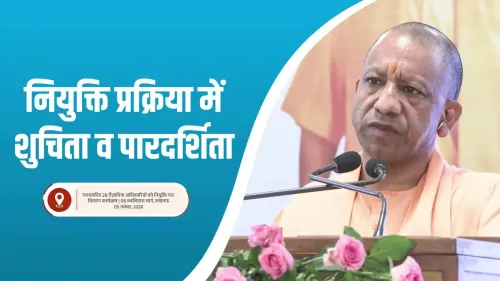
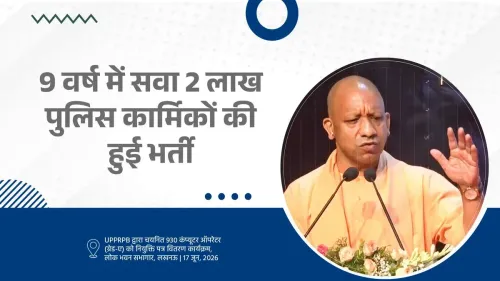
CM Yogi: UP has completed 2.30 lakh police recruitments
Synopsis
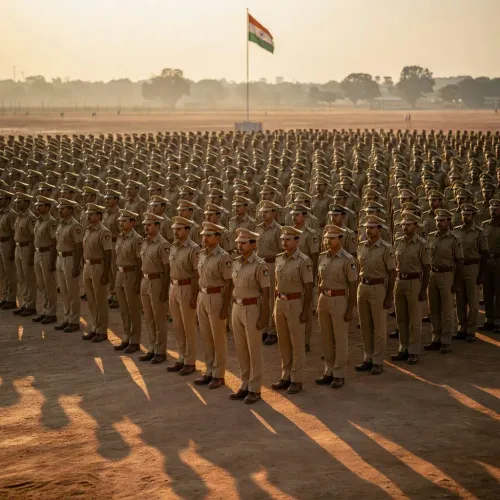
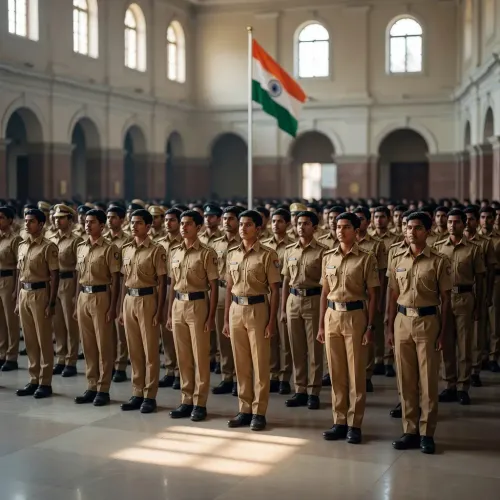
Chief Minister Yogi Adityanath has announced that Uttar Pradesh has completed police recruitments for 2.30 lakh personnel, framing it as proactive governance and a cornerstone of the state's law-and-order agenda since 2017.
Key Takeaways
2.30 lakh police recruitments have been completed by the Yogi Adityanath government in Uttar Pradesh.
The Chief Minister framed the drive as proactive planning — 'two steps ahead of time' — not reactive gap-filling.
Phased police recruitment drives began after the 2017 assembly elections to clear long-standing vacancies.
Uttar Pradesh is India's most populous state, with over 240 million residents , making police capacity a critical governance issue.
The next milestones to watch are deployment patterns, training completion, and crime-metric outcomes.
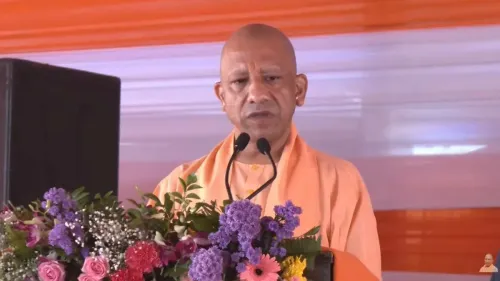
Uttar Pradesh Chief Minister Yogi Adityanath has declared that his government has completed the recruitment process for 2.30 lakh police personnel — a figure he presented as evidence that the administration has consistently tried to stay two steps ahead of the clock.
Posting on Wednesday, 18 November 2026, the Chief Minister stated in Hindi: 'अब तक 2.30 लाख पुलिस की भर्ती प्रक्रिया को पूरा कर चुके हैं... हमने समय से दो कदम आगे चलने का प्रयास किया...' — 'We have so far completed the recruitment process for 2.30 lakh police personnel... we have tried to walk two steps ahead of time.'
A decade-long vacancy problem, now a government centrepiece
When Yogi Adityanath first took office in 2017, the Uttar Pradesh Police was carrying a heavy backlog of unfilled positions — a structural weakness that critics had long tied to the state's law-and-order challenges. His administration launched phased recruitment drives almost immediately, making police expansion a flagship plank of its governance pitch.
The scale the Chief Minister now cites — 2.30 lakh recruits processed — represents one of the largest sustained state police recruitment efforts in the country's recent history. For a force that patrols India's most populous state, with over 240 million residents, the numbers carry real operational weight.
What '2 steps ahead of time' signals
The phrase is deliberate. It frames the recruitment push not as reactive gap-filling but as forward planning — a contrast with predecessor governments accused of letting vacancies accumulate. The Chief Minister has repeatedly positioned law enforcement capacity as a prerequisite for investment and economic growth in Uttar Pradesh, and this claim lands squarely in that narrative.
For the lakhs of police aspirants who have cleared examinations and training in this period, the message is one of institutional follow-through — that recruitment processes begun were actually finished, a promise that has not always held in the state's bureaucratic history.
The next measure of success will be what comes after the recruits join: deployment patterns, training quality, and whether the expanded force translates into the crime-reduction metrics the government has staked its reputation on.
Point of View
The Chief Minister is implicitly drawing a contrast with previous administrations where recruitment backlogs were the norm. The 'two steps ahead' framing also signals a governance philosophy that the BJP will likely deploy in pre-election messaging. The real test, however, will be whether the expanded force delivers measurable outcomes — because in UP's political environment, policing numbers without crime-reduction results can quickly become a liability.
NationPress
18 Nov 2026
Frequently Asked Questions
How many police have been recruited in Uttar Pradesh under Yogi Adityanath?
Chief Minister Yogi Adityanath has stated that the recruitment process for 2.30 lakh (230,000) police personnel has been completed under his government.
When did UP's large-scale police recruitment drives begin?
The Yogi Adityanath government launched phased police recruitment drives after winning the 2017 Uttar Pradesh assembly elections , aiming to fill long-standing vacancies in the state force.
Why is police recruitment important for Uttar Pradesh?
Uttar Pradesh is India's most populous state with over 240 million people , meaning an adequately staffed police force is essential for law enforcement, public safety, and underpinning economic investment.
What did CM Yogi Adityanath say about police recruitment on 18 November 2026?
CM Yogi posted that his government has completed recruitment for 2.30 lakh police personnel and said the administration has 'tried to walk two steps ahead of time' in its planning.
What comes next after UP's police recruitment drive?
The key metrics to watch following the recruitment completion are deployment efficiency, training quality, and whether the larger force produces measurable improvements in law-and-order outcomes across Uttar Pradesh .