CM Yogi: UP holds 60% of India's expressway network
Synopsis
Chief Minister Yogi Adityanath says Uttar Pradesh accounts for roughly 60 percent of India's expressway network and operates 5 international and 17 domestic airports, positioning the state as the country's multimodal connectivity leader.
Key Takeaways
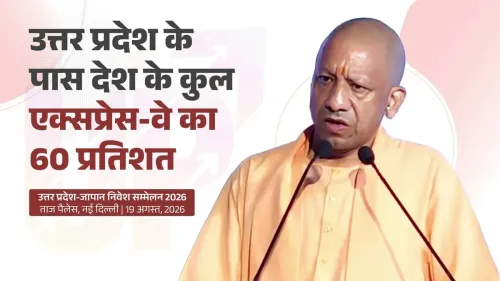
~60% of India's total expressway network is located in Uttar Pradesh , according to CM Yogi Adityanath.
The state operates 5 international airports and 17 domestic airports — 22 airports in total.
Key expressway projects include the Agra-Lucknow Expressway and the Purvanchal Expressway .
The growth aligns with the central government's Bharatmala Pariyojana (launched 2015) and the UDAN scheme (launched 2016).
The state frames its road, rail, and air grid as a combined multimodal argument for industrial investment.
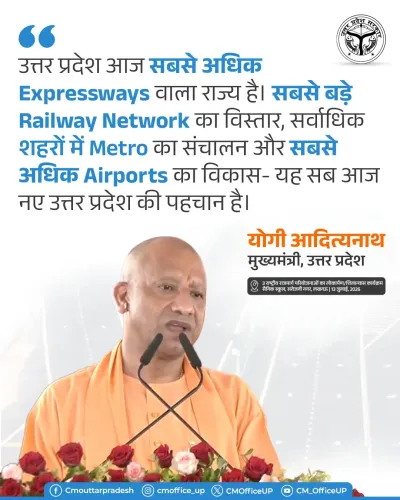
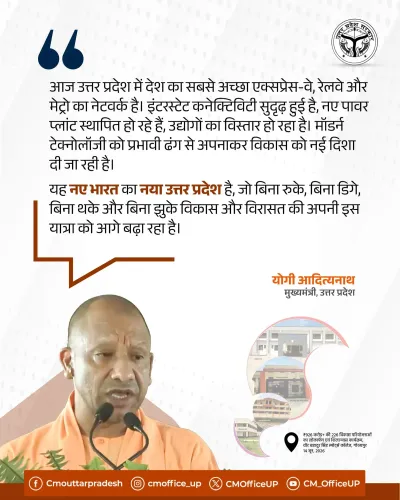
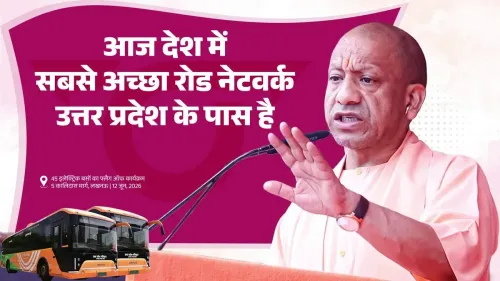
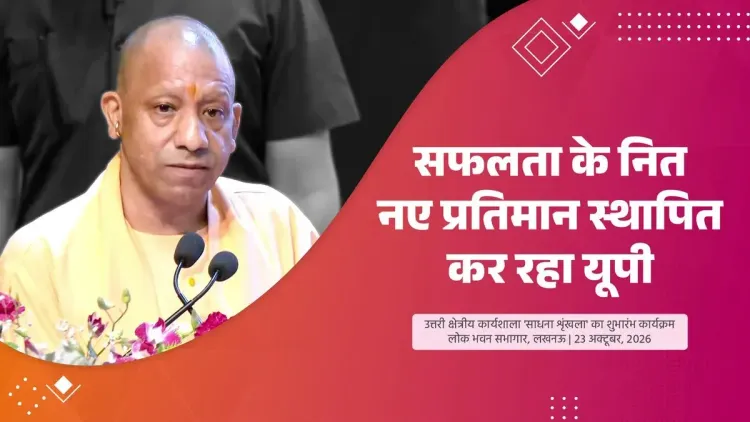
Roughly 60 percent of India's entire expressway network now runs through a single state — and that state is Uttar Pradesh. On Friday, 23 October 2026, the Chief Minister's Office of Uttar Pradesh quoted Chief Minister Yogi Adityanath declaring that the state has built the country's largest road network, a wide-reaching rail grid, and robust air connectivity, with 5 international airports and 17 domestic airports currently operational across the state.
In his statement, CM Yogi Adityanath said: 'Aaj desh ke kul expressway network ka lagbhag 60 pratishat Uttar Pradesh mein maujood hai' — 'Today, approximately 60 percent of the country's total expressway network exists in Uttar Pradesh.' He added that UP also commands India's largest road network, a comprehensive rail network, and strong air connectivity.
From dusty highways to expressway capital of India
The transformation has been years in the making. Uttar Pradesh has systematically completed multiple expressway corridors — including the Agra-Lucknow Expressway and the Purvanchal Expressway — that collectively stretch thousands of kilometres through the Gangetic heartland. These projects align directly with the central government's Bharatmala Pariyojana, the national highway development programme launched in 2015 that placed UP at the centre of India's controlled-access highway ambitions.
The result, according to the CM's Office, is a network that no other Indian state can match by share. For a state that was once a byword for poor roads and connectivity bottlenecks, the claim marks a striking reversal — and a data point that the Yogi Adityanath government has placed at the heart of its economic pitch to investors and industry.
22 airports and a sky-connectivity push
On aviation, the numbers are equally striking. 5 international airports and 17 domestic airports — 22 in total — are now operating in Uttar Pradesh, the CM's Office stated. That footprint owes much to the central government's UDAN regional connectivity scheme, launched in 2016, which targeted under-served cities and towns with subsidised air routes and supported new terminal development across states including UP.
Aviation connectivity matters beyond convenience. Operational airports compress the effective distance between UP's tier-2 and tier-3 cities and national business hubs, making the state more legible on the logistics map for manufacturers, exporters, and supply-chain planners — precisely the audience the state government is courting.
Why multimodal connectivity is now UP's investment argument
Road, rail, and air together form a multimodal pitch that Uttar Pradesh has increasingly deployed in investor summits and policy forums. The logic is straightforward: dense expressway grids cut truck turnaround times; an expansive airport network unlocks air-freight and business travel; a broad rail grid handles bulk movement. For the country's most populous state — one that has historically lagged wealthier coastal counterparts in per-capita economic output — this infrastructure density is meant to signal that the cost and friction of doing business in UP have fundamentally changed.
What to watch next: completion timelines for remaining expressway phases and any new airport capacity upgrades under both state and central schemes will determine whether UP can convert its connectivity lead into sustained industrial investment.
Point of View
The Yogi government is converting physical infrastructure into a political and economic brand, ahead of what are likely to be active investor outreach cycles. The emphasis on multimodal connectivity also signals a deliberate pivot from UP's historical image as a governance-challenged, low-investment state toward positioning it as India's logistics and manufacturing spine. Whether these numbers translate into measurable per-capita income gains for UP's vast population remains the test that will define this infrastructure era.
NationPress
23 Oct 2026
Frequently Asked Questions
How much of India's expressway network is in Uttar Pradesh?
According to Chief Minister Yogi Adityanath, approximately 60 percent of India's total expressway network is located in Uttar Pradesh.
How many airports does Uttar Pradesh have?
Uttar Pradesh currently has 5 international airports and 17 domestic airports, totalling 22 operational airports, as per the Chief Minister's Office.
What are the major expressways in Uttar Pradesh?
Key expressways in UP include the Agra-Lucknow Expressway and the Purvanchal Expressway, both developed under state and central programmes including the Bharatmala Pariyojana.
What is Bharatmala Pariyojana and how does it affect UP?
Bharatmala Pariyojana is the central government's national highway development programme launched in 2015. Uttar Pradesh is one of its major focus states, and several expressway corridors passing through UP have been built under or alongside this scheme.
What is the UDAN scheme and its role in UP's airport growth?
UDAN is a central government regional connectivity scheme launched in 2016 to develop airports and subsidised air routes in under-served cities. It has supported new terminal development and route expansion across Uttar Pradesh.