CM Yogi: UP Mangoes Now Exported to 11+ Countries
Synopsis
Uttar Pradesh mangoes are now reaching consumers in more than eleven countries — from the UK and UAE to Japan, New Zealand and Russia — as CM Yogi Adityanath's government deepens the state's agricultural export push under India's 2018 export policy framework.
Key Takeaways
Uttar Pradesh mangoes are currently being exported to 11-plus countries , including the UK, UAE, Malaysia, Singapore, Kuwait, New Zealand, Belgium, Japan, Italy, Qatar and Russia.
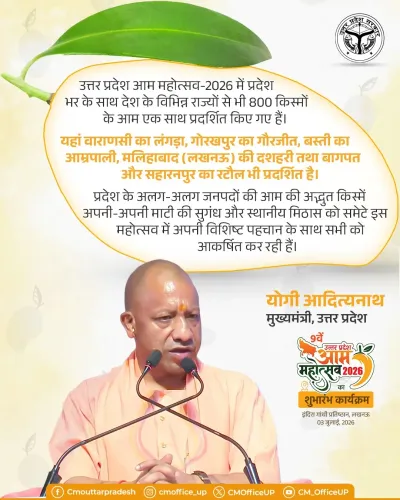
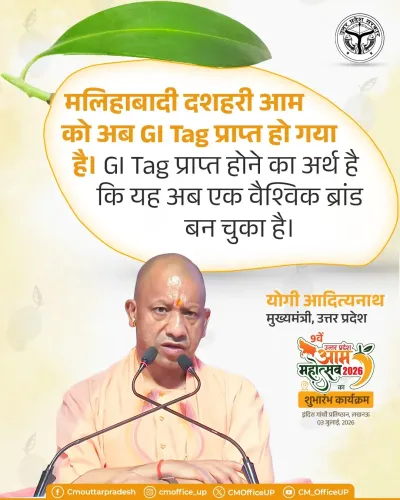
The state is a leading producer of GI-tagged varieties such as Dasheri and Langra , which command premium positioning in international markets.
The announcement was made by the Chief Minister's Office of Uttar Pradesh , attributing the statement to CM Yogi Adityanath , on 3 July 2026 .
The export drive aligns with India's Agricultural Export Policy 2018 , which targets cluster-based development and market diversification.
High-value markets such as Japan and New Zealand impose stringent import standards, raising the overall quality benchmark for UP produce.
Future milestones include the next Ministry of Commerce export data release and potential new GI registrations by the UP Horticulture Department.
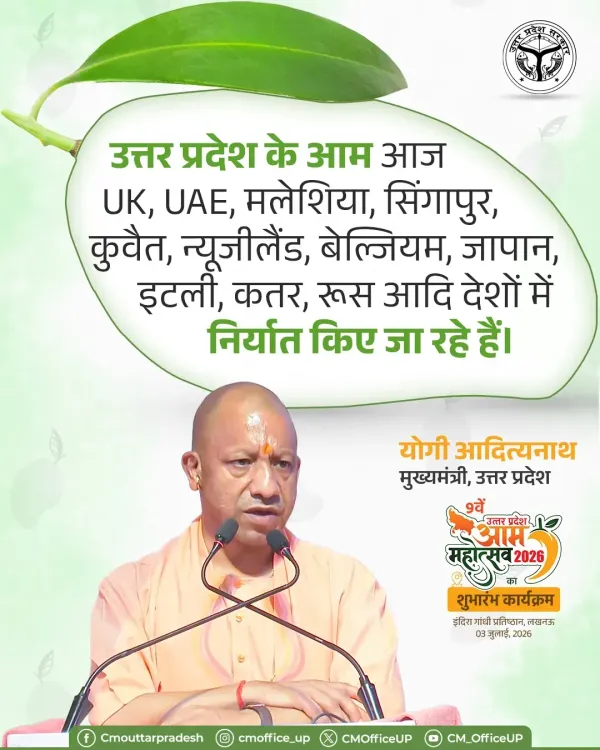
The Chief Minister's Office of Uttar Pradesh, citing Chief Minister Yogi Adityanath, announced on Friday, 3 July 2026 that mangoes from Uttar Pradesh are now being exported to more than eleven countries across multiple continents, marking a significant milestone in the state's agricultural outreach.
The post stated: 'Uttar Pradesh ke aam aaj UK, UAE, Malaysia, Singapore, Kuwait, New Zealand, Belgium, Japan, Italy, Qatar, Russia aadi deshon mein export kiye ja rahe hain' — 'Mangoes of Uttar Pradesh are today being exported to the UK, UAE, Malaysia, Singapore, Kuwait, New Zealand, Belgium, Japan, Italy, Qatar, Russia and other countries.'
Context
Uttar Pradesh is one of India's foremost mango-producing states, home to celebrated varieties such as Dasheri and Langra, both of which carry Geographical Indication (GI) tags that certify their regional authenticity. The state's mango belt, concentrated around districts such as Malihabad in Lucknow division, has long supplied domestic markets but has in recent years pivoted toward international buyers.
The announcement covers destinations spanning South Asia, the Middle East, Southeast Asia, East Asia, Europe, and Oceania — a breadth that signals diversification well beyond traditional export corridors.
Policy Backdrop
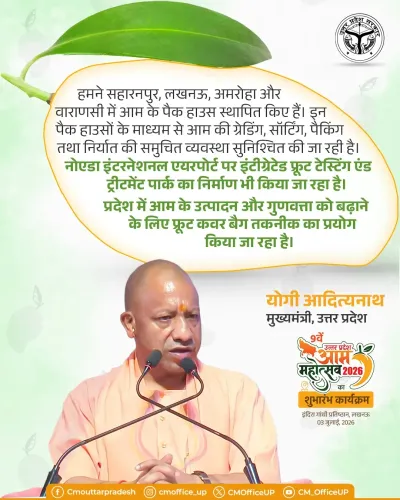
India's Agricultural Export Policy 2018, introduced by the central government, set out a framework to double agricultural exports through cluster-based development and market diversification. Uttar Pradesh aligned its horticulture strategy with this framework, with the state's Agriculture and Horticulture departments working to improve post-harvest handling, cold-chain logistics, and phytosanitary compliance required by importing nations.
Chief Minister Yogi Adityanath, in office since 2017, has consistently positioned agricultural export growth as a pillar of farmer income enhancement. GI-tagged varieties offer a premium positioning in international markets, particularly in the Gulf Cooperation Council countries and in Europe, where the Indian diaspora and mainstream consumers both drive demand.
Stakeholders and Impact
The primary beneficiaries of expanded mango exports are the state's mango farmers and the network of licensed exporters, packhouses, and cold-storage operators who form the supply chain. Wider market access translates, in principle, into better farmgate prices and reduced dependence on a single export destination.
Destinations such as Japan, New Zealand, and Belgium represent high-value markets with stringent import standards, meaning that compliance with those standards also raises the quality bar for produce entering domestic premium channels. The inclusion of Russia reflects India's broader effort to deepen agricultural trade ties with non-Western markets.
What's Next
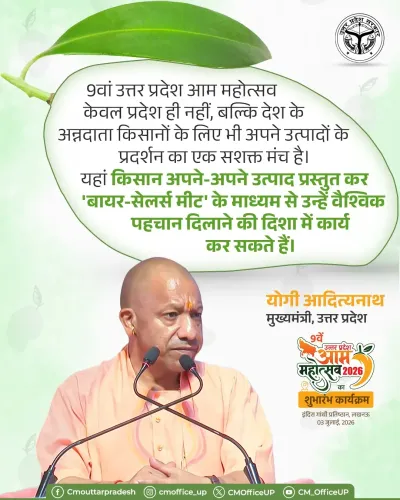
Attention will now turn to the next quarterly agricultural export data release by the Ministry of Commerce, which will offer a quantitative picture of how mango shipment volumes from northern states have trended. The UP Horticulture Department is also expected to organise buyer-seller meets and may pursue additional GI registrations to protect and promote further varieties.
Sustained export growth will depend on maintaining cold-chain infrastructure, meeting evolving phytosanitary requirements in destination markets, and scaling packhouse capacity — areas where both state investment and private participation will be critical.
Point of View
Framing agricultural exports as evidence of governance delivery ahead of a politically sensitive period. Reaching markets as diverse as Japan, New Zealand and Russia signals a conscious effort to diversify beyond the Gulf, which has historically dominated Indian mango exports. This mirrors a broader national pattern of using GI-tagged produce as soft economic diplomacy — where a Dasheri mango on a Tokyo shelf carries both commercial and reputational value for the state. The real test, however, lies in sustaining export volumes and farmgate price improvements, metrics that the next Commerce Ministry data release will begin to answer.
NationPress
3 Jul 2026
Frequently Asked Questions
Which countries is Uttar Pradesh exporting mangoes to in 2026?
According to the Chief Minister's Office of Uttar Pradesh, UP mangoes are being exported to the UK, UAE, Malaysia, Singapore, Kuwait, New Zealand, Belgium, Japan, Italy, Qatar and Russia, among other countries.
What mango varieties does Uttar Pradesh export?
Uttar Pradesh is best known for GI-tagged varieties such as Dasheri and Langra, which are produced primarily in the Malihabad belt near Lucknow and are prized in both domestic and international markets.
What is India's Agricultural Export Policy and how does it help UP mango farmers?
India's Agricultural Export Policy 2018 aims to double agricultural exports through cluster development, cold-chain investment and market diversification. UP has aligned its horticulture strategy with this framework, helping farmers access premium international buyers.
How has CM Yogi Adityanath supported agricultural exports in UP?
Since taking office in 2017, CM Yogi Adityanath has prioritised farmer income growth through international market access, supporting post-harvest infrastructure and phytosanitary compliance to meet the import standards of high-value destinations.
Why are Japan and New Zealand significant as mango export destinations for UP?
Japan and New Zealand maintain some of the world's most stringent agricultural import standards. Successfully exporting to these markets demonstrates high produce quality and strengthens UP's credibility with other premium buyers globally.