Uttarakhand CMO pays tribute to 'Himavant Kavi' Chandra Kunwar Bartwal
Synopsis
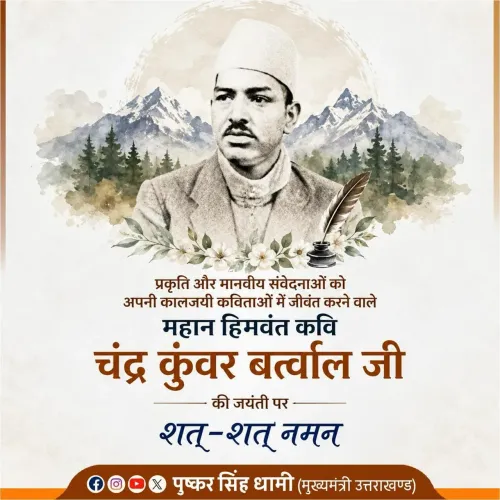
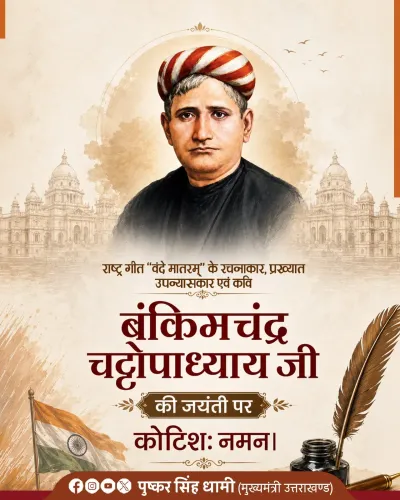
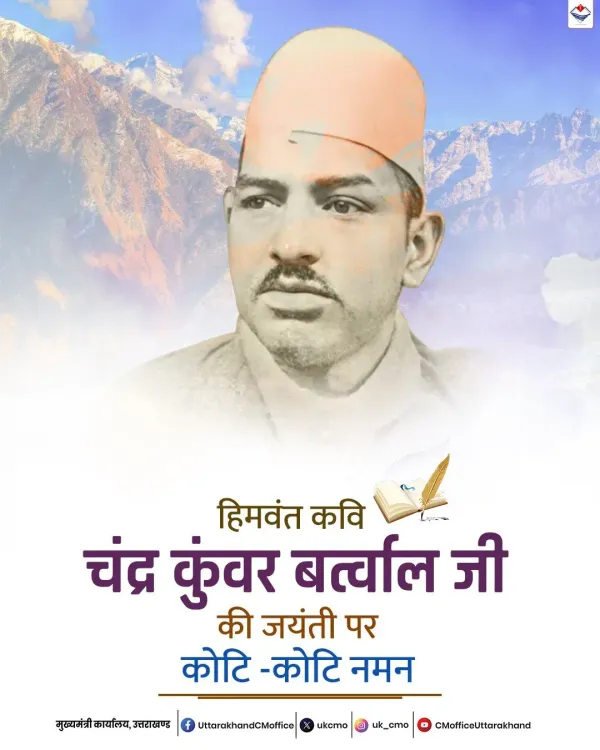
The Chief Minister's Office of Uttarakhand paid tribute to Chandra Kunwar Bartwal, the 20th-century Hindi and Garhwali poet known as 'Himavant Kavi', on his birth anniversary on 20 August 2026, honouring his legacy of Himalayan verse.
Key Takeaways
The Chief Minister's Office of Uttarakhand posted a tribute to Chandra Kunwar Bartwal on his birth anniversary on 20 August 2026 .
Bartwal is widely known as Himavant Kavi — the Poet of the Himalayas — for verses rooted in Himalayan life and nature.
He wrote in both Hindi and Garhwali , making him a significant figure for regional language advocates in Uttarakhand.
Uttarakhand governments have regularly honoured regional literary figures since the state's formation in 2000 as part of efforts to build a distinct cultural identity.
The tribute reflects the state's ongoing promotion of Garhwali language and Himalayan literary heritage .
A poet who gave the Himalayas a voice is being remembered today. The Chief Minister's Office of Uttarakhand marked the birth anniversary of Chandra Kunwar Bartwal — revered across the hills as Himavant Kavi (the Poet of the Himalayas) — with a tribute on Thursday, 20 August 2026.
The CMO's post offered koti-koti naman — a salute in the millions — to Bartwal, whose Hindi and Garhwali verses captured the textures of Himalayan life: its peaks, its seasons, its people.
The poet the hills called their own
Bartwal was a 20th-century poet from Uttarakhand whose work became inseparable from the region's literary identity. Writing in both Hindi and Garhwali, he drew his imagery directly from the mountain landscape — a body of work that earned him the title Himavant Kavi, meaning the poet rooted in the snow-bearing ranges. His verses remain touchstones for Garhwali language advocates and the broader Uttarakhand literary community.A state's habit of honouring its literary past
Since Uttarakhand's formation in 2000, successive governments have made a practice of publicly commemorating regional literary figures. These tributes serve a deliberate cultural function: reinforcing a distinct Himalayan identity that sets the young hill state apart. Bartwal fits squarely into that tradition — a poet whose life's work documented the very landscape the state was carved out to protect and represent. For the literary community of Uttarakhand, a tribute from the Chief Minister's Office is more than ceremony. It is an official signal that the Garhwali voice — long overshadowed in the national literary conversation — belongs in the public record.Point of View
Ecology, and regional pride. Whether these tributes translate into sustained institutional support for Garhwali literature, however, remains the more consequential question.
NationPress
5 Oct 2026
Frequently Asked Questions
Who is Chandra Kunwar Bartwal?
Chandra Kunwar Bartwal was a 20th-century poet from Uttarakhand who wrote in Hindi and Garhwali. He is known as 'Himavant Kavi' — the Poet of the Himalayas — for verses that depicted Himalayan landscapes, nature, and regional life.
What does 'Himavant Kavi' mean?
'Himavant Kavi' is a title meaning 'Poet of the Snow-Bearing Mountains' or 'Himalayan Poet', reflecting Chandra Kunwar Bartwal's deep connection to the Himalayan landscape in his writing.
Why did the Uttarakhand CMO post a tribute to Bartwal?
The Chief Minister's Office of Uttarakhand posted the tribute on Bartwal's birth anniversary on 20 August 2026, continuing the state government's practice of publicly honouring significant regional literary and cultural figures.
What language did Chandra Kunwar Bartwal write in?
Bartwal wrote in both Hindi and Garhwali, making him an important figure in both the broader Hindi literary tradition and the regional Garhwali language movement in Uttarakhand.
Why does Uttarakhand government honour regional poets?
Since Uttarakhand's formation in 2000, successive governments have commemorated regional literary figures as part of efforts to strengthen the state's distinct Himalayan cultural identity and promote Garhwali language and heritage.