Did CNS Engage with Chiefs of Russian, Thai, and Sri Lankan Navies at the International Fleet Review?
Synopsis
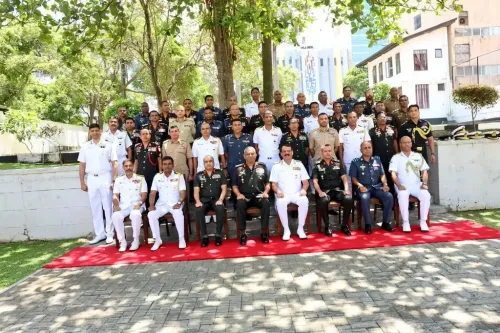
In a significant display of maritime diplomacy, Admiral Dinesh K. Tirpathi, Chief of the Naval Staff, engaged with naval chiefs from Russia, Thailand, and Sri Lanka during the International Fleet Review in Visakhapatnam, reinforcing India’s commitment to regional maritime security and international cooperation.
Key Takeaways
Tirpathi engaged with international naval leaders.
Discussions centered on operational cooperation and joint exercises.
India's naval strength showcased through multi-domain capabilities .
International Fleet Review emphasized maritime security .
Participation from 74 countries highlights global naval collaboration.
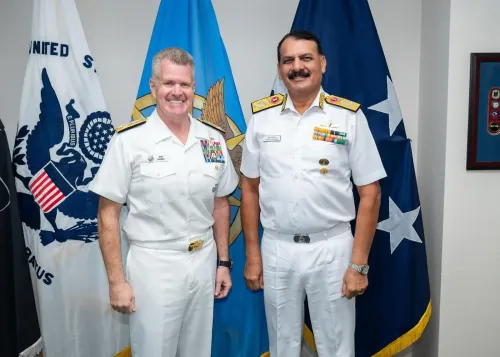
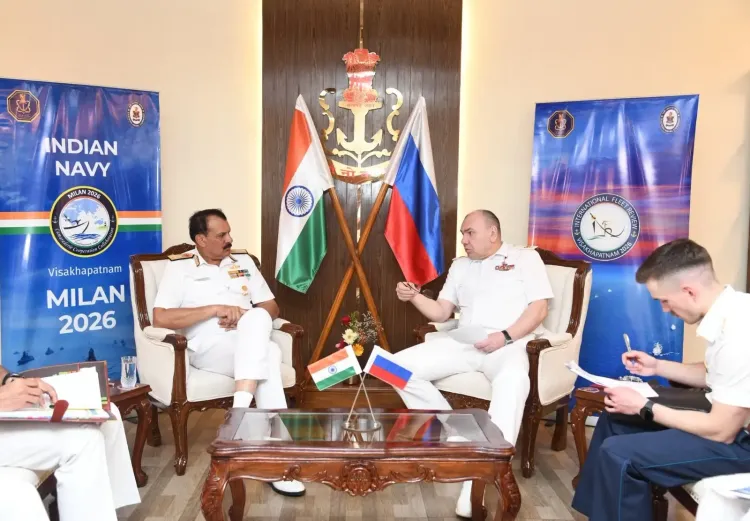
Visakhapatnam, Feb 18 (NationPress) Admiral Dinesh K. Tirpathi, Chief of the Naval Staff, interacted with the head of the Russian Navy during the International Fleet Review held here on Wednesday.
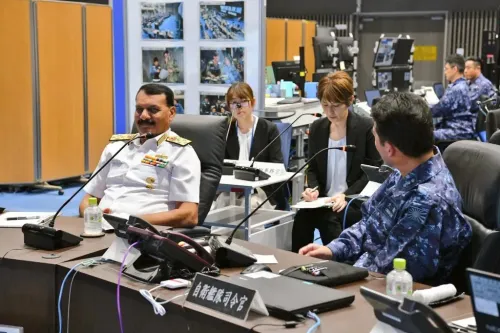
A spokesperson from the Indian Navy reported that CNS had discussions with Admiral Aleksandr Alekseevich Moiseev, Commander-in-Chief of the Russian Navy.
This dialogue underscored the long-standing nature of India-Russia naval cooperation, emphasizing ongoing operational interactions, interoperability, and professional exchanges, which are strengthened through agreements like the RELOS Agreement and initiatives such as Exercise INDRA Navy, as mentioned by the spokesperson on X.
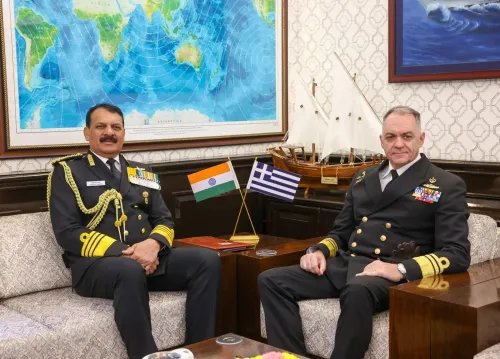
In addition to the fruitful operational and professional interactions in Visakhapatnam, Admiral Tripathi also met with Adm Pairote Fuangchan, Commander-in-Chief of the Royal Thai Navy.
Discussions focused on enhancing operational collaborations, including Exercise Ayutthaya, coordinated patrols (CORPATs), and the Trilateral Maritime Exercise SITMEX, along with ongoing efforts to improve information sharing for Maritime Domain Awareness.
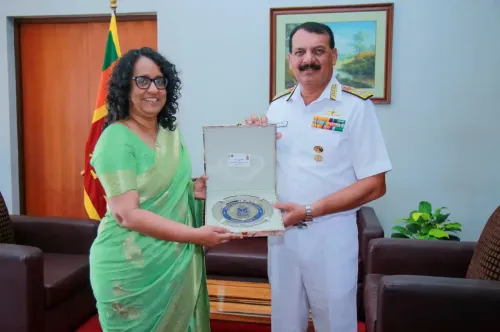
In a demonstration of the close maritime ties between neighboring navies, CNS also interacted with VAdm Kanchana Banagoda, Commander of the Sri Lanka Navy.
This meeting highlighted sustained operational links, ongoing capacity-building initiatives, and collaboration reinforced through engagements like Exercise SLINEX, as well as regular training and professional exchanges.
The Deputy Chief of the Naval Staff, Vice-Admiral Tarun Sobti, met with VAdm Axel Deertz, Commander of the German Fleet and Supporting Forces.
This discussion highlighted opportunities for enhanced cooperation, professional exchanges, and ongoing maritime engagements, with continued interactions planned during MILAN 2026.
The presence of the German Navy P-8 maritime patrol aircraft illustrated the growing operational convergence and interoperability between the two navies, as noted by the Navy spokesperson.
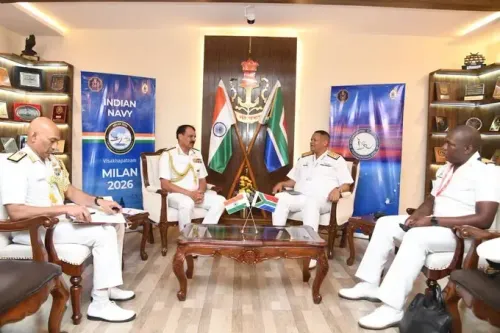
Emphasizing the strategic significance of the Indian Ocean Region, DCNS VAdm Tarun Sobti held a bilateral meeting with Brigadier General Mohamed Saleem, Commandant Coast Guard, MNDF, Republic of Maldives.
This interaction showcased the strong and lasting maritime partnership between India and the Maldives, concentrating on enhancing cooperation and expanding professional exchanges. Ongoing engagements during MILAN 2026 further reinforced the mutual commitment to promoting regional maritime security and stability. The involvement of the MNDF Coast Guard Ship Huravee demonstrated the Maldives’ dedication to improving interoperability and deepening cooperative efforts at sea.
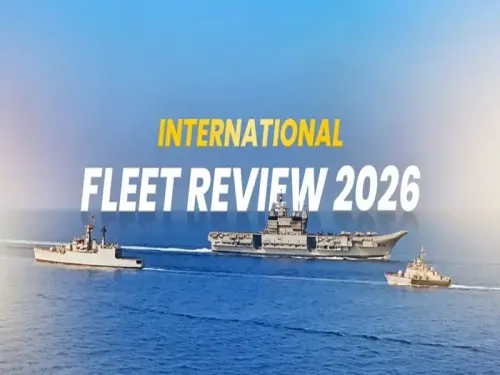
The International Fleet Review 2026 took place off the coast of Visakhapatnam on Wednesday, featuring participation from 74 nations.
President Droupadi Murmu reviewed the assembled fleet from INS Sumedha, an indigenously constructed Offshore Patrol Vessel. According to the Ministry of Defence, 66 Indian and 19 foreign ships participated, along with three Indian Navy submarines and over 60 aircraft.
The Indian Navy exhibited multi-domain operational capabilities through Search and Rescue drills, operational readiness demonstrations by MARCOS, and dynamic maritime maneuvers. Iconic vessels, including INS Vikrant and Indian Navy submarines, highlighted India’s combat readiness and indigenous maritime strength.
Point of View
It is essential to recognize the strategic implications of these high-level naval interactions. The ongoing dialogues between India and its partners reflect a collective commitment to ensuring maritime security, enhancing interoperability, and fostering professional exchanges. Such engagements not only bolster India’s naval capabilities but also contribute to regional stability in an increasingly complex geopolitical landscape.
NationPress
20 Sept 2026
Frequently Asked Questions
What was the purpose of the International Fleet Review?
The International Fleet Review aimed to showcase naval cooperation, operational readiness, and foster partnerships among participating nations.
Who attended the International Fleet Review?
The event saw participation from naval chiefs of Russia, Thailand, Sri Lanka, and many other nations, totaling 74 countries.
What exercises were discussed during the interactions?
Key exercises discussed included Exercise INDRA Navy, Exercise Ayutthaya, and Exercise SLINEX, focusing on enhancing operational engagements.
What does the presence of the German Navy indicate?
The presence of the German Navy P-8 maritime patrol aircraft signifies growing operational convergence and interoperability between Germany and India.
How does this event impact regional maritime security?
Such international engagements reinforce commitments to maritime security, enhance cooperation, and promote stability in the Indian Ocean Region.