Did the Coast Guard DG Launch a Waterjet Production Facility in Goa?
Synopsis
The inauguration of a waterjet production facility in Goa by the Indian Coast Guard marks a significant leap in India's maritime self-reliance, establishing the nation as a leader in indigenous technology and employment generation.
Key Takeaways
New waterjet facility inaugurated in Goa enhances indigenous capabilities.
India becomes the third nation to host such a facility.
Facility aims to boost employment generation and support MSMEs.
ICG operates over 100 waterjet systems onboard its vessels.
First vessel from the Air Cushion Vehicle program expected in May 2026.
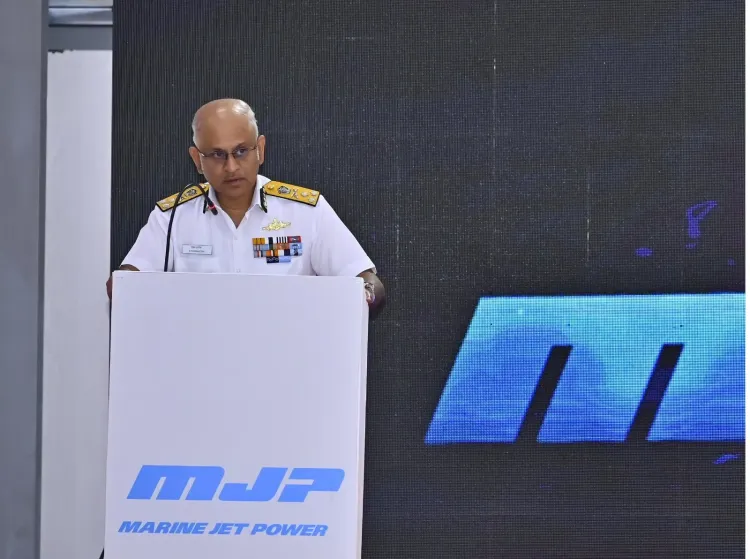
On February 13, in Panaji, Paramesh Sivamani, the Director General of the Indian Coast Guard, officially opened a state-of-the-art waterjet production and testing facility in Goa. This development is a pivotal step towards India's goal of achieving maritime Aatmanirbharta, as stated in a recent announcement.
With this cutting-edge facility established under the Manufacturing and Transfer of Technology framework, India becomes the third nation worldwide, following the US and South Korea, to host such a facility.
The facility is set to ensure domestic supply chain security, facilitate indigenous testing of waterjet systems, and position itself as a regional hub catering to South Asia and neighboring areas, according to the announcement.
This initiative is also expected to boost employment generation, support the MSME ecosystem, and improve technology absorption across the country.
The Indian Coast Guard currently utilizes over 100 MJP waterjet propulsion systems on its vessels, with an additional 42 systems planned for ships currently under construction. The newly inaugurated facility will markedly improve operational sustainability and enhance indigenous maintenance capabilities, as noted in the statement.
Director General Sivamani reaffirmed the ICG's unwavering commitment to indigenisation and emphasized that this achievement is the result of ongoing multi-tier engagements initiated since 2023.
During his visit, DG ICG also assessed the advancement of six indigenously manufactured Air Cushion Vehicles at another company. This project signifies India's inaugural indigenous Air Cushion Vehicle program, boasting nearly 50 percent indigenous content, with the first vessel's delivery slated for May 2026.
On the previous day, the Defence Ministry announced a contract with Hindustan Aeronautics Limited (HAL) for the procurement of eight Dornier 228 aircraft, along with operational role equipment for the Indian Coast Guard, valued at Rs 2,312 crore.
This order is anticipated to create significant direct and indirect employment opportunities by fortifying HAL's production ecosystem and bolstering a wide network of MSMEs and ancillary industries.
Point of View
The establishment of this waterjet facility not only strengthens the maritime sector but also enhances employment opportunities and technological advancement.
NationPress
8 Oct 2026
Frequently Asked Questions
What is the significance of the waterjet facility inaugurated in Goa?
The waterjet facility marks a major step towards India's maritime self-reliance, ensuring domestic supply chain security and enhancing indigenous testing capabilities.
How does India rank globally regarding this facility?
India is the third country in the world, after the US and South Korea, to establish a waterjet production and testing facility.
What impact will this facility have on employment?
The facility is expected to generate significant direct and indirect employment opportunities, benefiting the MSME ecosystem.
When is the first vessel from the Air Cushion Vehicle program expected to be delivered?
The first vessel from the Air Cushion Vehicle program is scheduled for delivery in May 2026.
What is the financial worth of the contract signed with HAL?
The Defence Ministry has signed a contract with HAL for Rs 2,312 crore for the acquisition of eight Dornier 228 aircraft.