How Does ICGS Samudra Pratap Enhance India's Self-Reliance and Security?

Synopsis
Prime Minister Modi celebrates the launch of ICGS Samudra Pratap, marking a pivotal moment for India's defense and environmental stewardship. This vessel showcases India's commitment to self-reliance and significantly enhances the Coast Guard's capabilities in pollution control and maritime safety.
Key Takeaways
Strengthens maritime security Promotes self-reliance Advanced pollution control capabilities Indigenous manufacturing excellence Contributes to environmental sustainability
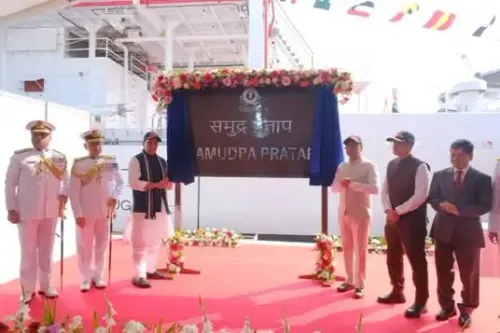
New Delhi, Jan 7 (NationPress) Prime Minister Narendra Modi expressed his enthusiasm on Wednesday regarding the commissioning of the Indian Coast Guard Ship (ICGS) Samudra Pratap, the inaugural vessel of its kind dedicated to pollution control. He emphasized that this vessel will further bolster India's security framework and promote the nation's goal of self-reliance.
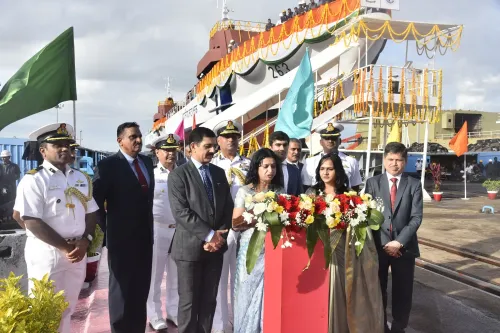
The Defence Minister, Rajnath Singh, officially commissioned the ship on Monday, January 5.
In a post shared on X, PM Modi remarked, "The commissioning of ICGS Samudra Pratap is significant for many reasons, particularly how it enhances our vision of self-reliance, strengthens our security framework, and showcases our dedication to sustainability, among various others."
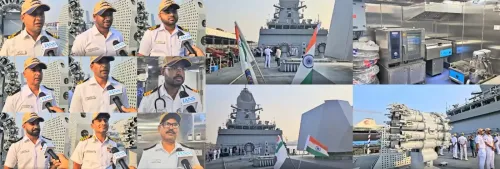
With more than 60% indigenous components, the ICGS Samudra Pratap stands as India’s first indigenously designed pollution control vessel and is the largest ship in the ICG fleet to date.
This addition is set to significantly improve the ICG's operational abilities in pollution management, firefighting, maritime safety, and environmental stewardship. Additionally, it will enhance the ICG's capacity for extended surveillance and rapid response across India's extensive maritime territories.
During the commissioning event, Rajnath Singh described the ICGS Samudra Pratap as a testament to India's advanced defence industrial ecosystem.
He praised the ecosystem's capacity to tackle complex manufacturing challenges efficiently, stating that the ICGS Samudra Pratap will greatly improve the ICG's capabilities in pollution management, firefighting, maritime safety, and environmental protection.
"ICGS Samudra Pratap has been specifically engineered for pollution management, yet its functionality extends beyond this. With multiple capabilities integrated into a single platform, the ship will be effective in coastal surveillance and enhancing maritime safety. It exemplifies the modern strategy adopted by Goa Shipyard Limited (GSL) to increase adaptability and readiness for contemporary maritime issues," remarked Rajnath Singh.
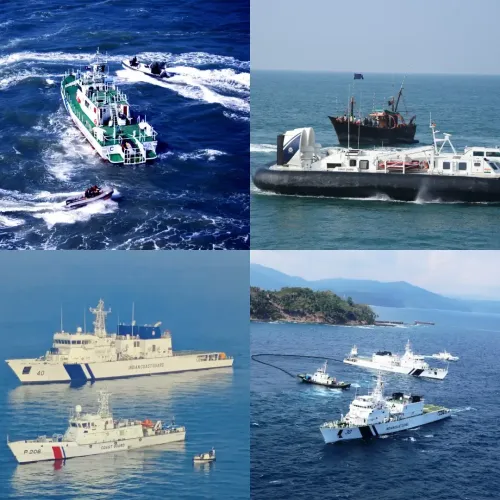
The Defence Minister acknowledged the ICG for its versatile roles, ranging from marine pollution control to coastal cleanliness, and from search and rescue operations to maritime law enforcement.
He asserted that the diligent performance of the Coast Guard sends a clear message to potential adversaries: any attempt to threaten India’s maritime borders or engage in any misadventure will be met with a decisive and robust response.
The ship boasts advanced pollution detection systems, dedicated pollution response boats, and state-of-the-art firefighting capabilities.
It also includes a helicopter hangar and aviation support facilities, significantly enhancing its operational reach and effectiveness.
Rajnath Singh expressed confidence that, owing to these features, the vessel will maintain stability even in turbulent sea conditions, providing a substantial advantage during real-world operations.
He emphasized that safeguarding the marine environment is not merely a strategic imperative but also a moral obligation, particularly in the face of climate change and global warming challenges.
The Defence Minister commended the ICG for executing oil spill responses, firefighting, and salvage missions, positioning India among a select group of nations that possess advanced environmental response capabilities.
"Through its swift detection, precise maneuvering, and efficient recovery systems, ICGS Samudra Pratap will bolster our response abilities. It will ensure timely control of pollution incidents, thereby preventing harm to coral reefs, mangroves, fisheries, and marine biodiversity, which are directly linked to the sustainability of coastal communities and the blue economy," he explained.
Point of View
I believe that the commissioning of the ICGS Samudra Pratap represents a significant leap for India in both defense and environmental responsibility. This vessel not only strengthens our maritime security but also reaffirms our commitment to sustainability. It's a proud moment that showcases India's indigenous capabilities and its dedication to protecting our marine ecosystems.
NationPress
30 Sept 2026
Frequently Asked Questions
What is the significance of ICGS Samudra Pratap?
ICGS Samudra Pratap is significant as it enhances India's maritime security and showcases the nation's commitment to self-reliance and environmental sustainability.
How much indigenous content does ICGS Samudra Pratap have?
The ship boasts over 60% indigenous content, making it a landmark achievement in India's defense manufacturing.
What capabilities does ICGS Samudra Pratap possess?
ICGS Samudra Pratap is equipped for pollution control, firefighting, maritime safety, and extended surveillance missions.
Who commissioned the ICGS Samudra Pratap?
The ship was commissioned by Defence Minister Rajnath Singh on January 5.
What role does ICGS Samudra Pratap play in environmental protection?
The vessel is designed for pollution management and will help in timely responses to pollution incidents, protecting marine biodiversity.