Is the Indian Rupee in Freefall? Congress Flags Concerns in Rajya Sabha
Click to start listening
Synopsis
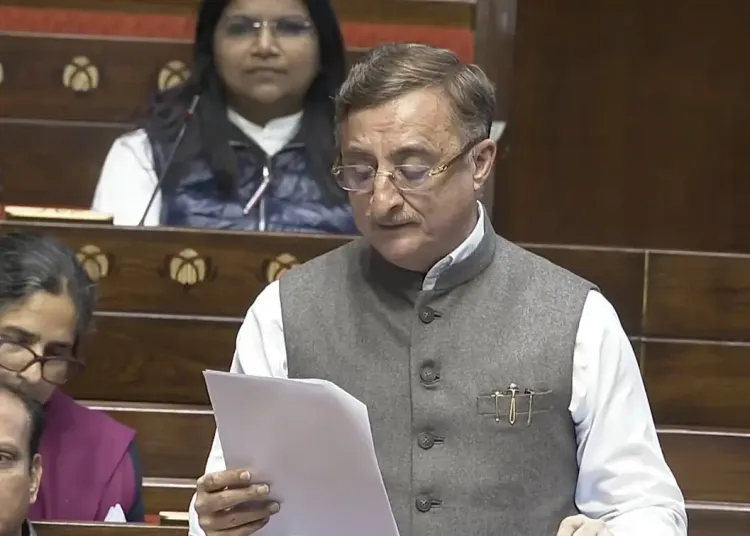
On December 4, Congress MP Vivek Tankha raised alarm about the Indian rupee's sharp decline and its impact on the economy during Zero Hour in the Rajya Sabha. He detailed how this depreciation is affecting citizens, businesses, and economic stability, urging the government to take urgent action.
Key Takeaways
- The Indian rupee has fallen to historic lows, affecting purchasing power.
- Households and businesses are experiencing increased financial strain.
- Rising import costs lead to inflation, impacting essential goods.
- Foreign investment is declining, worsening economic stability.
- Immediate government intervention is necessary to address these issues.
New Delhi, Dec 4 (NationPress) During Zero Hour in the Rajya Sabha on Thursday, Congress MP from Madhya Pradesh Vivek Tankha expressed grave concern about what he termed the “freefall of the Indian rupee” and the escalating economic distress impacting everyday citizens throughout the nation.
Labeling the issue as “extremely topical and urgent”, Tankha highlighted that the currency’s significant decline is causing extensive financial strain on families, enterprises, and crucial economic sectors.
He pointed out that the rupee has plummeted past Rs 90 per US dollar -- ranging between 90.14 and 90.19 -- marking the lowest level in India’s history. Over the last five years, he indicated that the rupee has lost between 20 per cent and 27 per cent of its value, effectively diminishing the purchasing power of people’s income by nearly one fourth. In global terms, the rupee has dropped 5 per cent this year alone, its steepest decline since 2022, positioning it as one of Asia’s worst-performing currencies in 2025.
Tankha further noted that India recently recorded a monthly trade deficit exceeding USD 40 billion, emphasizing how sharply imports surpass exports. Concurrently, foreign investors have retreated, withdrawing more than USD 17 billion from Indian markets this year -- the largest outflow in several years -- which has drained capital and weakened investor sentiment.
“FDI flows are stagnant, external borrowings have slowed, and the world is becoming increasingly wary of India’s external stability,” Tankha cautioned.
Stressing the direct implications for citizens, he remarked that each instance of rupee depreciation makes imports more expensive, and India is heavily reliant on imported fuel, cooking gas, electronic machinery, and medicines. A 5 per cent drop in the rupee, he elucidated, raises inflation by 30-35 basis points.
“Every household ends up paying more. Food prices rise, transport costs increase, and a chain reaction ensues that impacts the less fortunate the most,” he stated.
The middle class, he added, is also feeling the pressure as the costs of smartphones, laptops, medical equipment, school supplies, clothing, and household appliances rise due to India's reliance on imported components.
“For the common person, a declining rupee feels like a salary cut without the employer informing you. Your money buys less every day,” he commented.
Tankha also called attention to the strain on Micro, Small and Medium Enterprises (MSMEs), many of which depend on imported raw materials. These businesses are grappling with a 20-30 per cent increase in input costs, further squeezing already slim margins.
The cost of machinery imports has surged, hindering expansion and jeopardizing jobs. He pointed out that exporters are not benefiting from the weaker rupee because major export sectors -- including textiles, chemicals, and engineering goods -- heavily rely on imported intermediaries.
“Small manufacturers find themselves facing a double blow: elevated costs and reduced demand,” he said.
Businesses with foreign currency loans are also struggling, with repayment costs increasing by 15-20 per cent due to the rupee’s depreciation, undermining corporate balance sheets and threatening financial stability.
A declining rupee, Tankha added, deters overseas investors, creating a “vicious cycle” where diminishing confidence exacerbates currency pressure. “As the rupee declines, investors withdraw, and markets shift,” he warned.
Tankha urged the government to acknowledge the gravity of the situation and implement immediate corrective measures to stabilize the currency and protect vulnerable sectors of the economy.
Point of View
It's vital to recognize the concerns raised by Congress MP Vivek Tankha regarding the rupee's decline. This situation reflects not only economic challenges but also the broader impact on the lives of ordinary citizens and the need for effective government intervention to safeguard the economy.
NationPress
04/12/2025
Frequently Asked Questions
What is the current value of the Indian rupee against the US dollar?
The Indian rupee has recently fallen to between 90.14 and 90.19 per US dollar.
Why is the decline of the rupee a concern for ordinary citizens?
The decline in the rupee reduces purchasing power, making imports more expensive and increasing inflation, which directly affects household expenses.
What impact does the rupee's decline have on businesses?
Businesses face rising input costs due to the increased price of imported raw materials, which can hurt profit margins and lead to job losses.
How does the rupee's depreciation affect foreign investment?
A weakening rupee can deter foreign investors, leading to capital outflows and a decrease in FDI, further straining the economy.
What measures can the government take to stabilize the rupee?
The government can implement economic reforms, enhance investor confidence, and take steps to balance trade to stabilize the rupee.