Congress flags tribal crisis in MP ahead of President Murmu's visit
Synopsis
As President Droupadi Murmu touched down in Madhya Pradesh for a five-day visit, the Congress handed her a ten-point tribal crisis brief — citing a 20-percentage-point literacy gap, a doctor shortage in Primary Health Centres, and stalled Forest Rights Act compliance. With 1.53 crore Scheduled Tribes making up 21% of the state's population, the Opposition is framing this as a rights deficit, not a welfare shortfall.
Key Takeaways
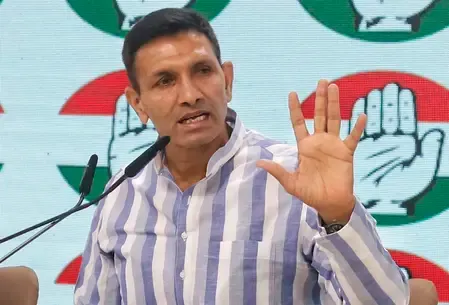
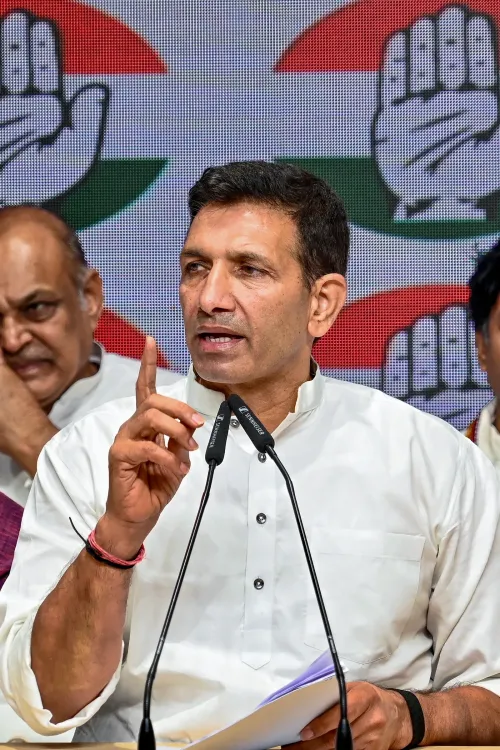
Madhya Pradesh Congress chief Jitu Patwari submitted a ten-point demand charter to President Droupadi Murmu on 18 June , urging action on tribal education, health, and livelihood.
Madhya Pradesh has the largest tribal population in India — 1.53 crore Scheduled Tribes comprising 21% of the state's population.
Tribal literacy in MP stands at approximately 50% , against a state average exceeding 70% .
Demands include 100% Forest Rights Act compliance , time-bound filling of teacher and doctor vacancies, and a dedicated tribal employment mission.
President Murmu's five-day itinerary spans Indore , Betul , Omkareshwar , Jabalpur , and Kuno National Park , concluding on 22 June .
On 19 June , the President will attend an International Sickle Cell Anaemia Day event — a disease with high prevalence among tribal populations.
Madhya Pradesh Congress chief Jitu Patwari on Thursday, 18 June urged President Droupadi Murmu to take note of the deepening challenges faced by the state's tribal communities — covering education, healthcare, and livelihood — as the President began a five-day visit to Madhya Pradesh. The appeal came hours after Murmu landed in Indore, marking the first major political intervention ahead of her packed itinerary across the state.
Congress's Ten-Point Demand List
Patwari, in a formal statement, welcomed the President on behalf of the people of Madhya Pradesh and acknowledged her personal journey as a source of inspiration for the country's tribal population. He then laid out a ten-point charter of demands, including a special emergency plan for education and health in tribal areas, time-bound filling of vacant teacher and doctor posts, 100 per cent compliance with the Forest Rights Act, and a dedicated employment mission for tribal youth.
'Today, the need is not merely to announce schemes, but to translate the spirit of constitutional justice into reality on the ground. The tribal community of Madhya Pradesh seeks rights, not charity,' Patwari said.
The Scale of the Problem
Patwari pointed to stark numbers to underline the urgency. Madhya Pradesh is home to the largest tribal population in India — 1.53 crore Scheduled Tribes who account for roughly 21 per cent of the state's total population. Yet their literacy rate stands at approximately 50 per cent, well below the state's overall literacy rate of over 70 per cent. Healthcare in tribal regions is under similar strain, with acute shortages of doctors at Primary Health Centres and persistently high rates of malnutrition and maternal mortality, according to Patwari's statement.
President Murmu's Madhya Pradesh Itinerary
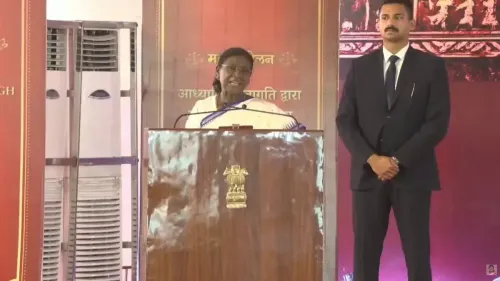
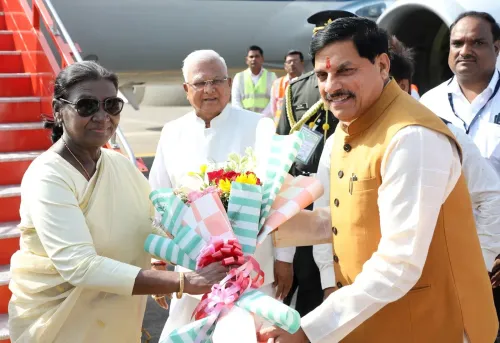
President Murmu arrived at Devi Ahilyabai Holkar Airport in Indore on Thursday morning and was received by Chief Minister Mohan Yadav and Governor Mangubhai Patel. She then travelled to Betul to attend a programme titled 'Empowerment of Tribal Society by Spiritual Awakening', organised by Prajapita Brahma Kumaris Ishwariya Vishwa Vidyalaya, before heading to Omkareshwar.
On 19 June, the President is scheduled to attend a programme marking International Sickle Cell Anaemia Day in Madhya Pradesh — a disease that disproportionately affects tribal communities and has been a longstanding public health concern in the state. Following a brief visit to West Bengal, she returns on 20 June to Jabalpur for International Yoga Day celebrations on 21 June and the 36th convocation of Rani Durgavati Vishwavidyalaya. The visit concludes on 22 June with a stop at Kuno National Park in Sheopur before her return to New Delhi.
Why the Timing Matters
This comes amid a broader political backdrop in which tribal welfare has emerged as a contested terrain in Madhya Pradesh. The state has seen repeated disputes over Forest Rights Act implementation, and tribal voter mobilisation has been a key electoral variable in recent assembly cycles. Notably, President Murmu — herself from a Scheduled Tribe background — carries symbolic weight on these issues that the Congress is clearly seeking to leverage. Critics argue that the ruling Bharatiya Janata Party (BJP) government's record on tribal education and health outcomes has fallen short of its stated commitments, a charge the government has not yet publicly addressed in the context of this visit.
With the President's schedule including an event specifically tied to tribal health, the Congress's intervention places tribal rights squarely on the agenda for her stay in the state.
Point of View
Not invented. What the intervention does not address is that these deficits have persisted across multiple governments, including Congress tenures in Madhya Pradesh. The more pointed question is why Forest Rights Act compliance remains incomplete more than fifteen years after the legislation was enacted, regardless of who held power in Bhopal. President Murmu's visit, rich in tribal symbolism, gives the Opposition a rare moment of leverage — but leverage only converts to outcomes if the demands move from a letter to a legislative or administrative follow-up.
NationPress
22 Sept 2026
Frequently Asked Questions
Why did Congress write to President Murmu about tribal issues in Madhya Pradesh?
Congress chief Jitu Patwari used President Murmu's five-day state visit as an opportunity to formally flag the challenges facing Madhya Pradesh's 1.53 crore Scheduled Tribes, who make up 21% of the state's population. The letter cited a tribal literacy rate of around 50% against a state average above 70%, along with severe healthcare shortages and stalled Forest Rights Act compliance.
What are Congress's ten demands for Madhya Pradesh's tribal communities?
The demands include a special emergency plan for tribal education and health, time-bound filling of vacant teacher and doctor posts, 100% compliance with the Forest Rights Act, and a dedicated employment mission for tribal youth, among others. The Congress framed these as rights-based entitlements rather than welfare schemes.
What is President Murmu's schedule during her Madhya Pradesh visit?
President Murmu arrived in Indore on 18 June and travelled to Betul and Omkareshwar on the first day. She will attend an International Sickle Cell Anaemia Day event on 19 June, visit Jabalpur for Yoga Day on 21 June and the Rani Durgavati Vishwavidyalaya convocation, and conclude with a visit to Kuno National Park in Sheopur on 22 June before returning to New Delhi.
How does Madhya Pradesh's tribal literacy rate compare to the state average?
According to Jitu Patwari's statement, Madhya Pradesh's overall literacy rate exceeds 70%, while the literacy rate among Scheduled Tribes is recorded at around 50% — a gap of roughly 20 percentage points. The state has the largest tribal population in India at 1.53 crore.
What is the significance of International Sickle Cell Anaemia Day for tribal communities in MP?
Sickle cell anaemia has a disproportionately high prevalence among tribal populations in Madhya Pradesh and central India, making it a major public health concern in the region. President Murmu is scheduled to attend a state-level event on 19 June to mark International Sickle Cell Anaemia Day.