Congress reconstitutes Uttarakhand Political Affairs Committee with 23 members
Synopsis
The Congress high command has moved decisively on Uttarakhand, reconstituting the Pradesh Political Affairs Committee with 23 members — including former Chief Minister Harish Rawat — effective immediately. The reshuffle is a clear signal that the party is gearing up to challenge the BJP's long hold on the hill state.
Key Takeaways
AICC reconstituted the Uttarakhand Pradesh Congress Committee's Political Affairs Committee on 7 July , with the decision taking immediate effect.
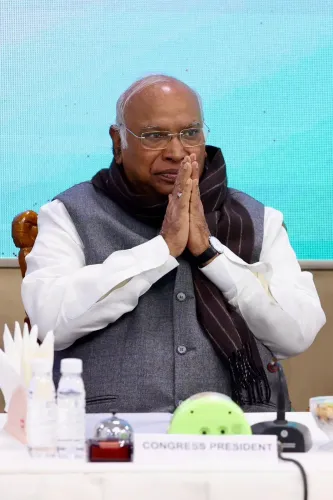
The panel comprises 23 members , approved by Congress President Mallikarjun Kharge .
Former Uttarakhand Chief Minister Harish Rawat is among the prominent members included.
Heads of all state frontal organisations will serve as ex officio members .
The move is aimed at unifying factions and strengthening the party's organisational machinery ahead of future elections in BJP -ruled Uttarakhand.
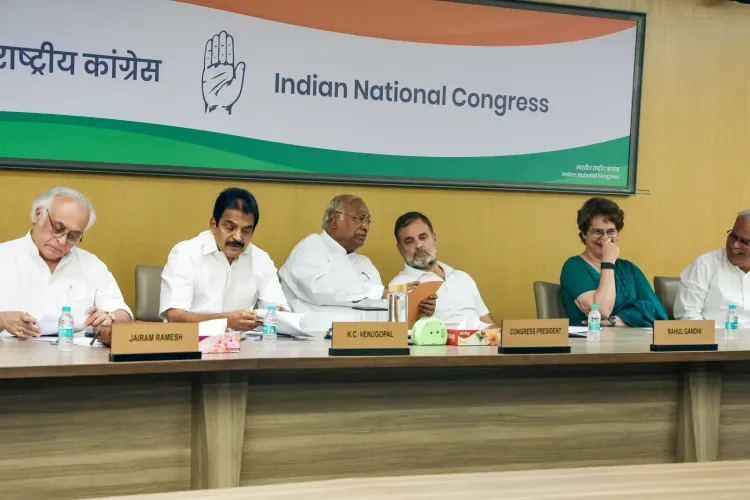
The All India Congress Committee (AICC) on Tuesday, 7 July announced the reconstitution of the Uttarakhand Pradesh Congress Committee's Political Affairs Committee, forming a 23-member panel that takes effect immediately. Congress President Mallikarjun Kharge approved the proposal, according to an official AICC press release issued from New Delhi.
Who Is on the Panel
The reconstituted committee brings together senior national and state-level leaders. Prominent members include Kumari Selja, Ganesh Godiyal, Yashpal Arya, Harish Rawat, Pritam Singh, Gurdeep Singh Sappal, Qazi Nizamuddin, Karan Mahara, Manoj Yadav, Surender Sharma, Harak Singh Rawat, Bhuvan Kapri, Prakash Joshi, Tilak Raj Behar, Mamta Rakesh, Manoj Tiwari, Vikram Singh Negi, Ravi Bahadur, Govind Singh Kunjwal, Nav Prabhat, Pradeep Tamta, Mahendra Pal Singh, and Brahm Swaroop Brahamchari. Heads of all state frontal organisations will serve as ex officio members.
Strategic Significance of the Reconstitution
The inclusion of former Uttarakhand Chief Minister Harish Rawat alongside other influential figures is widely seen as an attempt to inject strategic depth into a state unit that has struggled with internal factionalism. The high command's move is being interpreted as a direct signal of intent to unify competing groups within the party ahead of future electoral contests.
Notably, the committee blends experienced legislators with organisational veterans — a structure designed to align on-ground mobilisation with legislative strategy. This is the Congress's most significant organisational intervention in Uttarakhand in recent memory.
The Political Context in Uttarakhand
The Bharatiya Janata Party (BJP) has governed Uttarakhand for several years, and the Congress has been seeking to rebuild its footprint in the hill state. The reconstitution of the Political Affairs Committee is seen as the party's renewed commitment to strengthening state-level decision-making structures rather than relying solely on central directives.
This comes amid broader efforts by the Congress to revamp its state units across several BJP-ruled states as it prepares for upcoming assembly elections.
What Happens Next
With the committee now operational, political observers in Uttarakhand will watch whether the new body can translate organisational consolidation into electoral momentum. The diversity of the panel — spanning regions, communities, and experience levels — is intended to help the party present a more unified front against the ruling dispensation in the state.
Point of View
Whose relationship with the Congress high command has been publicly turbulent, suggests the party is prioritising electoral utility over factional comfort. Uttarakhand is a small state by seat count but symbolically important for the Congress's hill-state credibility. The real question is whether a 23-member committee produces cohesion or simply a larger arena for internal rivalry — a risk that has plagued Congress state units repeatedly in the past.
NationPress
6 Oct 2026
Frequently Asked Questions
What is the Uttarakhand Pradesh Congress Committee Political Affairs Committee?
It is the apex decision-making body of the Congress party at the state level in Uttarakhand, responsible for setting political strategy and coordinating the party's organisational activities. The reconstituted 23-member panel was approved by Congress President Mallikarjun Kharge and came into effect on 7 July.
Who are the key members of the reconstituted committee?
The panel includes prominent leaders such as former Chief Minister Harish Rawat, Kumari Selja, Ganesh Godiyal, Yashpal Arya, Pritam Singh, and Karan Mahara, among 23 named members. Heads of all state frontal organisations will also serve as ex officio members.
Why has Congress reconstituted the Uttarakhand Political Affairs Committee now?
The reconstitution is seen as an effort to unify factions within the Uttarakhand unit and strengthen the party's organisational base ahead of future assembly elections. The BJP has governed the state for several years, and the Congress is seeking to rebuild its electoral presence.
Who approved the reconstitution of the committee?
Congress President Mallikarjun Kharge approved the proposal, and the AICC issued an official press release on Tuesday, 7 July, confirming the decision takes immediate effect.
How does this committee affect Congress's prospects in Uttarakhand?
The inclusion of experienced leaders is expected to improve coordination and provide strategic depth to the state unit. However, translating organisational restructuring into electoral gains will depend on how effectively the diverse panel manages internal differences and mobilises voters on the ground.