Tejashwi Yadav cites Bihar Police to rebut ruling party claims
Synopsis
RJD leader Tejashwi Yadav posted sharply on X on 20 November 2026, citing Bihar Police's own statements as proof that the ruling party's claims were false — escalating the long-running credibility battle between RJD and the Nitish Kumar-led alliance in Bihar.
Key Takeaways
RJD leader and Leader of the Opposition Tejashwi Yadav posted on X on 20 November 2026 attacking the Bihar ruling party over what he called exposed lies.
Yadav claimed that Bihar Police's own statements contradict and refute the ruling party's official narrative.
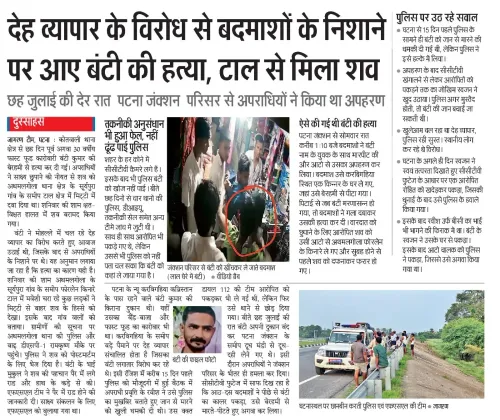
He posted two images alongside the text, apparently showing official police documents or communications.
The specific incident referenced in the post could not be independently verified from available public records at the time of reporting.
The ruling alliance and Bihar government had not publicly responded to Yadav's post at the time of publication.
The exchange is part of a pattern of RJD vs ruling coalition credibility battles over law and order that have defined Bihar politics since 2005.
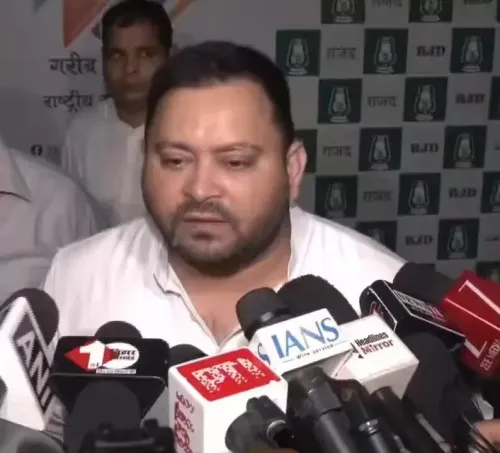
When a government's own police force appears to contradict its political leadership, the opposition does not let that moment pass quietly. On Friday, 20 November 2026, RJD leader and Leader of the Opposition Tejashwi Yadav posted sharply on X, citing what he described as Bihar Police's own statements as proof that the ruling party had been caught in a lie — and he did not mince words about it.
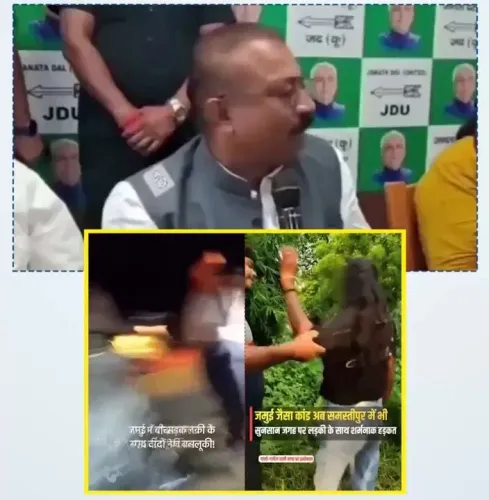
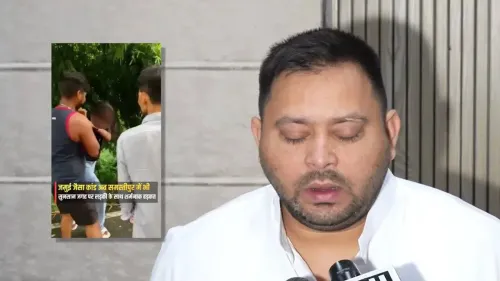
Posting in Hindi, Yadav wrote: 'Duniya ke sabse mahajhoothe aadmi ki party ki jhooth ki dhajjiyaan udaati unhi ki police. Gundoon ki party ka jhooth police ka khandan' — which translates as: 'The police of the world's biggest liar's party tearing apart that party's own lies. The lie of the goons' party, refuted by the police themselves.' He accompanied the post with two images, apparently showing official police statements or documents.
RJD's long-running credibility offensive against the Nitish government
RJD and the Nitish Kumar-led ruling alliance in Bihar have traded accusations over governance credibility since at least 2005, when RJD lost power in the state. The opposition's core strategic argument has consistently been that official pronouncements from Patna do not hold up against ground reality — and that law-enforcement data, crime figures, and police records tell a different story than ministerial press briefings.
Tejashwi Yadav has sharpened this line of attack on social media, regularly posting documents, data snippets, and official communications to contrast government claims with what he argues are the state's own records. The tactic is designed to make the critique land harder: it is not just the opposition calling the government out — it is the government's own machinery.
Why a police contradiction carries political weight in Bihar
Bihar Police as an institution carries particular symbolic weight in state politics. Law and order has been the central battleground between RJD and successive ruling coalitions — the ruling side routinely cites falling crime rates as a governance achievement, while the opposition contests those numbers just as routinely. When a police communication appears to diverge from an official political claim, it hands the opposition precisely the kind of internally-sourced ammunition that is hardest to dismiss.
The specific incident or statement that Yadav references in his post — and the images he attached — could not be independently verified from available public records as of this report. The Bihar government and the state ruling alliance had not issued a public response to Yadav's post at the time of publication.
In Bihar's intensely competitive political arena, where every news cycle is a dry run for the next electoral contest, a charge like this — rooted in an official agency's own paperwork — will be difficult to let sit unanswered for long.
Point of View
Which is far harder for the ruling side to discredit than a purely partisan accusation. It fits neatly into RJD's broader strategy of using official data and documents to frame the Nitish Kumar alliance as a regime that manufactures facts. The timing, absent a specific electoral trigger, suggests the RJD is working to keep the credibility narrative alive in the inter-election period. Whether Bihar Police issues a clarification or the ruling alliance responds will determine how much oxygen this particular charge gets.
NationPress
20 Nov 2026
Frequently Asked Questions
What did Tejashwi Yadav post about Bihar Police on 20 November 2026?
Tejashwi Yadav posted on X claiming that Bihar Police's own official statements contradict and expose lies made by the ruling party, sharing two images as supporting evidence.
What is Tejashwi Yadav's current political position in Bihar?
Tejashwi Yadav is the Leader of the Opposition in the Bihar Legislative Assembly and a senior leader of the Rashtriya Janata Dal (RJD). He previously served as Deputy Chief Minister of Bihar.
Has Bihar Police or the Bihar government responded to Tejashwi Yadav's post?
As of the time of publication on 20 November 2026, neither Bihar Police nor the state government had issued a public response to Yadav's post.
What is the history of RJD and the Bihar ruling alliance clashing over police and law and order?
Since RJD lost power in Bihar in 2005, the party has consistently challenged the Nitish Kumar-led ruling alliance's claims on law and order, often citing crime data and official records to dispute government narratives.
Why is it politically significant when police contradict a government's claims in Bihar?
Law and order is the central governance battleground in Bihar politics. When a police body appears to contradict the ruling party's own statements, it gives the opposition internally-sourced evidence that is harder to dismiss as partisan spin.