Congress has weak UP base, max 40 seats: NCP-SP
Synopsis
NCP-SP leader Majeed Memon has capped the Congress at 40 Uttar Pradesh seats, calling its state base weak as SP-Congress talks stall over a 26-seat offer. The remark follows reports that Rahul Gandhi sought over 180 seats, and comes after Congress MP Imran Masood said the party was not waiting for Akhilesh Yadav's handouts.
Key Takeaways
NCP-SP leader Majeed Memon said on 25 November that the Congress has a weak base in Uttar Pradesh and will get at most 40 seats .
The Samajwadi Party has offered the Congress 26 seats for the 2027 Assembly polls and released a first list of five candidates.
Earlier reports said Rahul Gandhi sought more than 180 seats , while Akhilesh Yadav was willing to give only 25-30 .
SP MP Shiv Pal Singh Patel said 26 seats were appropriate as the Congress won only 2 per cent of the vote last time.
Congress MP Imran Masood said the party was not waiting for Akhilesh Yadav's handouts; Saharanpur remains on the talks agenda.
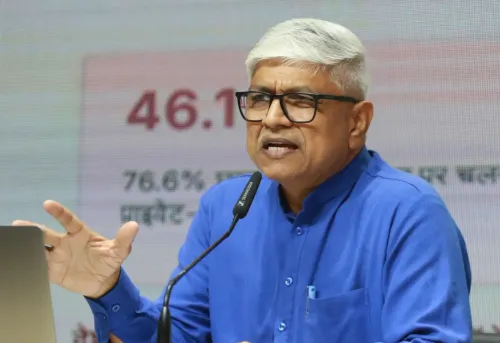
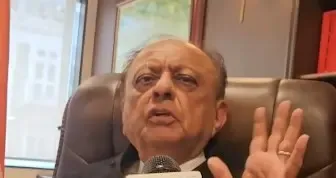
Nationalist Congress Party-Sharad Pawar (NCP-SP) leader and former Rajya Sabha MP Majeed Memon on Wednesday said the Congress has a “weak” base in Uttar Pradesh and will not get more than 40 seats to contest, even as heated seat-sharing talks continue with the Samajwadi Party (SP) ahead of the Assembly polls. Speaking in Mumbai on 25 November, Memon argued that the grand old party remains a small force in the state despite its national stature and the standing of Congress leader Rahul Gandhi.
The remarks come as the SP has offered the Congress 26 seats for the 2027 elections and has released its first list of five candidates, drawing a sharp response from Congress MP Imran Masood. The public gap between what the Congress is reported to have sought and what the SP is willing to cede now sits at the centre of the alliance negotiations.
Memon on Congress's Uttar Pradesh base
Memon said: “There are a large number of Assembly seats in Uttar Pradesh and the Congress is a small party as far as the state is concerned. It may be a national party in its own right, and Rahul Gandhi's standing is what it is, but as far as the Congress's base in Uttar Pradesh goes, it is very weak. They can only get a few seats, not many.”
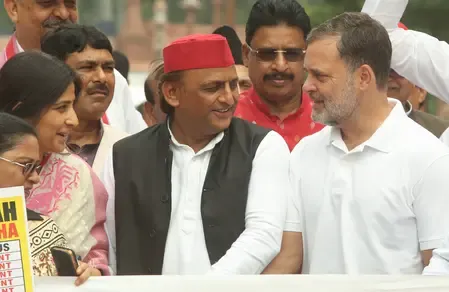
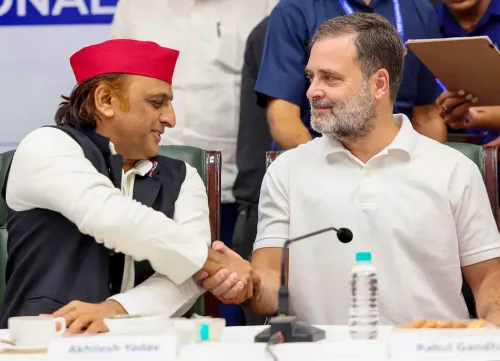
He added that, according to earlier reports, Gandhi had sought more than 180 seats, while SP president Akhilesh Yadav was willing to part with only 25-30. “There will be further deliberations in the subsequent round of talks but I don't think Congress will get more than 40 seats at the most,” the NCP-SP leader said.
Notably, Memon is not a Uttar Pradesh office-bearer; his assessment is being read as an ally's public signal that the Congress should scale down expectations. The distance between a reported claim of more than 180 constituencies and an offer in the mid-20s is the core of the present friction.
Seat-sharing numbers on the table
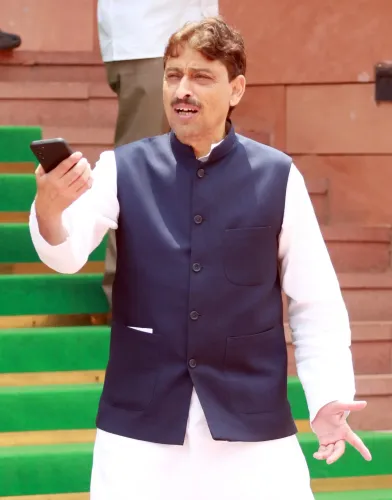
On Memon's telling, the arithmetic is blunt: the Congress, he said, can only get a few seats because its organisational footprint in Uttar Pradesh is limited. SP MP Shiv Pal Singh Patel separately defended the decision to offer 26 seats, arguing that handing more constituencies to the alliance partner could demoralise SP workers who have worked hard in their respective seats.
Patel also said the 26-seat offer was appropriate because the Congress secured only 2 per cent of the vote in the last elections. That figure, cited by the SP leader, is being used inside the alliance to justify a modest share rather than a large block of constituencies.
This comes amid a familiar opposition pattern in which the dominant state party resists ceding turf its cadre treats as its own. The SP's open defence of the 26-seat offer, and Memon's ceiling of 40, together sketch a narrow band within which further talks are expected to move.
SP's first list and the Saharanpur claim
The SP's first list of five candidates triggered a sharp reaction from Congress ranks. Memon played the development down. “It is not a very big deal. Even if the SP declares candidates on 50 seats, talks can still take place,” he said.
On the Congress staking a claim on the Saharanpur Assembly constituency, he said: “When discussions take place on the seats that the Congress wants to contest, Saharanpur will also be discussed.” He did not say whether the SP was prepared to leave Saharanpur for the Congress, only that the seat would figure in subsequent negotiations.
Congress backlash and alliance strain
Congress MP Imran Masood launched a sharp attack on the SP, saying the Congress was “not a party of beggars waiting for Akhilesh Yadav's handouts.” The language showed how far the disagreement has spilled into the open, even as both sides remain aligned to contest the 2027 Assembly elections as partners.
The sequence is now clear: an SP offer of 26 seats, a first candidate list, a Congress protest over both the numbers and specific seats such as Saharanpur, and then comments from an NCP-SP leader and SP figures urging realism. Memon's intervention adds a third-party voice from a party that shares the broader opposition space with both sides.
What happens next
Memon indicated that a subsequent round of talks is expected and that deliberations can continue even if the SP expands its candidate announcements. He maintained that, at most, the Congress would end up with around 40 seats — higher than the current 26-seat offer, but far below the more than 180 reportedly sought earlier.
Alliance managers will now have to reconcile cadre morale, as flagged by Patel, with the Congress's insistence that it is not a junior partner waiting for allocations. How Saharanpur and other claimed seats are treated in the next round will signal whether the gap is narrowing or hardening. Further talks, Memon suggested, remain possible even after more SP candidates are named.
Point of View
A sign that Akhilesh Yadav does not intend to gift the Congress a revival platform at his workers' expense. If this spat stays public, the 2027 opposition arithmetic in India's most electorally decisive state will be settled by humiliation, not negotiation.
NationPress
25 Nov 2026
Frequently Asked Questions
What did Majeed Memon say about the Congress in Uttar Pradesh?
NCP-SP leader Majeed Memon said the Congress has a weak base in Uttar Pradesh and will not get more than 40 seats to contest. He described the party as a small force in the state despite its national stature.
How many seats has the SP offered the Congress for the 2027 UP polls?
The Samajwadi Party has offered the Congress 26 seats for the 2027 Uttar Pradesh Assembly elections. SP MP Shiv Pal Singh Patel defended that figure, citing cadre morale and the Congress's 2 per cent vote share last time.
Why did Imran Masood criticise the Samajwadi Party?
Congress MP Imran Masood attacked the SP after it offered 26 seats and released a first list of five candidates. He said the Congress was not a party of beggars waiting for Akhilesh Yadav's handouts.
Did Rahul Gandhi seek 180 seats in Uttar Pradesh?
According to earlier reports cited by Majeed Memon, Rahul Gandhi had sought more than 180 seats, while Akhilesh Yadav was willing to give only 25-30. Memon said he does not expect the Congress to get more than 40 seats at most.
Will SP-Congress talks continue after the first candidate list?
Memon said the SP's first list of five candidates is not a very big deal and that talks can still take place even if the SP declares candidates on 50 seats. He added that Saharanpur will also be discussed when seat claims are taken up.