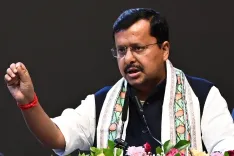
Congress Slams AAP: Kejriwal Ditched Core Values, Chadha Got Greedy
Synopsis
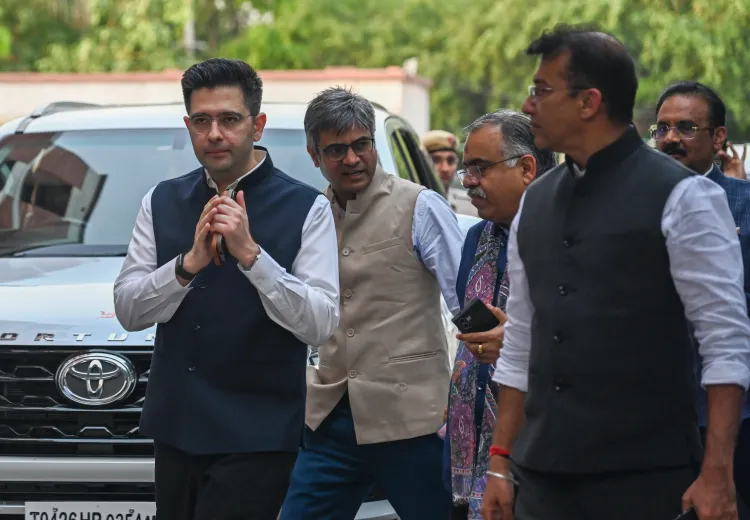
Seven AAP Rajya Sabha MPs, including Raghav Chadha, have merged with BJP — and Congress is calling it karma. With allegations of seat-buying, money politics, and a Punjab rift between Chadha and Kejriwal, AAP's ideological collapse is now impossible to ignore ahead of 2027.
Key Takeaways
Seven AAP Rajya Sabha MPs , including Raghav Chadha , merged with the BJP on or around April 25, 2025 , marking one of AAP's biggest internal fractures.
Congress leader Sandeep Dikshit alleged a personal rift between Raghav Chadha and Arvind Kejriwal in Punjab , and called Chadha "overly ambitious." Congress MLA Sukhpal Singh Khaira alleged the defecting MPs were wealthy corporate figures who had "purchased" Rajya Sabha seats from Kejriwal and moved to a better political deal.
Khaira predicted AAP will be "wiped off" from Indian politics after the 2027 Punjab Assembly elections , citing alleged atrocities on farmers and ties to mining mafias.
Congress leader Husain Dalwai broke ranks, calling defection "absolutely wrong" and warning that BJP uses agencies like the ED to pressure non-committed politicians.
The exodus also included key organisational figure Sandeep Pathak , signalling a broader leadership crisis within AAP beyond just parliamentary representation.
New Delhi, April 25: The Indian National Congress launched a sharp attack on the Aam Aadmi Party (AAP) and its founder Arvind Kejriwal on Saturday, asserting that the exodus of seven AAP Rajya Sabha MPs — including Raghav Chadha — to the Bharatiya Janata Party (BJP) was a direct consequence of Kejriwal's abandonment of the party's founding ideology. Congress leaders alleged that Chadha had grown "overly ambitious" and that AAP had long since surrendered its anti-corruption roots in favour of what they called "money politics."
Congress Leaders React: Ambition, Rift, and Frustration
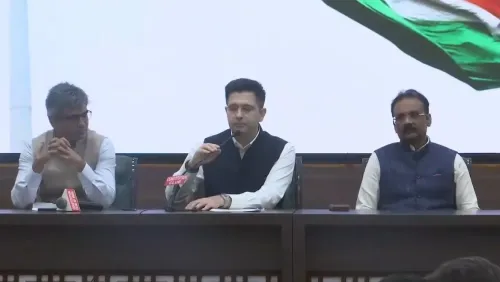
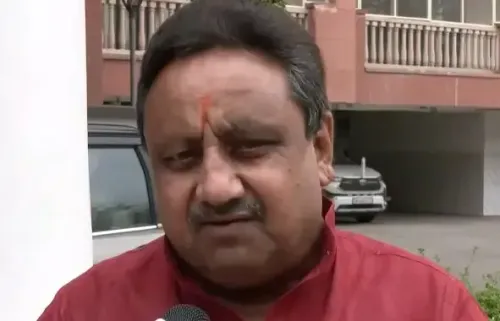
Congress leader Sandeep Dikshit, speaking to IANS, said he was not surprised by the political development. He noted that Chadha had been speaking in an unusual manner for some time, suggesting personal ambitions had overtaken party loyalty.
"Raghav Chadha has been speaking in a strange language for some days and perhaps has become overly ambitious. But from what I have heard, there was perhaps a rift between him and Kejriwal in Punjab," Dikshit said.
Dikshit further pointed out that since AAP does not operate on a defined ideological framework, ideological differences alone cannot explain the departures. He also referenced the exit of key organisational figures like Sandeep Pathak, suggesting a deeper internal crisis. "Maybe they are unable to see a future for the party, and secondly, they might have been left frustrated due to Kejriwal's actions," he added.
AAP's Punjab Politics Under Fire
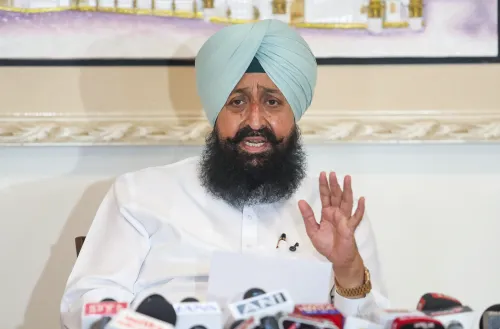
Congress MLA Sukhpal Singh Khaira described the developments as the inevitable "fate" of AAP, alleging that Arvind Kejriwal had long ago abandoned the original principles that once made the party a symbol of people's politics. "Now, Kejriwal and his party's complete focus is on the politics of money," Khaira told IANS.
Khaira went further, alleging that most of the defecting MPs were wealthy corporate figures who had no genuine connection to AAP's ideology. He claimed they had essentially "purchased" their Rajya Sabha seats from Kejriwal and, upon finding a more advantageous political arrangement, moved on. "They had purchased these Rajya Sabha seats from Kejriwal. And now that they have found a better shop, they have sold their MP seats in that shop," he said.
Khaira also accused AAP's Punjab government of running a "business-oriented" administration, alleging atrocities on farmers, ecological destruction through a mining mafia, and a free hand given to gangsters. He predicted that AAP would be "wiped off" from Indian politics after the 2027 Punjab Assembly elections.
A Dissenting Congress Voice: Defection Still Wrong
Not all Congress leaders took an entirely critical stance toward the departing MPs. Congress leader Husain Dalwai acknowledged that while AAP may have its shortcomings, leaving a party in such a manner is "absolutely wrong."
"The party that brought you this far should not be abandoned like this. The BJP intimidates, saying they will use the ED and take other actions. Those who are not committed are the ones who leave," Dalwai said.
On the possibility of AAP MLAs following the same path, Dalwai was cautiously optimistic about the party's survival. "They will certainly try, but a party does not end like this. If it is a party of ideology, it does not end. The party will remain and continue," he stated.
Deeper Context: AAP's Ideological Drift and Political Realignment
This development comes amid a broader pattern of political realignment in India, where smaller or weakened regional parties often see their MPs gravitating toward the ruling establishment — a phenomenon critics have long associated with alleged misuse of central investigative agencies. AAP, which was founded in 2012 on the back of the anti-corruption movement led by Anna Hazare, has faced repeated accusations of deviating from its founding values, particularly following Kejriwal's arrest in connection with the Delhi liquor policy case in 2024.
The exit of seven Rajya Sabha MPs in one move represents one of the most significant internal fractures AAP has faced since its meteoric rise. Notably, the party's stronghold in Punjab — its only remaining state government — now faces heightened scrutiny, with the 2027 Assembly elections serving as the next major electoral test. Political analysts suggest that if the BJP successfully absorbs more AAP legislators, it could significantly alter the power dynamics in Punjab ahead of that crucial vote.
With Congress itself eyeing a political revival in Punjab, the party's criticism of AAP is not without strategic calculation — positioning itself as the credible alternative to both BJP and a weakened AAP in the state.
Point of View
The 2027 elections could mark the party's existential reckoning. India's political landscape is watching whether ideology or institutional capture wins.
NationPress
16 Sept 2026
Frequently Asked Questions
Why did AAP Rajya Sabha MPs including Raghav Chadha join BJP?
Seven AAP Rajya Sabha MPs, including Raghav Chadha, merged with the BJP amid reported internal rifts and dissatisfaction with Arvind Kejriwal's leadership. Congress leaders alleged personal ambition, alleged financial arrangements for seats, and frustration over the party's direction as key reasons.
What did Congress say about Raghav Chadha joining BJP?
Congress leader Sandeep Dikshit said Raghav Chadha had become 'overly ambitious' and may have had a rift with Kejriwal over Punjab. Congress MLA Sukhpal Khaira alleged Chadha and others had purchased their Rajya Sabha seats and simply moved to a 'better shop' in BJP.
Has Arvind Kejriwal abandoned AAP's original ideology?
Congress leaders have strongly alleged so, with MLA Sukhpal Khaira stating that Kejriwal abandoned the party's founding anti-corruption principles long ago and shifted focus entirely to 'money politics.' AAP has not officially responded to these specific allegations.
What impact will AAP MPs joining BJP have on Punjab politics?
The defection could weaken AAP's political standing ahead of the crucial 2027 Punjab Assembly elections, where the party currently governs. Congress is positioning itself as the alternative, while BJP's absorption of AAP figures could shift voter dynamics significantly.
Did all Congress leaders oppose the AAP MPs' move to BJP?
No — Congress leader Husain Dalwai called the manner of leaving 'absolutely wrong,' regardless of AAP's shortcomings. He warned that BJP uses agencies like the ED to pressure politicians and said committed leaders do not abandon their parties under such pressure.