Congress to lose last Gujarat Rajya Sabha seat for first time since 1960
Synopsis
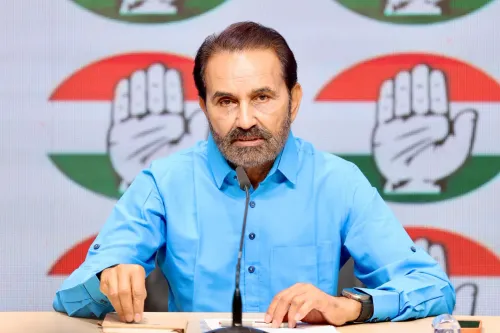
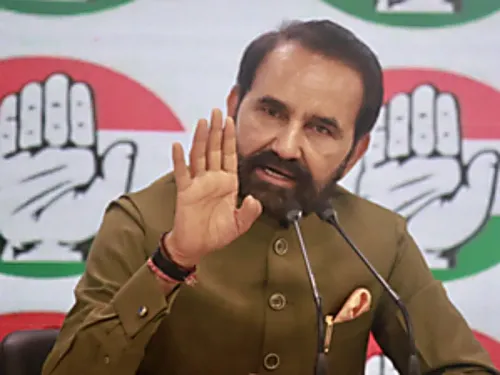
For the first time since Gujarat was carved out as a state in 1960, Congress has not fielded a single Rajya Sabha candidate — and with Shaktisinh Gohil's term ending 21 June, the party is days away from having zero Upper House representation from a state it once governed. The BJP is set to hold all 11 Gujarat Rajya Sabha seats, an outcome that encapsulates one of Indian politics' most dramatic regional collapses.
Key Takeaways
Congress fielded no candidate in the Gujarat Rajya Sabha election — the first time since the state's formation on 1 May 1960 .
The BJP is set to hold all 11 Rajya Sabha seats from Gujarat once its four nominees are elected.
Congress's last Gujarat Rajya Sabha member, Shaktisinh Gohil , exits on 21 June 2025 .
Congress holds only 12 MLAs in the 182-member Gujarat Assembly , far short of the 37 needed to win a Rajya Sabha seat.
Key defections include Hardik Patel (2022), Alpesh Thakor (2019), C.
Chavda (2024), and Arjun Modhwadia (March 2024).
Rahul Gandhi launched the Sangathan Srijan Abhiyan in Gujarat in April 2025 , but organisational revival remains uncertain.
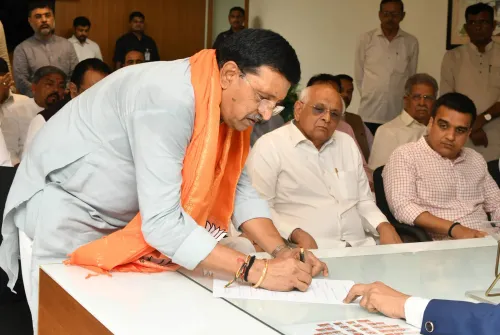
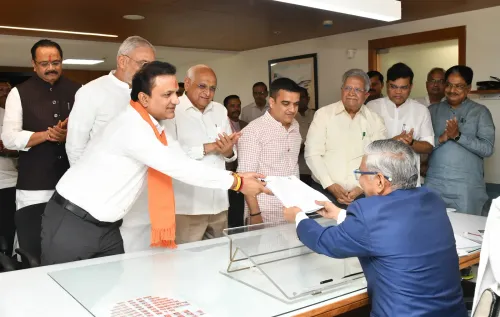
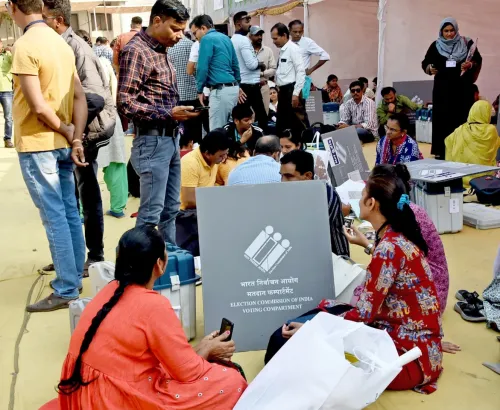
For the first time in Gujarat's 65-year history, the Indian National Congress has not fielded a candidate in a Rajya Sabha election from the state — a milestone that marks the near-total collapse of a party that once dominated Gujarat politics after Independence. The development came into sharp relief on Monday, 8 June, when Bharatiya Janata Party (BJP) nominees filed nomination papers at the Gujarat Legislative Assembly in Gandhinagar, unopposed by the principal opposition.
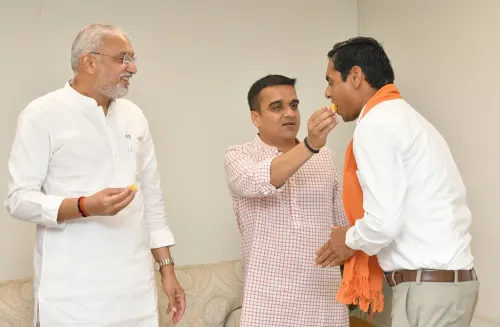
Once the BJP's four candidates are elected, the party will hold all 11 Rajya Sabha seats allotted to Gujarat, leaving Congress without a single representative from the state in the Upper House of Parliament.
The Arithmetic Behind the Absence
The immediate explanation is numerical. In the 182-member Gujarat Assembly, the BJP holds 161 seats. Congress has been reduced to 12 MLAs, with the Aam Aadmi Party (AAP) holding four seats and the Samajwadi Party one. A Rajya Sabha candidate requires the backing of roughly 37 MLAs to secure election — a threshold Congress cannot meet. The four BJP nominees — Raju Shukla, Mansinh Parmar, Mukesh Rathwa, and Jitendra Kanzariya — filed papers in the presence of Chief Minister Bhupendra Patel and BJP state president Jagdish Vishwakarma.
The Last Foothold: Shaktisinh Gohil's Expiring Term
Congress's last Rajya Sabha representative from Gujarat is Shaktisinh Gohil, a veteran leader from Bhavnagar district whose term expires on 21 June. Gohil entered the Upper House in 2020 and subsequently served as Gujarat Pradesh Congress Committee president. Once his term concludes, Congress will have no Rajya Sabha member elected from Gujarat — a situation without precedent since the state was formed on 1 May 1960.
A Decline Years in the Making
The erosion has been gradual but accelerating. Congress won 77 Assembly seats in 2017, briefly suggesting a revival, but collapsed to just 17 seats in the 2022 Assembly election — falling short of the 10 per cent threshold (19 seats) required for recognition as the principal opposition party. Subsequent defections reduced its tally further to 12 MLAs.
Among the most prominent departures were Hardik Patel, who joined the BJP in 2022; Alpesh Thakor, who crossed over in 2019; and C. J. Chavda, who resigned and joined the BJP in 2024. The most symbolically significant exit, however, was that of Arjun Modhwadia — a Congress veteran of nearly four decades who served as Leader of Opposition in the Gujarat Assembly and later headed the Gujarat Pradesh Congress Committee. In March 2024, Modhwadia resigned, joined the BJP, won a by-election from Porbandar, and is now the state's Forest and Environment Minister.
What Former and Current Leaders Say
Modhwadia offered a pointed diagnosis of Congress's condition after the nominations. 'Congress was first a movement, then it became a political party, and today it is gradually moving towards becoming an NGO,' he said. He also criticised what he described as excessive centralisation, arguing: 'No successful political party is run from Delhi. A political party functions from the district, block, and booth levels.' On the party's ongoing organisational drive, he added: 'Even its own leaders have categorised party workers into three groups: race horses, baarat horses, and langde horses. Can party workers ever be compared to horses?'
Congress, for its part, rejects the framing that its absence signals irrelevance. State party chief spokesperson Dr. Manish Doshi said the decision not to contest was deliberate and principled. 'The Congress did not field a candidate for the Rajya Sabha election from Gujarat because the party believes in democracy and principled decision-making. Since Congress does not currently have the required numerical strength in the Gujarat Assembly, it chose not to contest,' Doshi said. He raised a broader concern: 'With all Rajya Sabha MPs from Gujarat now belonging to the BJP, will Gujarat receive justice?' — citing pending demands on the Western Railway headquarters, the Salt Commissioner's relocation, and the Narmada project.
Rahul Gandhi's Rebuild and Its Limits
The setback arrives even as Congress has launched one of its most ambitious organisational overhauls in recent memory. In April 2025, Leader of the Opposition in the Lok Sabha Rahul Gandhi launched the 'Sangathan Srijan Abhiyan' in Gujarat — a grassroots restructuring effort targeting the district, block, and booth levels. The initiative is part of a broader post-electoral reform programme championed by the Congress leadership. Whether it can reverse the party's fortunes in Gujarat remains an open question. For now, the Rajya Sabha nominations offer the starkest illustration yet of a party that once shaped Gujarat's political identity preparing to watch an Upper House election without a candidate — and, from 21 June, without a single representative.
Point of View
A cadre hollowed out by centralisation, and an inability to hold together caste coalitions that were always transactional rather than ideological. The Sangathan Srijan Abhiyan is the right diagnosis delivered a decade too late. More telling is Modhwadia's observation — that the same internal critique has been circulating for 15 years without producing change. A party that cannot identify its capable leaders after 15 years of introspection is not in decline; it is in institutional failure. The real question for national Congress is whether Gujarat is an outlier or a preview.
NationPress
22 Sept 2026
Frequently Asked Questions
Why did Congress not field a candidate in the Gujarat Rajya Sabha election 2025?
Congress chose not to contest because it holds only 12 MLAs in the 182-member Gujarat Assembly, well below the roughly 37 votes needed to win a Rajya Sabha seat. The party described the decision as principled, saying it would not contest an election it could not win.
When does Congress lose its last Gujarat Rajya Sabha seat?
Congress's last Rajya Sabha member from Gujarat, Shaktisinh Gohil, completes his term on 21 June 2025. After that date, Congress will have no Upper House representative elected from Gujarat for the first time since the state was formed in 1960.
How many Rajya Sabha seats does the BJP hold in Gujarat?
Once the four BJP nominees — Raju Shukla, Mansinh Parmar, Mukesh Rathwa, and Jitendra Kanzariya — are elected, the BJP will hold all 11 Rajya Sabha seats allotted to Gujarat.
What caused Congress's decline in Gujarat?
Congress's decline stems from a combination of poor electoral performances, most notably falling from 77 Assembly seats in 2017 to just 17 in 2022, and a wave of high-profile defections to the BJP. Key leaders including Hardik Patel, Alpesh Thakor, C. J. Chavda, and Arjun Modhwadia all left the party between 2019 and 2024.
What is the Sangathan Srijan Abhiyan launched by Rahul Gandhi in Gujarat?
The Sangathan Srijan Abhiyan is a grassroots organisational rebuilding drive launched by Rahul Gandhi in Gujarat in April 2025. It aims to restructure the Congress party from the booth and block levels upward, as part of a broader post-electoral reform effort following repeated setbacks.