Congress pays tributes to Indira Gandhi on 41st death anniversary at Shakti Sthal
Synopsis
On Indira Gandhi's 41st death anniversary, Congress's top brass — Sonia Gandhi, Rahul Gandhi, and Mallikarjun Kharge — converged at Shakti Sthal to pay tribute. The gathering is as much a statement of political identity as it is a memorial act, with the party invoking her legacy of national unity and decisive leadership at a moment of its own ideological repositioning.
Key Takeaways
Congress held a tribute ceremony at Shakti Sthal, New Delhi on 31 October 2026 , marking Indira Gandhi's 41st death anniversary .
Attendees included Sonia Gandhi , Rahul Gandhi , Mallikarjun Kharge , and K.C.
The party described Indira Gandhi as a 'symbol of indomitable courage and willpower' in posts on X .
Indira Gandhi served as Prime Minister from 1966–1977 and 1980–1984 , and led India to victory in the 1971 India-Pakistan war .
National Integration Day is observed on her birth anniversary, 19 November , instituted by Congress in 1985 .
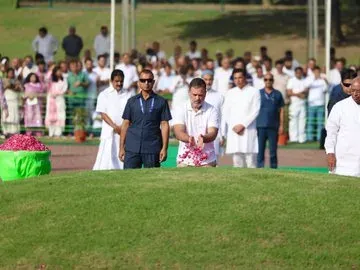
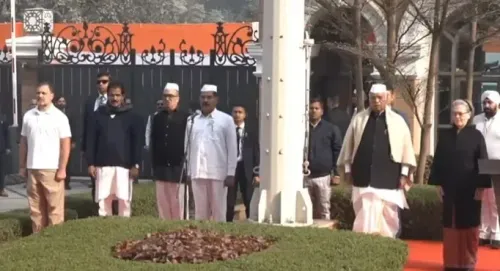
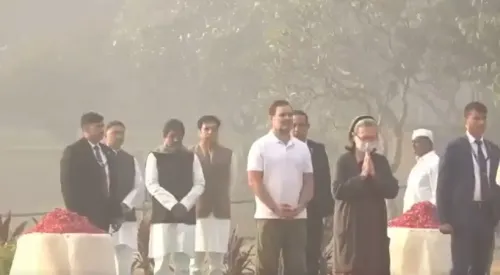
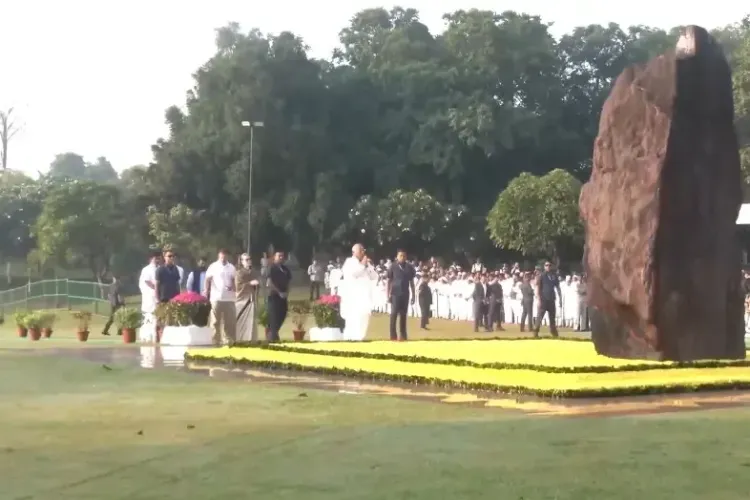
The Indian National Congress party paid floral tributes to former Prime Minister Indira Gandhi on her 41st death anniversary at Shakti Sthal in New Delhi on Saturday, 31 October 2026, honouring her legacy as a transformative leader who steered India through some of its most consequential moments.
Who Gathered at Shakti Sthal
Congress Parliamentary Party (CPP) Chairperson Sonia Gandhi, Leader of Opposition in the Lok Sabha Rahul Gandhi, Congress National President Mallikarjun Kharge, and Congress General Secretary K.C. Venugopal were among the senior party leaders who arrived at the memorial to lay floral tributes. The gathering reflected the party's continued emphasis on Indira Gandhi's central place in its political identity.
What the Party Said
Congress described Indira Gandhi as 'a symbol of indomitable courage and willpower' in posts on X marking the occasion. 'We remember her courage, strong leadership and lifelong commitment to India's unity, integrity and progress,' the party said in a subsequent post. The tributes were framed around her role as India's first woman Prime Minister and her decisive imprint on the country's national consciousness.
Indira Gandhi: Life and Legacy
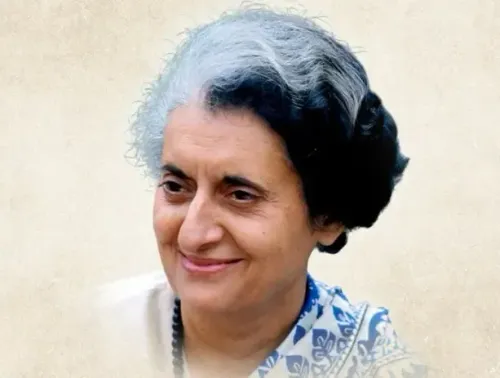
Indira Gandhi was born on 19 November 1917 in Allahabad, Uttar Pradesh, into a Kashmiri Pandit family. The daughter of India's first Prime Minister Jawaharlal Nehru and Kamala Nehru, she went on to serve as Prime Minister for two distinct tenures — 1966 to 1977 and again from 1980 until her assassination in 1984. Popularly called the 'Iron Lady of India,' she remains one of the most consequential figures in post-Independence Indian politics.
Among her most cited achievements is her decisive leadership during the 1971 India-Pakistan war, which culminated in the creation of Bangladesh. The victory, widely seen as a defining moment of Indian statecraft, cemented her reputation as a leader of strategic resolve. Her tenure also saw the nationalisation of banks, land reform legislation, and the controversial period of the Emergency from 1975 to 1977, which continues to invite debate among historians and political analysts.
National Integration Day and Its Significance
National Integration Day is observed annually on 19 November, coinciding with Gandhi's birth anniversary. The Congress instituted the observance in 1985 — a year after her assassination — to commemorate her efforts in promoting national unity. The day is seen as a platform to celebrate India's diversity and underscore the importance of collective national purpose. As India pursues its ambitions as a global power, the observance is frequently invoked to draw a line from Gandhi's governance philosophy to present-day nation-building discourse.
Political Context of the Tribute
The annual tribute at Shakti Sthal carries particular significance as Congress navigates a period of electoral rebuilding. By foregrounding Indira Gandhi's legacy — especially her leadership during the 1971 war and her emphasis on national unity — the party is reasserting a historical identity at a time when its contemporary positioning remains contested. Notably, this year's gathering brought together the party's three most prominent power centres: the Gandhi family, the organisational president, and the parliamentary leadership.
Point of View
But this year's gathering — with all three power nodes of the party present — signals an intentional projection of unity. Invoking Indira Gandhi's legacy of national integration and decisive leadership is a strategic choice for a party that has struggled to consolidate a coherent identity in the opposition. What is often underplayed in such tributes is the full complexity of her record: the 1971 victory sits alongside the Emergency, a period that drew lasting criticism from civil liberties advocates. A party genuinely engaging with her legacy would reckon with both — the selective invocation only of the heroic chapters limits the depth of the conversation India needs about power, accountability, and democratic norms.
NationPress
31 Oct 2026
Frequently Asked Questions
Why did Congress gather at Shakti Sthal on 31 October 2026?
Congress leaders gathered at Shakti Sthal in New Delhi on 31 October 2026 to pay floral tributes on Indira Gandhi's death anniversary. The former Prime Minister was assassinated on 31 October 1984, and the party marks the occasion annually at her memorial.
Who attended the tribute ceremony at Shakti Sthal?
The ceremony was attended by Congress Parliamentary Party Chairperson Sonia Gandhi, Leader of Opposition in the Lok Sabha Rahul Gandhi, Congress National President Mallikarjun Kharge, and General Secretary K.C. Venugopal, among other party leaders.
What is Shakti Sthal?
Shakti Sthal is the memorial in New Delhi dedicated to former Prime Minister Indira Gandhi, located along the Rajghat memorial complex. It serves as the site for her annual death anniversary tributes and other commemorative events.
What is National Integration Day and when is it observed?
National Integration Day is observed annually on 19 November, coinciding with Indira Gandhi's birth anniversary. It was instituted by the Indian National Congress in 1985, a year after her assassination, to honour her contributions to national unity and integrity.
What are Indira Gandhi's most noted achievements as Prime Minister?
Indira Gandhi served as Prime Minister from 1966 to 1977 and again from 1980 until her assassination in 1984. Her most frequently cited achievement is India's decisive victory in the 1971 India-Pakistan war, which led to the creation of Bangladesh; she also oversaw bank nationalisation and major land reform legislation during her tenure.