Rahul Gandhi, Kharge pay tribute to Nehru on 62nd death anniversary
Synopsis
On Nehru's 62nd death anniversary, Rahul Gandhi — his great-grandson — and Congress chief Kharge led tributes at Shanti Van. Kharge's X post quoted Nehru on equality and national unity, signalling how the Congress continues to deploy Nehru's ideological legacy as a live political instrument, not merely a historical footnote.
Key Takeaways
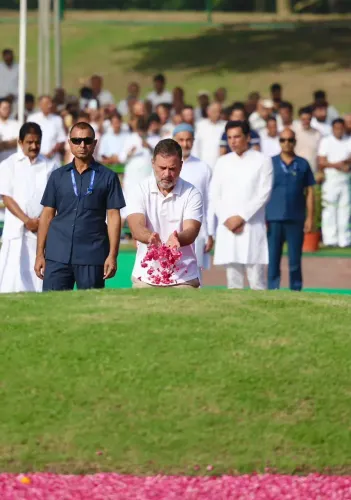
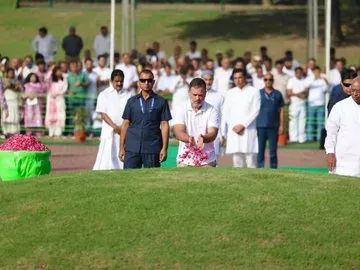
Rahul Gandhi and Mallikarjun Kharge paid floral tributes at Shanti Van , New Delhi, on 27 May 2025 — Nehru's 62nd death anniversary .
Kharge posted a tribute on X , quoting Nehru on national unity, equality, and the rejection of concentrated wealth.
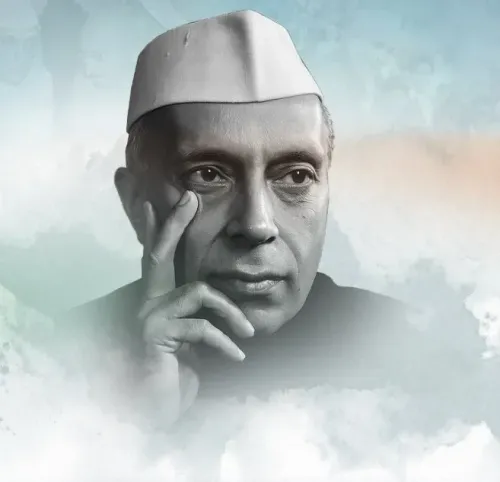
Jawaharlal Nehru was born on 14 November 1889 in Allahabad and died on 27 May 1964 after a heart attack.
Nehru was imprisoned nine times during the freedom struggle; his final imprisonment was at Ahmednagar Fort in 1942.
His birthday, 14 November , is observed as Children's Day across India.
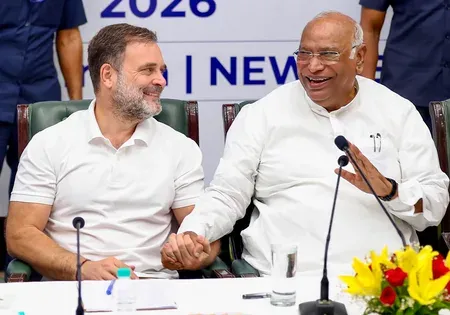
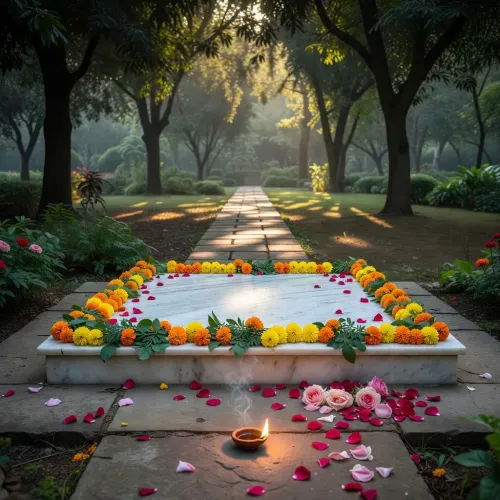
Rahul Gandhi and Congress National President Mallikarjun Kharge on Wednesday, 27 May paid floral tributes to India's first Prime Minister, Pandit Jawaharlal Nehru, on his 62nd death anniversary at his memorial, Shanti Van, in New Delhi. The occasion drew senior Congress leadership to the site as the party reaffirmed its ideological connect with Nehru's legacy.
Leaders at Shanti Van
Rahul Gandhi, Leader of Opposition in the Lok Sabha and Congress MP, offered floral tributes at Shanti Van — a gesture that carries added personal significance given that Nehru was his great-grandfather. Kharge also paid his respects at the memorial, joining other party members in marking the anniversary.
What Kharge Said
Kharge took to social media platform X to share a tribute, quoting Nehru directly: 'The defence of the nation, the progress of the nation, and the unity of the nation — these constitute the national duty of us all. We may follow different faiths, reside in different regions, or speak different languages; yet, no barrier should ever be allowed to rise between us... Every individual must be accorded an equal opportunity for advancement. We do not desire a nation where a privileged few amass immense wealth while the vast majority remains impoverished.'
In a separate statement, Kharge described Nehru as 'the architect who laid the strong foundations of modern India, an unwavering guardian of democratic values, a guiding light for scientific temper, industrial growth, and economic self-reliance.' He added that 'any vision of 21st-century India remains incomplete without acknowledging the invaluable contributions of Pandit Nehru.'
Goa Congress Tribute
The Goa Congress unit also posted on X, calling Nehru 'the true architect of modern India' and crediting him with building world-class institutions and strengthening India's scientific, industrial, and global standing. 'He placed India firmly on the world stage with dignity, confidence, and a voice that commanded global respect,' the post read.
Nehru's Life and Legacy
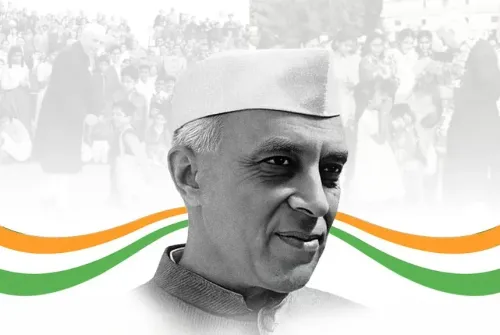
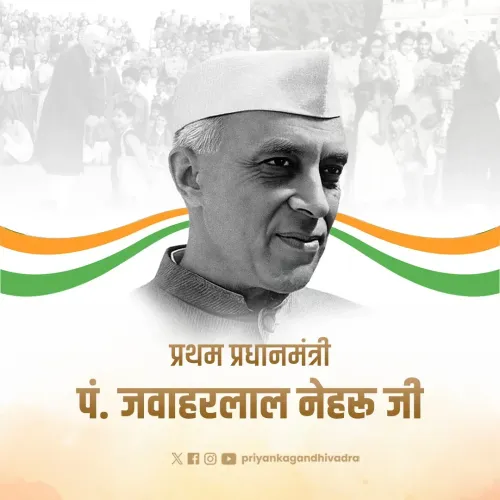
Jawaharlal Nehru was born in Allahabad on 14 November 1889. Educated at Harrow and Cambridge University, where he studied Natural Sciences, he later qualified as a barrister from the Inner Temple in London. He returned to India in 1912 and quickly entered active politics, attending the Bankipore session of the Congress that year as a delegate.
His first meeting with Mahatma Gandhi took place in 1916, and the encounter shaped his political outlook profoundly. He organised the first Kisan March in Pratapgarh, Uttar Pradesh, in 1920, and was imprisoned twice during the Non-Cooperation Movement between 1920 and 1922. By 1929, he had been elected President of the Lahore Session of the Indian National Congress, under which the party formally adopted complete independence as its goal.
Nehru was jailed nine times in total during the freedom struggle. His longest imprisonment was at Ahmednagar Fort following his arrest on 8 August 1942, a day after he moved the historic Quit India Resolution in Bombay. He completed his autobiography at Almora Jail on 14 February 1935.
After independence, Nehru served as India's first Prime Minister, shaping the country's democratic institutions, foreign policy of non-alignment, and industrial foundation. He passed away on 27 May 1964 following a heart attack; his death was officially announced in the Lok Sabha that day. His birthday, 14 November, is observed nationally as Children's Day in recognition of his affection for children.
Political Significance of the Occasion
The annual tribute at Shanti Van carries heightened political weight in the current climate, as the Congress party increasingly invokes Nehru's legacy of institutional democracy, secularism, and scientific temper as a counter-narrative in contemporary debates. Notably, this is the 62nd such anniversary — and the first since the party's improved showing in the 2024 general elections strengthened its position as the principal opposition force.
Point of View
For whom Nehru is both ancestor and ideological anchor. The Congress's choice of quotes this year — Nehru on wealth inequality and equal opportunity — is pointed: it maps a 1950s vision onto a 2025 political contest over economic justice. What is less examined is how Nehru's own record on civil liberties and press freedom sits alongside the party's current rhetoric on democratic values. A fuller reckoning with the legacy, rather than selective invocation, would lend the tribute greater credibility.
NationPress
24 Sept 2026
Frequently Asked Questions
Why is 27 May observed as Nehru's death anniversary?
Pandit Jawaharlal Nehru, India's first Prime Minister, passed away on 27 May 1964 following a heart attack. His death was officially announced in the Lok Sabha that day, and the date has since been marked annually by the Congress party and others with tributes at his memorial, Shanti Van, in New Delhi.
Who attended the tribute at Shanti Van on 27 May 2025?
Leader of Opposition Rahul Gandhi and Congress National President Mallikarjun Kharge both paid floral tributes at Shanti Van on 27 May 2025. The Goa Congress unit also posted a tribute on social media platform X.
What did Mallikarjun Kharge say about Nehru?
Kharge described Nehru as 'the architect who laid the strong foundations of modern India' and said any vision of 21st-century India remains incomplete without acknowledging Nehru's contributions. He also shared a Nehru quote emphasising national unity, equal opportunity, and opposition to concentrated wealth.
What is the significance of Nehru's birthday, 14 November?
14 November, Nehru's birthday, is celebrated across India as Children's Day, reflecting his well-documented affection for children. The observance has been a national tradition since shortly after his death in 1964.
How many times was Jawaharlal Nehru imprisoned during the freedom struggle?
Nehru was imprisoned nine times in total during India's freedom struggle. His longest and final imprisonment was at Ahmednagar Fort, where he was held after being arrested on 8 August 1942, a day after moving the Quit India Resolution in Bombay.