Should Congress Push for Digitally Identifiable Voter Lists and Aadhaar Card Verification?
Synopsis
In a bold move to enhance electoral integrity, the Congress party demands digitally identifiable voter lists and the inclusion of Aadhaar card verification following the Election Commission's announcement of a critical revision campaign in Madhya Pradesh. This initiative aims to modernize the electoral process and eliminate discrepancies in voter registration, ensuring a more transparent and reliable electoral system.
Key Takeaways
Digitally readable voter lists are essential for accurate electoral records.
Aadhaar card verification could enhance identity confirmation.
The campaign aims to ensure free and fair elections .
Efforts will focus on eliminating duplicate entries and correcting voter details.
Voter demographics show a significant youth presence.
Bhopal, Oct 28 (NationPress) The Congress party is advocating for the establishment of digitally readable voter lists along with the compulsory verification of Aadhaar cards. This call comes right after the Election Commission of India announced a Special Intensive Revision initiative aimed at revamping the electoral rolls in Madhya Pradesh.
Launched on Monday, this campaign represents a crucial advancement in modernizing the state's voter registry.
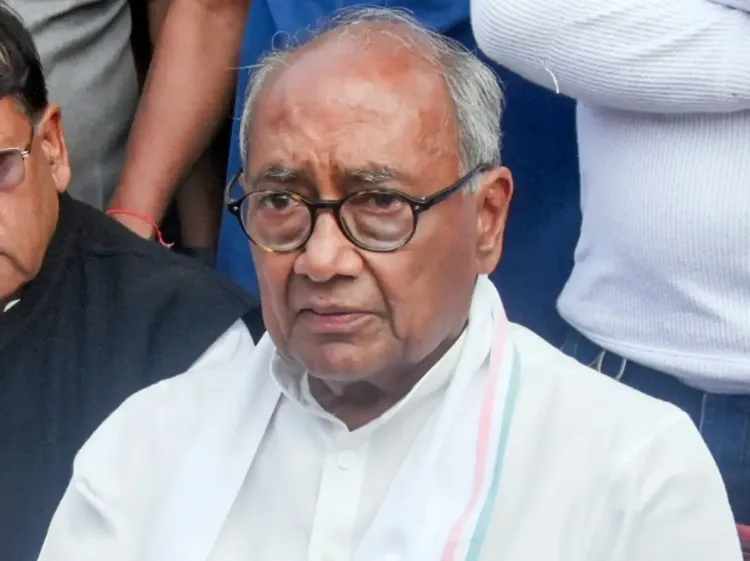
While addressing the media in Guna, former Chief Minister Digvijaya Singh voiced his apprehension regarding the absence of digitally identifiable (machine-readable) voter lists from the Election Commission.
He reiterated the demand that the voter lists provided to political representatives should be in a machine-readable format. This would aid in digital cross-verification and help identify duplicate entries across different constituencies.
Moreover, Singh criticized the Election Commission for not including Aadhaar cards among the acceptable forms of identity verification, asserting that it is both a fundamental right of eligible citizens and a key responsibility of the Commission.
Despite directives from the Supreme Court, the Commission has left Aadhaar out of the 11 documents that Booth Level Officers (BLOs) are instructed to verify during their outreach efforts.
According to the Commission's guidelines, all voters in the state will undergo a new identity verification process. The voter lists at every polling station across all 230 assembly constituencies will be carefully examined. This extensive operation aims to achieve several objectives: registering new voters who have recently turned 18, eliminating names of deceased voters, those who have moved away, and addressing duplicate entries.
Additionally, any inaccuracies in names, addresses, and other personal information will be rectified to ensure the voter lists accurately represent the current population.
To carry out this task, BLOs will conduct door-to-door visits in both urban and rural settings, distributing forms, collecting data, and validating identities with officially recognized documents.
Madhya Pradesh currently has about 57.4 million registered voters. This extensive revision effort involves 65,014 polling booths, 119,940 BLOs, 762 assistant returning officers, and 55 district election officers collaborating together.
The gender distribution of the voter base shows approximately 29.2 million men and 27.8 million women. A demographic analysis indicates a youthful inclination within certain age groups.
The state has 1,119,161 voters aged 18 to 19, 13,388,424 in the 20-29 age bracket, 15,144,883 between 30 and 39, 11,528,407 aged 40 to 49, 8,131,709 in the 50-59 category, 4,815,858 aged 60 to 69, 2,211,505 between 70 and 79, and 752,420 citizens aged 80 and above.
The second phase of this revision has already sparked political discussions. The Election Commission, characterizing this initiative as a special and intensive endeavor, has reaffirmed its commitment to maintaining the integrity and dependability of the voter registry, thereby establishing a robust foundation for free and fair elections in the future.
Point of View
I believe this initiative by the Congress party highlights the essential need for transparency within our electoral system. While the drive for digitally identifiable voter lists and Aadhaar card verification is commendable, it is crucial that such measures are implemented thoughtfully to ensure they serve the public interest and enhance the democratic process across the nation.
NationPress
9 Sept 2026
Frequently Asked Questions
Why is the Congress party advocating for digitally identifiable voter lists?
The Congress party believes that digitally identifiable voter lists will facilitate better verification processes and help eliminate duplicate entries, ensuring a more accurate voter registry.
What is the role of Aadhaar cards in voter verification?
Aadhaar cards are proposed to be included as a form of identity verification to ensure that every eligible citizen is registered, enhancing the integrity of the electoral process.
What are the key objectives of the Special Intensive Revision campaign?
The campaign aims to register new voters, remove deceased individuals, eliminate duplicate entries, and correct inaccuracies in voter information.
How will the voter verification process be conducted?
Booth Level Officers (BLOs) will conduct door-to-door visits, collecting data and verifying identities using officially recognized documents.
What is the current voter population in Madhya Pradesh?
Madhya Pradesh currently has approximately 57.4 million registered voters, with a diverse age and gender demographic.