Another Highly Pathogenic Avian Influenza Case at Duck Farm in South Korea?

Synopsis
In a troubling development, South Korea has reported another case of highly pathogenic avian influenza at a duck farm, now totaling 16 cases this season. Authorities are implementing stringent quarantine measures and enhancing monitoring efforts to prevent further outbreaks while agricultural import prices continue to surge due to currency fluctuations.
Key Takeaways
New avian influenza case confirmed in South Jeolla Province.
Quarantine measures and monitoring efforts are underway.
Imported agricultural prices are rising due to currency depreciation.
Intensive inspections will begin for local duck farms.
Global agricultural markets are affected by fluctuating exchange rates.
Seoul, December 21 (NationPress) - South Korea has confirmed a new case of highly pathogenic avian influenza at a duck farm located in South Jeolla Province, representing the 16th instance of such an infection at poultry establishments this season.
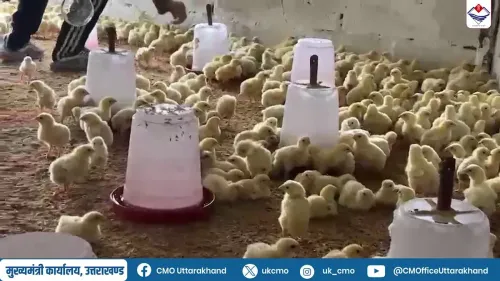
The recent outbreak was identified at a farm in Naju, which is situated 285 kilometers south of Seoul and raises approximately 23,000 ducks, according to the central disaster management headquarters, as reported by Yonhap News Agency.
Officials have announced the implementation of special quarantine protocols at the affected site and are enhancing surveillance of associated facilities and transportation to curb further transmission of the illness.
Additionally, a thorough inspection will take place at over 200 duck farms in the vicinity, commencing Monday.
In related news, the prices of key imported agricultural products in South Korea have soared significantly in recent years, surpassing global price hikes due to the depreciation of the South Korean won against the US dollar, as indicated by data released on Sunday.
The Bank of Korea reported that the import price index for coffee reached 307.12 in November when measured in US dollars and 379.71 in Korean won, with the year 2020 serving as the base year at 100.
This data illustrates that while global coffee prices have tripled over the past five years, they have quadrupled when expressed in Korean won.
Furthermore, the cost of imported beef has surged by 30% during the same period in US dollar terms but has increased by 60.6% when measured in Korean won.
Over the same timeframe, imported pork prices have risen by 5.5% in US dollars but have jumped 30.5% in Korean won.
The Korean won traded around the 1,100-won level in 2021, deteriorating to the upper 1,200-won range in 2022. In the fourth quarter of 2025, the average exchange rate was reported at 1,450 won per dollar.
Interestingly, the cost of imported fresh seafood declined by 11% in US dollar terms but rose by 10% in Korean won, further emphasizing the effects of currency depreciation.
Point of View
It is imperative to remain vigilant about the ongoing avian influenza outbreaks in South Korea. The government’s proactive measures are essential in safeguarding public health and the poultry industry. Continuous monitoring and inspections are crucial in preventing further infections and ensuring the safety of agricultural products.
NationPress
18 Oct 2026
Frequently Asked Questions
What is avian influenza?
Avian influenza, also known as bird flu, is a viral infection that predominantly affects birds but can also infect humans and other animals.
How does avian influenza spread?
The disease can spread through direct contact with infected birds, contaminated surfaces, and through airborne transmission in some cases.
What are the symptoms of avian influenza in birds?
Symptoms may include sudden death, a drop in egg production, respiratory distress, and neurological signs.
What precautions are taken during an outbreak?
Authorities implement quarantine measures, increase surveillance of farms, and conduct thorough inspections to control the spread.
How does currency fluctuation affect agricultural prices?
When a country's currency weakens against the dollar, the cost of importing goods increases, leading to higher prices for local consumers.