Congress slams Modi's G7 Summit performance, cites energy and trade failures
Synopsis
Congress has delivered one of its sharpest foreign policy attacks yet, accusing Modi of returning from the G7 Summit in France empty-handed — no OFAC waiver on Russian oil, no favourable trade terms, and a conspicuous silence when Trump claimed credit for post-Operation Sindoor ceasefire. The critique cuts at a core BJP claim: that Modi's personal diplomacy delivers strategic results.
Key Takeaways
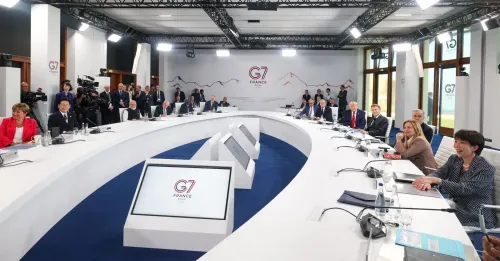
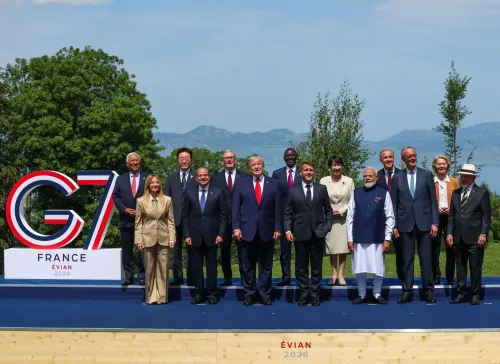
Congress on 18 June accused PM Modi of failing to defend India's interests at the G7 Summit in Évian, France .
Former Union Minister Salman Khurshid alleged Modi could not secure an OFAC sanctions waiver for continued Russian oil imports despite his rapport with President Trump .
Congress said Modi's silence over Trump's claim of engineering a post- Operation Sindoor ceasefire undermines India's principle of rejecting third-party mediation.
The party also alleged failure to secure favourable trade deal terms and accused the government of allowing India's geopolitical isolation to deepen.
The government has not yet formally responded to the Congress statement.
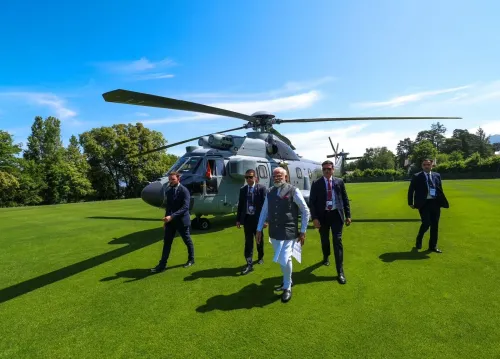
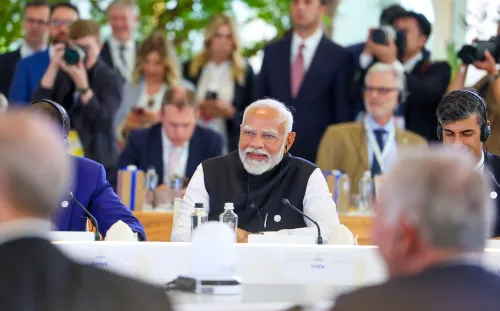
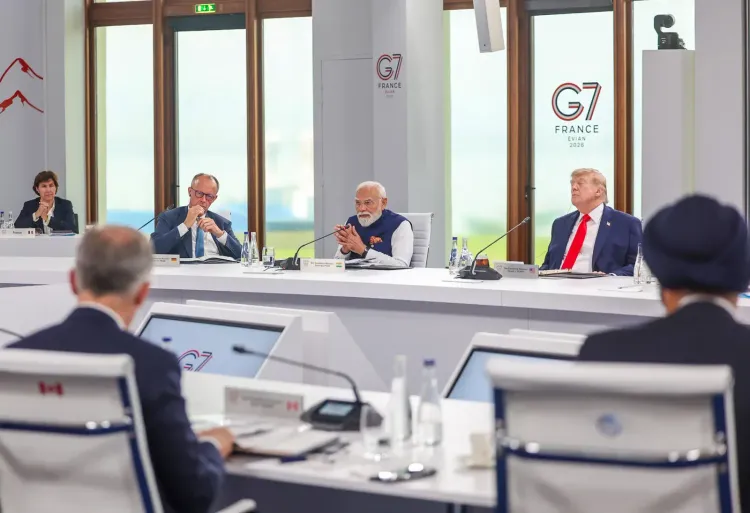
The Indian National Congress on Thursday, 18 June sharply criticised Prime Minister Narendra Modi's participation at the G7 Summit in Évian, France, alleging that he failed to defend India's energy sovereignty, secure trade concessions, or push back against US President Donald Trump's claims about post-Operation Sindoor diplomacy. The party's broadside, delivered through a formal statement, signals an intensifying opposition offensive over the government's foreign policy posture.
Key Allegations Against PM Modi
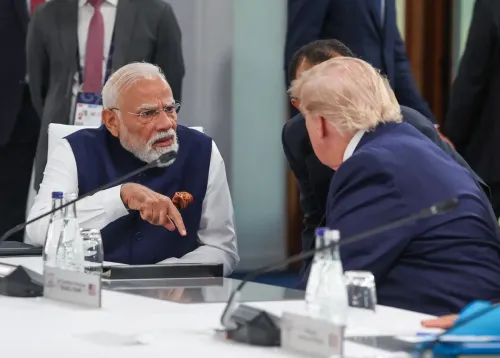
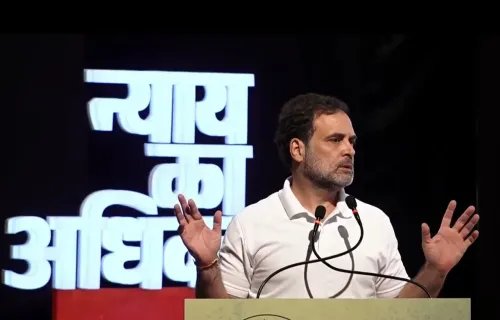
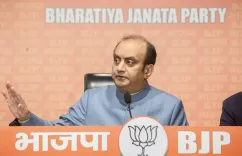
Congress Foreign Affairs Department head and former Union Minister Salman Khurshid said the summit 'exposed a troubling gap between rhetoric and results.' He alleged that despite claims of a close personal rapport with President Trump, Modi was unable to secure an OFAC sanctions waiver that would have permitted continued Indian imports of Russian oil at discounted rates.
'In his meetings with President Trump, and belying claims of a close friendship with the President, PM Modi was unable either to defend India's energy sovereignty by drawing a firm line with the President or to secure an OFAC sanctions waiver that would have allowed continued imports of Russian oil,' Khurshid said in his statement.
Energy Sovereignty and Fuel Prices
Khurshid framed the G7 outcome as the latest in a pattern of concessions on energy policy, pointing to the earlier curtailment of oil imports from Iran and Venezuela and the subsequent scaling back of purchases from Russia. He argued these decisions have left Indian consumers exposed to higher fuel and commodity prices, with no compensating diplomatic gain secured at Évian.
This is not the first time the Congress has raised the energy sovereignty argument — the party has consistently challenged the government's willingness to align with Western pressure on Russian oil, particularly after the Ukraine conflict drove global energy prices higher.
Silence on Trump's Operation Sindoor Claim
One of the sharper accusations in Khurshid's statement concerned what he described as Modi's 'inexplicable silence' after Trump publicly implied he had engineered a ceasefire following Operation Sindoor. Khurshid said such silence 'can only be interpreted as either tacit acceptance of the President's assertion or an unwillingness to publicly challenge it,' adding that it undermines India's longstanding principle of rejecting third-party mediation in bilateral disputes.
The Congress also raised concern over Trump's public offer of 'support' to Modi, which Khurshid said carried 'profound implications' — potentially signalling either domestic political interference or a security commitment, neither of which had been officially clarified by the government.
Trade Deal and Geopolitical Isolation
Khurshid further alleged that Modi failed to secure favourable terms in ongoing trade negotiations while India continues to face what the party described as 'economic warfare.' He also accused the government of doing nothing to address India's 'increasing geopolitical isolation,' and claimed that Pakistan had outmanoeuvred India in the evolving US-Iran ceasefire dynamics.
'PM Modi must not prioritise his friendship with the US President over Indian interests… India's interests must remain paramount, irrespective of who occupies the White House or South Block,' Khurshid said.
What Comes Next
The government has not yet issued a formal response to the Congress statement. With Parliament's monsoon session approaching, the G7 fallout — particularly the questions around energy policy and the Operation Sindoor narrative — is likely to become a focal point of opposition pressure in the weeks ahead.
Point of View
Since the party must explain what alternative supply architecture it would have pursued. The more potent charge is the silence on Trump's Operation Sindoor claim — that touches a foreign policy red line that transcends party lines. If the government does not clarify its position on third-party mediation, the ambiguity will compound with each subsequent Trump statement. The trade deal criticism is well-founded in principle, but without specifics on what terms were on the table, it risks sounding like process critique rather than policy alternative.
NationPress
18 Sept 2026
Frequently Asked Questions
What did Congress say about PM Modi's G7 Summit performance?
Congress accused PM Modi of failing to defend India's energy sovereignty, secure an OFAC sanctions waiver for Russian oil imports, or obtain favourable trade terms at the G7 Summit in Évian, France on 18 June. Former Union Minister Salman Khurshid delivered the critique through a formal party statement.
What is the OFAC sanctions waiver that Congress mentioned?
An OFAC (Office of Foreign Assets Control) sanctions waiver would have allowed India to continue importing Russian oil without facing US financial penalties. Congress alleged that Modi failed to secure such a waiver during his bilateral meetings with President Trump at the G7.
Why did Congress criticise Modi's silence on Trump's Operation Sindoor claim?
Congress said Modi stayed silent after President Trump publicly implied he had brokered a ceasefire following Operation Sindoor. The party argued this silence amounts to tacit acceptance of a third-party mediation claim, which contradicts India's longstanding foreign policy of rejecting outside intervention in bilateral matters.
What did Congress say about India's energy policy at the G7?
Congress alleged that the government has repeatedly compromised India's energy sovereignty — first by ending discounted oil purchases from Iran and Venezuela, then by scaling back Russian oil imports. It argued these decisions have raised fuel and consumer prices for ordinary Indians with no compensating diplomatic gain.
Has the government responded to Congress's G7 criticism?
As of the time of reporting, the government had not issued a formal response to the Congress statement. The allegations are expected to resurface as a point of opposition pressure when Parliament's monsoon session convenes.