Court must decide if Umar Khalid is anti-national, not BJP: KPCC chief Hariprasad
Synopsis
KPCC chief B.K. Hariprasad has escalated a charged political row by insisting that only a court — not the BJP — can brand Umar Khalid anti-national, while the BJP calls for legal action against him. With Khalid in custody since September 2020 and no concluded trial, the case has become a proxy battle over UAPA, constitutional rights, and the limits of political speech in India.
Key Takeaways
Hariprasad defended calling Umar Khalid a 'nationalist' on 17 September 2026 , saying only courts can determine who is anti-national.
Hariprasad alleged Khalid has been in prison for six years without a completed trial — though court records show an FIR was filed in March 2020 and chargesheets in September 2020 and 2023 .
Khalid has been in custody since September 2020 over alleged conspiracy in the 2020 Northeast Delhi riots .
Ashwathnarayan accused Hariprasad of supporting anti-national forces; former CM Basavaraj Bommai demanded legal action.
The dispute was triggered by a controversy over a proposed documentary screening at NLSIU, Bengaluru .
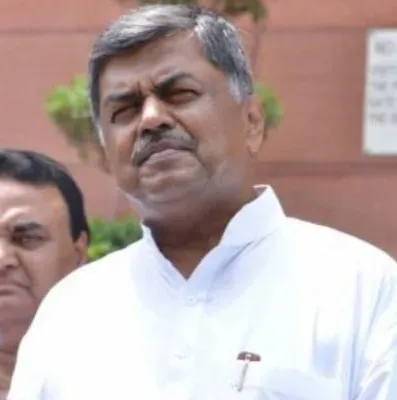
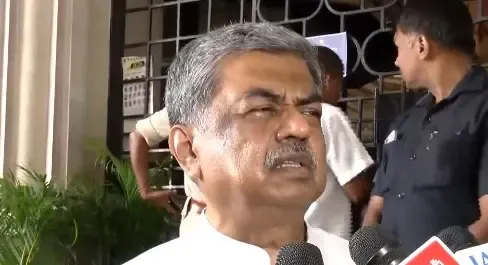
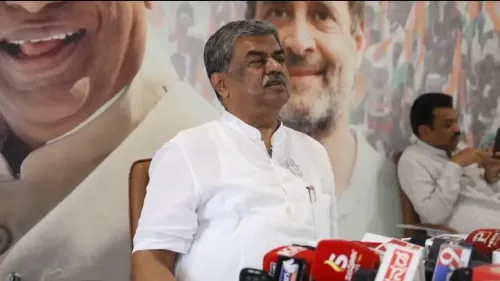
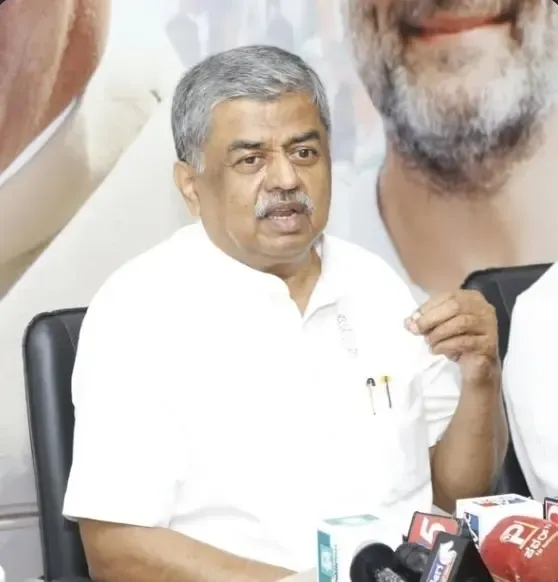
Karnataka Pradesh Congress Committee (KPCC) President B.K. Hariprasad on Thursday, 17 September defended his earlier remark calling jailed activist Umar Khalid a 'nationalist', arguing that whether any individual is anti-national is a matter for the judiciary — not for political parties — to determine. The statement was made during a media interaction in Bengaluru and sharpened the ongoing political dispute between the Congress and the Bharatiya Janata Party (BJP) in Karnataka over Khalid's prolonged detention and the meaning of nationalism itself.
What Hariprasad Said
Hariprasad framed his defence in constitutional terms, drawing a clear line between political labelling and judicial determination. 'Those who oppose the national tricolour, oppose the Constitution and refuse to sing the national anthem are anti-national. Umar Khalid has not spoken against the Constitution or the country,' he said.
He further asserted that Khalid had been imprisoned for six years without a completed trial and that the activist had demonstrated respect for the judiciary. 'Umar Khalid does not need a certificate from the BJP. J.P. Nadda, junior Yediyurappa (State BJP President B.Y. Vijayendra) or anybody else in the BJP are not judges. The BJP office is not a court. If Umar Khalid is anti-national or a betrayer, it has to be decided by the court,' Hariprasad stated.
He also alleged that the Congress condemned what he called the 'prolonged and unethical detention' of an Indian citizen, maintaining that no political certification was needed to establish Khalid's nationality.
Background to the Controversy
The remarks were triggered by a dispute over a proposed documentary screening at the National Law School of India University (NLSIU) in Bengaluru, during which Hariprasad had earlier described Khalid as a nationalist — a comment that drew sharp criticism from the BJP.
Khalid has been in custody since September 2020 in connection with an alleged conspiracy related to the 2020 Northeast Delhi riots. The prosecution has accused him of involvement in a broader conspiracy, allegations that remain before the courts. Court records in the Northeast Delhi riots conspiracy case indicate that an FIR was registered in March 2020, a main chargesheet was filed in September 2020, and supplementary chargesheets were subsequently filed, including in 2023.
Hariprasad, however, alleged that the progress of the case had stalled and claimed that authorities had failed to file an FIR or chargesheet — a claim that appears to contradict the court record cited above. NationPress notes this discrepancy and attributes Hariprasad's assertion to him directly.
BJP Pushes Back
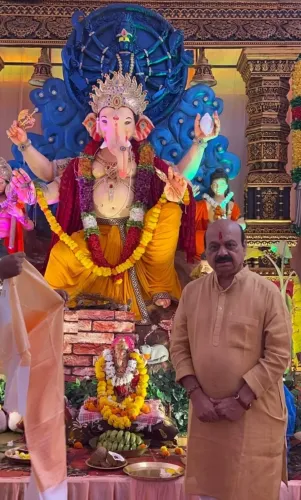
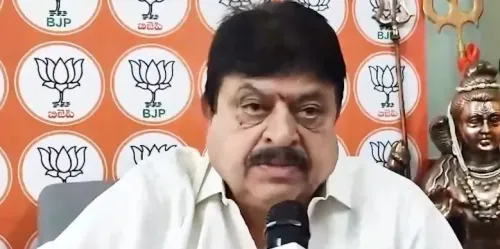
The BJP responded swiftly. BJP MLA and former Deputy Chief Minister C.N. Ashwathnarayan accused Hariprasad of repeatedly making controversial remarks and alleged that he was lending support to forces the BJP has characterised as anti-national. Former Karnataka Chief Minister and BJP MP Basavaraj Bommai went further, calling for legal action against Hariprasad over his statements.
The Broader Political Context
This is not an isolated exchange. The Khalid case has become a recurring flashpoint in national politics, with the Congress consistently questioning the length of his pre-trial detention under the Unlawful Activities (Prevention) Act (UAPA) and the BJP defending the prosecution's position. Karnataka's ruling Congress government has a political incentive to press the due-process argument ahead of upcoming electoral cycles.
Notably, Hariprasad's remarks signal a deliberate attempt by the Congress to shift the debate from 'is Khalid anti-national?' to 'who has the authority to make that determination?' — a framing rooted in constitutional doctrine but carrying clear political intent. The controversy is likely to persist as long as the case remains in judicial limbo.
Point of View
Not political, verdict — is constitutionally sound, but it doubles as a calculated political move in a state Congress is determined to keep. The more substantive question his remarks sidestep is whether the UAPA's bail provisions, which have kept Khalid in custody for over five years pre-trial, themselves pass constitutional muster — a point the Congress has avoided pressing in Parliament. The BJP's demand for legal action against Hariprasad risks reinforcing the very argument he is making: that political actors are substituting judicial authority with partisan decree. This exchange matters beyond Karnataka because Khalid's case is a barometer for how far India's political mainstream is willing to go in interrogating UAPA's application.
NationPress
17 Sept 2026
Frequently Asked Questions
Why did B.K. Hariprasad defend calling Umar Khalid a nationalist?
Hariprasad argued that labelling someone anti-national is a judicial matter, not a political one, and that Khalid had not spoken against the Constitution or the country. He was defending a remark he had made earlier during a controversy over a proposed documentary screening at NLSIU in Bengaluru.
Who is Umar Khalid and why is he in custody?
Umar Khalid is a former Jawaharlal Nehru University student and activist who has been in custody since September 2020 in connection with an alleged conspiracy related to the 2020 Northeast Delhi riots. He is charged under the Unlawful Activities (Prevention) Act (UAPA); the case remains before the courts.
What did the BJP say in response to Hariprasad's remarks?
BJP MLA and former Deputy Chief Minister C.N. Ashwathnarayan accused Hariprasad of repeatedly making controversial remarks and supporting forces the BJP regards as anti-national. Former Karnataka Chief Minister and BJP MP Basavaraj Bommai called for legal action against Hariprasad.
What is the status of the case against Umar Khalid in court?
Court records in the Northeast Delhi riots conspiracy case show that an FIR was registered in March 2020, a main chargesheet was filed in September 2020, and supplementary chargesheets were filed subsequently, including in 2023. The trial proceedings are ongoing.
What triggered this controversy in Karnataka?
The controversy arose from a dispute over a proposed documentary screening at the National Law School of India University (NLSIU) in Bengaluru, during which Hariprasad described Khalid as a nationalist — a remark that drew immediate criticism from the BJP and led to the broader political exchange.