How Did Cyclone Montha Cause Destruction in Coastal Andhra?
Synopsis
Cyclone Montha made landfall in Andhra Pradesh, causing destruction and loss of life. With heavy rains and strong winds, the cyclone led to significant flooding, uprooted trees, and damaged homes and crops. As the government mobilizes relief efforts, the focus remains on recovery and assessing the extensive damage across the region.
Key Takeaways
Cyclone Montha made landfall in Andhra Pradesh, causing severe damage.
Two fatalities were reported due to the cyclone.
Emergency teams are actively working to clear roads and restore power.
Approximately 75,000 people were relocated to relief camps.
The government is providing financial assistance and essential supplies to affected families.
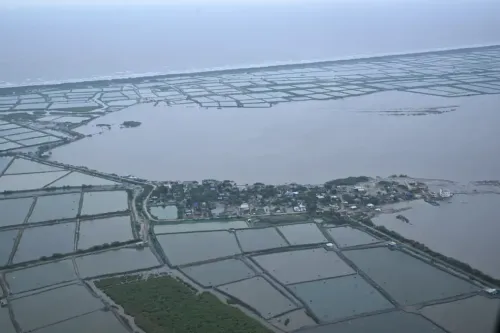
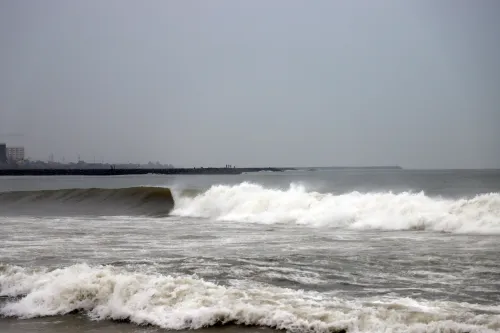
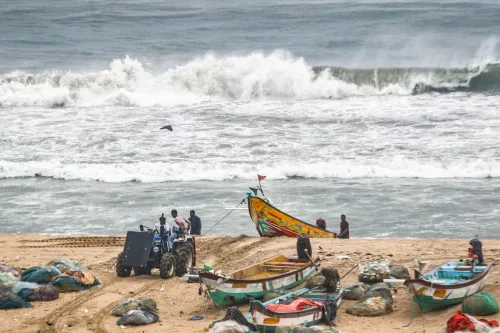
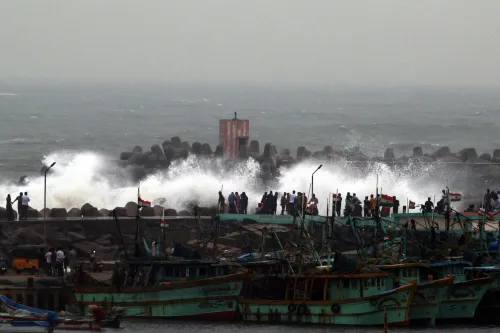
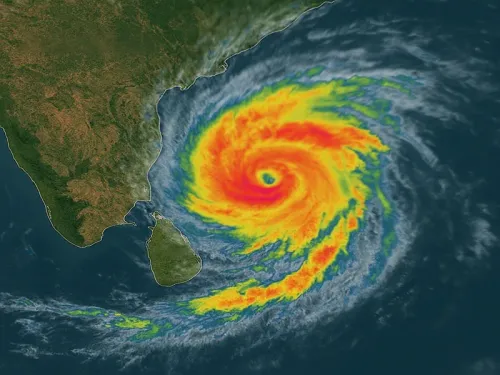
Amaravati, Oct 29 (NationPress) The powerful cyclone Montha made landfall on the Andhra Pradesh coastline early Wednesday, resulting in significant destruction, including the loss of two lives. The cyclone caused extensive damage to homes, agricultural land, and electricity infrastructure, severely disrupting road traffic.
Strong gusts uprooted trees and utility poles, while torrential rainfall led to widespread flooding in lakes and rivers.
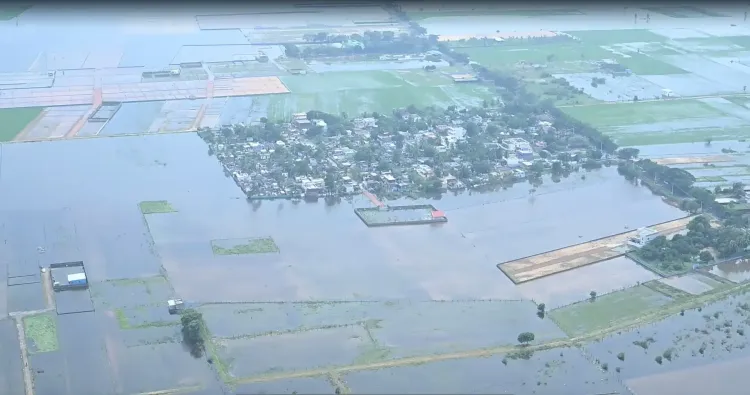
Many villages and urban areas in coastal districts faced inundation. Several roads became impassable due to flooding, leading to traffic disruptions.
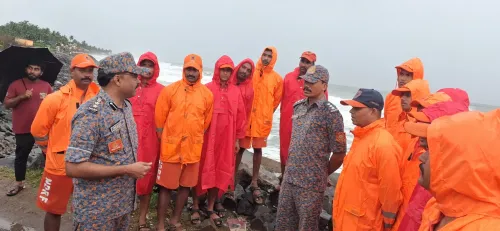
Emergency response teams from the NDRF and SDRF were deployed to clear fallen trees and poles, while efforts to restore electricity in affected regions were underway.
As per the India Meteorological Department (IMD), the cyclone made landfall near Narsapur, situated between Machilipatnam and Kakinada. It subsequently weakened into a cyclone and then into a deep depression. The system is expected to progress north-northwestward through Andhra Pradesh, adjacent Telangana, and southern Chhattisgarh, diminishing into a depression within the next six hours.
The cyclone inflicted severe agricultural damage in coastal districts, with Agriculture Minister K. Atchenaidu reporting that over 20,000 acres of paddy crops in Konaseema district suffered damage.
Vijayawada experienced heavy rainfall, leading to flooding in low-lying areas. Roads in the city were submerged, causing traffic disruptions, and water entered homes in various neighborhoods.
In Bapatla district, police successfully rescued 20 individuals trapped by floodwaters at a local shrine.
A portion of National Highway 16 (Kolkata-Chennai) was submerged near Timmapuram in Palnadu district, halting traffic.
Authorities closed the Srisailam ghat road due to landslides, with police halting vehicles heading toward Srisailam at Pedda Dornala in Prakasam district. JCB machines were deployed to clear the road.
Floodwaters entered two tunnels of the Veligonda project in Prakasam district, prompting the safe evacuation of 200 workers.
In Nandyal district, the Kundu River and local streams overflowed, flooding low-lying regions. Water flowing over the bridge at Boyarevula halted traffic.
Meanwhile, Chief Minister N. Chandrababu Naidu visited cyclone-stricken Udelarevu in Konaseema district to assess damage and discuss recovery efforts with officials and public representatives.
He conducted an aerial survey of the cyclone-impacted areas and previously held a teleconference with district collectors and officials to strategize on flood recovery measures.
He asserted that effective management of the cyclone's aftermath over the next four to five days could reduce damage.
The government announced plans to provide financial aid of Rs 1,000 to individuals who sought shelter in relief camps. Families with more than three members will receive a maximum of Rs 3,000.
Officials stated that funds would be distributed to individuals as they return home.
Approximately 75,000 individuals were relocated to relief camps in the affected districts.
Previously, the government authorized district collectors in affected areas to distribute essential supplies, free of charge, to families in relief camps and fishermen whose livelihoods were disrupted.
Each affected family will receive 25 kg of rice (50 kg for weavers and fishermen), one kg of red gram dal, one liter of palm oil, one kg of onions, one kg of potatoes, and one kg of sugar.
Point of View
It is essential to report on the catastrophic effects of Cyclone Montha in Andhra Pradesh with clarity and compassion. The loss of life and property is deeply saddening, and the government's proactive measures to assist those affected demonstrate a commitment to recovery. It is crucial to remain informed and supportive as communities rebuild from this devastating event.
NationPress
3 Oct 2026
Frequently Asked Questions
What areas were most affected by Cyclone Montha?
The coastal districts of Andhra Pradesh, particularly Konaseema, Vijayawada, and Bapatla, experienced significant damage due to Cyclone Montha.
How many people were displaced due to the cyclone?
Approximately 75,000 individuals were relocated to relief camps in the affected districts.
What assistance is the government providing to cyclone victims?
The government announced financial aid of Rs 1,000 to individuals in relief camps, with families receiving additional assistance based on size.
What measures are being taken for recovery?
Emergency response teams are clearing debris, restoring electricity, and distributing essential supplies to affected families.
How has agriculture been impacted by the cyclone?
The cyclone caused extensive damage to crops, with reports indicating over 20,000 acres of paddy crops were affected in Konaseema district alone.