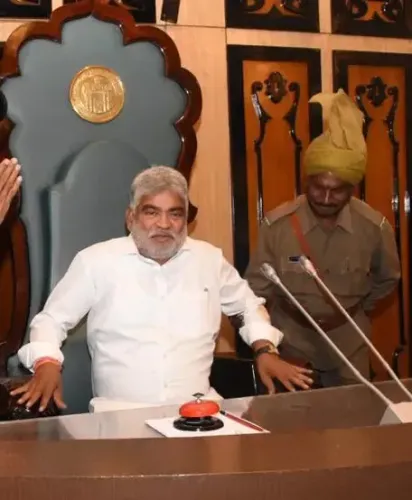
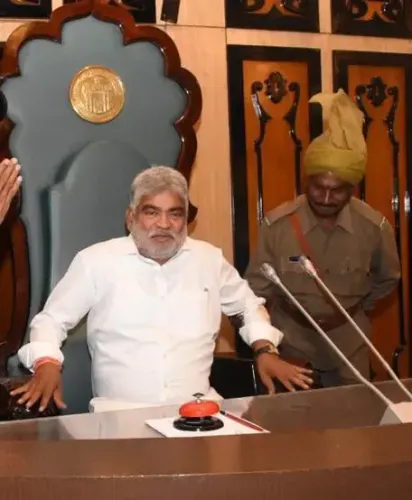
Danam Nagender moves SC against Telangana HC disqualification order

Synopsis
A BRS MLA who contested the 2024 Lok Sabha election on a Congress ticket has been disqualified retroactively from 23 April 2024 — and the High Court refused to send it back to a Speaker it found had misread the law. The Supreme Court will now decide whether crossing the aisle at the ballot box triggers the Tenth Schedule, with the Khairatabad seat hanging in the balance.
Key Takeaways
Danam Nagender moved the Supreme Court on 21 September 2026 , challenging his disqualification as a Telangana MLA under the anti-defection law.
The Telangana High Court on 18 September 2026 declared him disqualified with effect from 23 April 2024 for contesting the Lok Sabha election as a Congress candidate despite being a BRS MLA.
The Khairatabad Assembly seat has been declared vacant; the Election Commission of India has been notified.
The High Court held that Assembly Speaker Gaddam Prasad Kumar misread the anti-defection law by dismissing the disqualification petitions on 11 March 2026 .
The Supreme Court, before CJI Surya Kant , agreed to list the SLP for hearing on Wednesday .
The bench rejected arguments that BRS's silence or Nagender's subsequent conduct could erase the disqualification.
Former Telangana MLA Danam Nagender on Monday, 21 September 2026, moved the Supreme Court challenging the Telangana High Court's order disqualifying him as a member of the Telangana Legislative Assembly under the anti-defection law. Senior advocate Mukul Rohatgi, appearing for Nagender, made an urgent mention before Chief Justice of India (CJI) Surya Kant, who agreed to list the Special Leave Petition (SLP) for hearing on Wednesday.
Background: The High Court Ruling
A Division Bench of the Telangana High Court, comprising Chief Justice Aparesh Kumar Singh and Justice G.M. Mohiuddin, delivered its judgment on 18 September 2026, holding that Nagender stood disqualified under paragraph 2(1)(a) of the Tenth Schedule read with Article 191(2) of the Constitution. The court found that Nagender, elected as a Bharat Rashtra Samithi (BRS) MLA from the Khairatabad assembly constituency in December 2023, had filed his nomination on 23 April 2024 as a Congress candidate for the Secunderabad Lok Sabha constituency and actively campaigned against the BRS candidate — a clear act of defection, the bench ruled.
What the High Court Decided
The High Court set aside the order of Assembly Speaker Gaddam Prasad Kumar, who on 11 March 2026 had dismissed petitions seeking Nagender's disqualification. The bench declared Nagender disqualified with effect from 23 April 2024 — the date he filed his Lok Sabha nomination as a Congress candidate. It further declared the Khairatabad Assembly seat vacant and directed that copies of its order be sent to the Secretary of the Telangana Legislative Assembly and the Election Commission of India (ECI).
The bench observed: 'The present case is one where the disqualification proceedings have lingered on for more than one-and-half-years and by now almost the three year term of the Legislative Assembly has expired.' Noting this prolonged pendency, it declined to remand the matter to the Speaker for a fresh decision.
The Legal Arguments and the Speaker's Error
The disqualification petitions had originally been filed by BJP Legislature Party leader Alleti Maheshwar Reddy and BRS MLA Padi Kaushik Reddy, challenging the Speaker's decision to dismiss them. The High Court found that the Speaker had misread the anti-defection law by treating conduct outside the House — specifically, contesting a Lok Sabha election on a rival party's ticket — as falling outside the scope of his powers under the Tenth Schedule.
Nagender's legal team had argued that the absence of disciplinary action by the BRS and his subsequent conduct could negate any disqualification. The High Court rejected this squarely, holding that 'silence of the party in question or lack of internal disciplinary action by it and the subsequent conduct of the member would not efface the disqualification' incurred by contesting as a Congress candidate.
Significance of the Anti-Defection Ruling
This case adds to a growing body of judgments that extend the reach of the Tenth Schedule beyond floor votes and formal resignations to include extra-legislative acts of party disloyalty, such as contesting elections on a rival ticket. The High Court explicitly invoked the constitutional objective of the Tenth Schedule — to 'curb the evil of political defections motivated by lure of office or other similar considerations which endanger the foundations of our democracy.'
The Supreme Court's decision to list Nagender's SLP means the disqualification and the vacancy of the Khairatabad seat will remain under judicial scrutiny. How the apex court rules could have wider implications for sitting legislators who switch electoral allegiances without formally resigning from their parent party.
What Happens Next
The SLP is scheduled to be heard on Wednesday before the Supreme Court. Until the apex court grants any stay, the Telangana High Court's order declaring the Khairatabad seat vacant stands. The Election Commission of India will likely await the Supreme Court's directions before initiating any by-election process for the seat.
Point of View
Period. The more troubling finding is about the Speaker: the court effectively said he did not just decide wrongly, he misread the law. That raises the recurring question of whether Speakers, as creatures of the majority, can be trusted as neutral arbiters of anti-defection cases at all. The Supreme Court's handling of Nagender's SLP — specifically whether it grants a stay and on what grounds — will either reinforce or dilute this principle ahead of a wave of state elections where seat-switching is endemic.
NationPress
21 Sept 2026
Frequently Asked Questions
Why was Danam Nagender disqualified as a Telangana MLA?
Nagender was disqualified because he filed his nomination on 23 April 2024 as a Congress candidate for the Secunderabad Lok Sabha seat despite having been elected in December 2023 as a BRS MLA from Khairatabad. The Telangana High Court held this constituted defection under paragraph 2(1)(a) of the Tenth Schedule of the Constitution.
What did the Telangana High Court order?
The Division Bench of the Telangana High Court, in its 18 September 2026 judgment, declared Nagender disqualified from 23 April 2024, set aside the Speaker's order dismissing the disqualification petitions, declared the Khairatabad Assembly seat vacant, and directed notification to the Election Commission of India.
What is the Supreme Court expected to do next?
The Supreme Court agreed to list Nagender's Special Leave Petition for hearing on Wednesday, 24 September 2026. The apex court may grant or decline a stay on the High Court's order, which would determine whether the Khairatabad by-election process can proceed.
Why did the High Court not send the case back to the Speaker?
The High Court declined to remand the matter to the Speaker, noting that the disqualification proceedings had already lingered for more than one and a half years and that almost three years of the assembly's term had elapsed. It also found the Speaker had misread the anti-defection law in his original dismissal order.
Who had filed the original disqualification petitions against Nagender?
The petitions were filed by BJP Legislature Party leader Alleti Maheshwar Reddy and BRS MLA Padi Kaushik Reddy, challenging Assembly Speaker Gaddam Prasad Kumar's 11 March 2026 order that had dismissed the disqualification bids against Nagender.