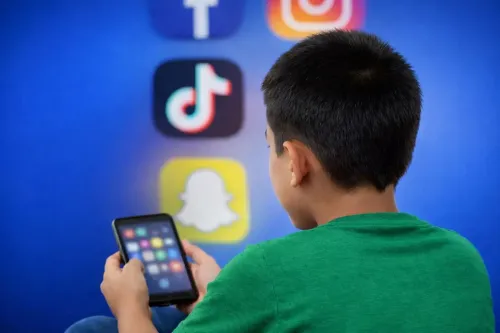
Navigating Social Media: Experts Discuss Potential Youth Ban
Synopsis
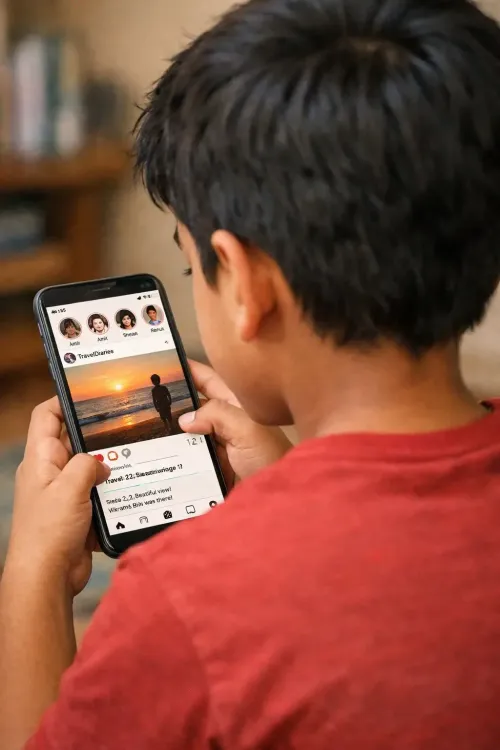
Experts are weighing in on the potential ban of social media for children under 16 in India, highlighting the urgent need for regulation to protect young minds from online dangers. This discussion reflects growing concerns over the effects of unrestricted access to social platforms.
Key Takeaways
Debate on social media ban: Some Indian states are considering a ban on social media for under-16s.
Expert insights: Experts emphasize the need for regulation to protect young users.
Parental guidance: Open conversations about social media usage are crucial.
Online risks: Children face threats like cyberbullying and unhealthy comparisons.
Legislation importance: New laws can help create safer online spaces for youth.
New Delhi, Feb 27 (NationPress) A significant debate is unfolding concerning reports that several Indian states are contemplating a ban on social media for individuals under the age of 16, primarily due to the adverse effects it poses on youthful minds.
In Australia, legislation has been enacted to safeguard young individuals from features that promote excessive screen time and expose them to content detrimental to their health and well-being, as stated by the country's Office For Youth. They emphasize that, “Restricting access aims to shield young people from these dangers.”
Prior to implementing this law, discussions were held with both children and parents.
“Parents noted that while some children will inevitably discover ways around it, many will not. The effectiveness hinges on how the legislation is introduced, monitored, and how society and individual households manage it,” elaborated Jatin Gandhi, a journalist and expert in Trust and Safety.
Trust and Safety practices encompass policies, protocols, and teams focused on ensuring users feel secure and can trust online platforms and services.
“This is certainly a positive move. Until now, social media has been unchecked and caused turmoil in our society. As internet access expands rapidly and the quality of online platforms deteriorates due to profit prioritization, the need for regulation is crucial,” he emphasized.
“Permitting social media to infiltrate our lives is perilous; hence, starting with a ban, followed by regulation, and then gradual easing is advisable,” he added.
Joydeep Dasgupta, a specialist in fact-checking and media literacy, expressed cautious optimism.
“It is imperative to impose restrictions on social media usage among children. The internet serves as a valuable tool for academic purposes, and access should be granted under the guidance of parents or teachers,” he asserted.
However, “Once children are introduced to smartphones, they inevitably enter the digital realm—and consequently, social media. In today’s interconnected world, expecting them to completely avoid smartphones or social platforms is neither practical nor feasible,” cautioned Sambit Pal, Director at the International School of Broadcasting and Journalism at MIT Art, Design and Technology University in Pune.
“What we require instead is parental supervision and open dialogues regarding wise social media usage. This approach is far more effective in minimizing its adverse impacts,” he concurred.
Dasgupta noted, “Unfettered social media access can expose children to online threats such as cyberbullying, predators, and unhealthy comparisons. Parents should provide guidance and set screen time limitations to ensure a balance between digital learning and face-to-face interactions.”
Gandhi referenced Cory Doctorow to illustrate the predictable decline in online platform quality as they prioritize profit over user experience. He described the three phases of social media, where initially, it is viewed as beneficial to society, empowering individuals, and democratizing communication, “thus creating value for users and forming a community,” he detailed.
“The platform captures attention and subsequently sells it to advertisers. In the final phase, it fails to deliver value to either the end user or the partnered business, focusing solely on profit accumulation,” Gandhi added.
Doctorow is renowned for advocating for more liberal copyright laws and for his contributions as a blogger and journalist, addressing topics like digital rights management and post-scarcity economics.
“Previously, users searched for content; now, content seeks them out,” stressed Gandhi, highlighting how platforms track user preferences and target accordingly.
“Social media companies must enforce stricter age-verification measures and guarantee that the content accessible to minors is suitable and safe,” Dr. Pal further emphasized.
“Without proper guidance and protections, children plunge into an endless sea of content without knowing how to navigate it. If even adults often find it challenging to stay afloat, we cannot expect children to manage it independently,” he warned.
Point of View
The safety and well-being of children must take precedence, demanding a balanced approach that integrates regulation with education.
NationPress
20 Sept 2026
Frequently Asked Questions
Why are some states considering a social media ban for children?
States are considering a ban due to concerns about the adverse effects of social media on the mental health and well-being of children under 16.
What measures are being proposed to protect young users online?
Proposed measures include implementing stricter age-verification systems and ensuring that the content available to minors is appropriate and safe.
How can parents help manage their children's social media usage?
Parents can guide their children by setting screen time limits, fostering open discussions about digital safety, and monitoring their online interactions.
What are the risks associated with unrestricted social media access for children?
Unrestricted access can lead to exposure to cyberbullying, online predators, and unhealthy social comparisons, posing significant risks to children's mental health.
What role does legislation play in regulating social media for minors?
Legislation aims to create a framework for protecting minors from harmful online content and ensuring a safer digital environment.