Delhi CM Rekha Gupta Activates Heat Wave Action Plan 2026 Citywide

Synopsis
Delhi CM Rekha Gupta has activated the Heat Wave Action Plan 2026 citywide, deploying 330 ambulances round-the-clock, opening cool rooms in 30+ hospitals, stocking 339 health centres, and installing 11,000+ cooling points — one of India's most expansive urban heat emergency responses yet, as temperatures threaten to cross 44°C.
Key Takeaways
CM Rekha Gupta announced full activation of Delhi's Heat Wave Action Plan 2026 on Sunday, April 26 via social media platform X .
339 health centres across Delhi have been stocked with essential medicines and medical supplies for heat-related illnesses.
Over 30 hospitals have opened dedicated 'cool rooms' to provide immediate relief to heatstroke and heat stress patients.
330 ambulances are deployed on 24x7 duty , with medical staff trained specifically in heatstroke management.
More than 11,000 cooling points and 1,900+ water coolers are being installed across the city, prioritising outdoor workers and transit hubs.
A 'Water Bell System' has been introduced in Delhi schools to ensure students hydrate regularly during peak summer months.
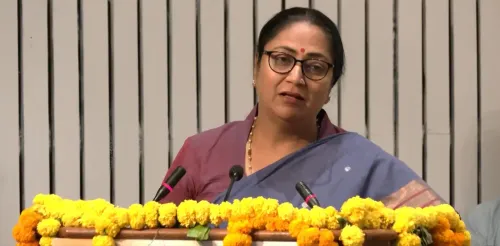
New Delhi, April 26: Delhi Chief Minister Rekha Gupta on Sunday announced the full ground-level activation of the Heat Wave Action Plan 2026, mobilising health infrastructure, emergency services, and public hydration networks across the capital as temperatures continue to surge in the season's most intense spell yet. The announcement underscores the city administration's recognition that extreme heat is no longer a seasonal inconvenience — it is a public health emergency demanding a coordinated, multi-agency response.
Key Deployments Under Delhi's Heat Wave Action Plan
CM Rekha Gupta confirmed via social media platform X that more than 339 health centres across Delhi have been stocked with essential medicines and medical supplies specifically to handle heat-related illnesses. In a significant step, over 30 hospitals have operationalised dedicated 'cool rooms' — temperature-controlled spaces designed to provide immediate clinical relief to patients suffering from heat stress, heatstroke, and related conditions.
To ensure emergency response does not lag behind the rising case load, 330 ambulances have been deployed on 24x7 duty across the city. Medical personnel attached to these units have undergone specialised heatstroke management training, ensuring frontline responders are equipped to handle the clinical complexities of severe heat-related medical emergencies.
Hydration Infrastructure: Water ATMs, Coolers, and Cooling Points
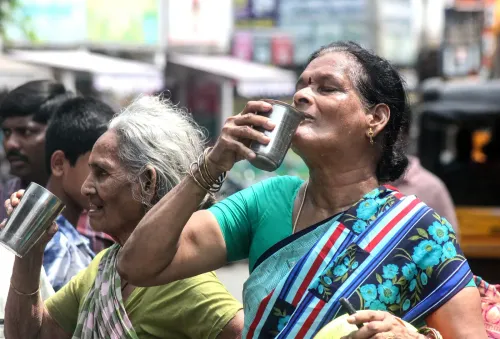
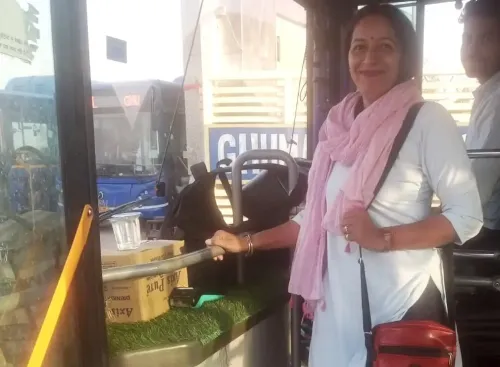
Recognising that dehydration is the primary driver of heat casualties, the Delhi government is installing Water ATMs, more than 1,900 water coolers, and over 11,000 designated cooling points at strategic locations across the city. These installations are prioritised in high-footfall areas, construction sites, and transit hubs where daily wage workers and outdoor labourers face the greatest exposure risk.
This hydration network represents one of the most expansive public cooling infrastructures deployed by any Indian state capital in recent memory, reflecting a shift from reactive disaster response to preventive public health management.
School Safety and Workplace Adjustments
The government has introduced a 'Water Bell System' in schools — a structured reminder mechanism that prompts students to hydrate at regular intervals during the school day. This initiative targets a demographic that is often overlooked in heat emergency planning: children, whose bodies are more vulnerable to rapid dehydration and heat exhaustion.
Additionally, work timings in select sectors have been adjusted to curtail outdoor labour exposure during peak heat hours, typically between 12 PM and 3 PM. This measure directly benefits construction workers, street vendors, and sanitation staff — groups that historically bear the highest mortality burden during Indian heatwaves.
What CM Rekha Gupta Said
CM Rekha Gupta urged Delhi residents to avoid direct sunlight during peak hours, maintain adequate hydration, and actively check on elderly neighbours and vulnerable family members. Her appeal reflects a broader public health communication strategy that complements the physical infrastructure rollout with community-level awareness.
Notably, this activation comes as India Meteorological Department (IMD) forecasts have consistently flagged above-normal temperatures for northwest India through May and June 2026, with Delhi expected to record multiple days above 44°C in the weeks ahead.
Broader Context: Why This Matters
India has witnessed a sharp escalation in heat-related deaths over the past decade. According to publicly available data, heatwaves claim hundreds of lives annually across the country, with urban heat islands like Delhi disproportionately affected due to dense concretisation, limited green cover, and high population density. The 2024 heatwave season was recorded as one of the most severe in recent history, prompting multiple state governments to revise their heat action frameworks.
Delhi's Heat Wave Action Plan 2026 appears to incorporate lessons from those failures — particularly the need for pre-positioned medical supplies and trained personnel rather than post-crisis mobilisation. The scale of deployment — 11,000+ cooling points and 330 round-the-clock ambulances — suggests a more institutionalised approach compared to previous years' largely reactive measures.
Critics and public health experts, however, will watch closely whether these measures remain operational through the peak summer months or taper off as administrative attention shifts — a pattern observed in past heat emergency plans across Indian cities. The true test of the Heat Wave Action Plan 2026 will be the data on heat-related hospitalisations and fatalities at the end of the season.
With temperatures forecast to remain dangerously high through June 2026, the coming weeks will determine whether Delhi's expanded heat infrastructure translates into measurably fewer casualties — and whether this model becomes a benchmark for other Indian cities facing the accelerating climate reality.
Point of View
But its true measure will be in the mortality data at season's end — not in press releases. India has a troubling history of heat action plans that look robust in April and collapse in May when administrative bandwidth stretches thin. What distinguishes this rollout is its scale — 11,000 cooling points and 330 dedicated ambulances — but urban heat mortality in India is fundamentally a governance consistency problem, not a resource problem. CM Rekha Gupta's administration deserves credit for early mobilisation, but accountability must follow: if heat deaths rise despite this infrastructure, the public deserves a full audit of where the plan failed.
NationPress
19 Sept 2026
Frequently Asked Questions
What is Delhi's Heat Wave Action Plan 2026?
Delhi's Heat Wave Action Plan 2026 is a government initiative activated by Chief Minister Rekha Gupta to protect residents from extreme summer heat. It includes deploying 330 ambulances, stocking 339 health centres, opening cool rooms in 30+ hospitals, and installing over 11,000 cooling points across the city.
How many ambulances has Delhi deployed for the heatwave?
Delhi has deployed 330 ambulances for round-the-clock emergency service as part of the Heat Wave Action Plan 2026. Medical personnel have also received specialised training to handle heatstroke and heat-related emergencies.
What is the Water Bell System introduced in Delhi schools?
The Water Bell System is a structured reminder mechanism introduced in Delhi schools to prompt students to drink water at regular intervals during the school day. It aims to prevent dehydration and heat exhaustion among children during peak summer months.
How many cooling points has Delhi set up for the summer of 2026?
Delhi has set up over 11,000 designated cooling points along with more than 1,900 water coolers and Water ATMs at strategic locations across the city. These are prioritised for daily wage workers, outdoor labourers, and high-footfall public areas.
Why is Delhi's heat wave response important in 2026?
India Meteorological Department forecasts indicate above-normal temperatures for northwest India through May and June 2026, with Delhi expected to record multiple days above 44°C. The 2024 heatwave was one of the severest on record, making proactive planning critical to reducing heat-related deaths.