Delhi AQI crosses 400 at IIT, ITO as NCR chokes on severe smog

Synopsis
Delhi's air turned dangerous on 15 November, with IIT Delhi hitting an AQI of 425 and six major monitoring stations crossing the 'severe' threshold of 400. The smog is city-wide — from North Campus to Okhla — and satellite cities like Gurugram and Noida are deep in the 'very poor' zone too. IMD's forecast of rain and strong winds offers the only near-term hope for relief.
Key Takeaways
IIT Delhi recorded the highest AQI in the city at 425 as of 7 am on 15 November 2026 .
ITO (415), Commonwealth Sports Complex (403), Delhi University North Campus and Pusa (both 402), and Burari Crossing (400) also crossed the 'severe' threshold.
Anand Vihar stood at 365 in the 'very poor' category, according to CPCB data.
NCR satellite cities — Noida (313), Gurugram (324), Faridabad (311), Ghaziabad (294), Greater Noida (283) — all recorded 'very poor' air quality.
The IMD has forecast rainfall and strong winds across parts of the country, which may offer temporary relief if conditions reach the NCR.
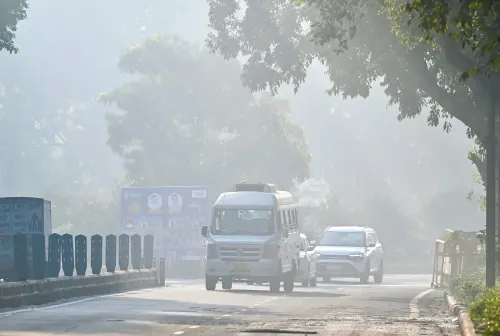
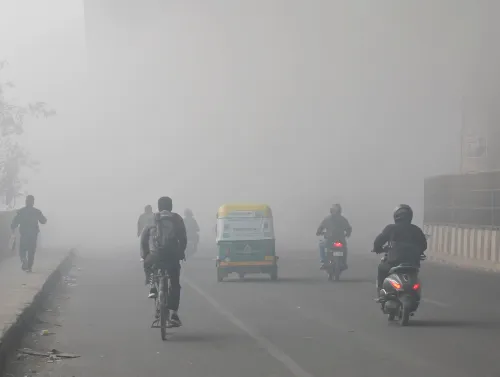
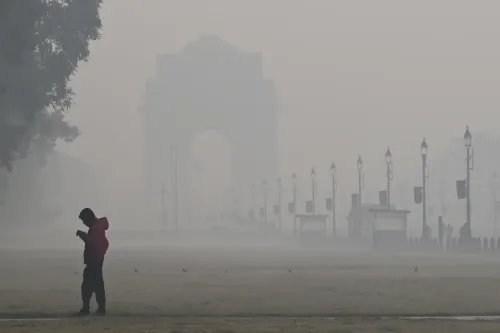
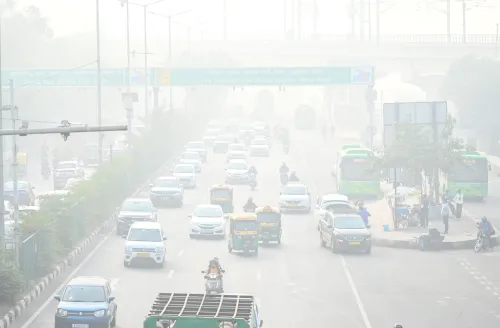
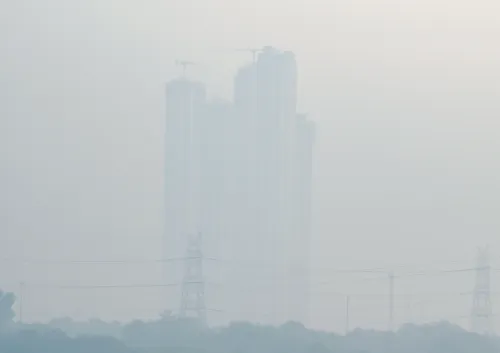
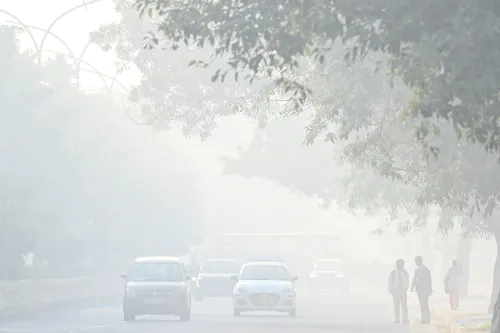
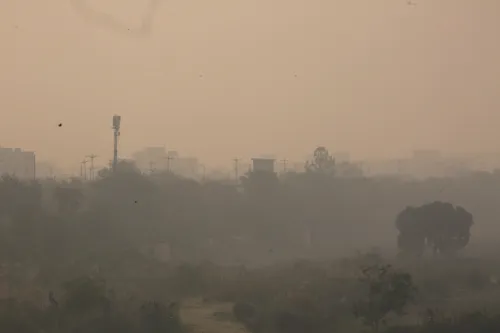
Delhi-NCR woke up to hazardous air on Sunday, 15 November 2026, with multiple monitoring stations recording Air Quality Index (AQI) readings in the 'severe' category as of 7 am, according to data from the Central Pollution Control Board (CPCB). A thick blanket of smog enveloped large swathes of the National Capital Region, sharply curtailing visibility and deepening public health concerns.
Worst-Hit Stations Across Delhi
IIT Delhi recorded the highest AQI in the city at 425, followed closely by ITO at 415. The Commonwealth Sports Complex logged 403, while Delhi University's North Campus and Pusa both registered 402. Burari Crossing stood at exactly 400, also firmly in the 'severe' bracket.
Other parts of the city recorded elevated but slightly lower readings: Punjabi Bagh at 386, Jawaharlal Nehru University (JNU) at 383, Akshardham Temple and Anand Vihar both at 365, RK Puram at 339, Okhla Phase-2 at 330, and Maidan Garhi at 325. These readings fall in the 'very poor' category — still posing significant health risks with prolonged exposure.
AQI Readings Across NCR Satellite Cities
Beyond Delhi's boundaries, the pollution crisis extended across the entire National Capital Region. Noida recorded an AQI of 313, Gurugram stood at 324, Faridabad at 311, Ghaziabad at 294, and Greater Noida at 283 — all in the 'very poor' range. The widespread nature of the pollution underscores that the crisis is not confined to Delhi alone but affects millions across the broader NCR zone.
What the Numbers Mean for Public Health
An AQI above 400 is classified as 'severe' by the CPCB, a threshold at which even healthy individuals can experience respiratory distress with prolonged outdoor exposure. Children, the elderly, and those with pre-existing cardiac or pulmonary conditions face acute risk. The 'very poor' category — AQI between 301 and 400 — also warrants restriction of outdoor activity, particularly in the morning hours when pollution tends to peak. This comes amid a broader pattern of worsening winter air quality in the region, a trend that has persisted for several consecutive years.
Weather Outlook and What Could Help
The India Meteorological Department (IMD) has forecast rainfall, thunderstorms, and strong winds across several parts of the country in the coming days. Weather-driven interventions — particularly rain and wind — remain among the most effective natural mechanisms for dispersing particulate matter in the absence of adequate emission controls. Whether the forecast conditions will reach Delhi-NCR with sufficient intensity to provide meaningful relief remains to be seen.
Authorities are expected to review the applicability of emergency pollution curbs under the Graded Response Action Plan (GRAP) as readings sustain in the severe category across multiple stations.
Point of View
Yet emergency responses remain reactive rather than anticipatory. The reliance on IMD rainfall forecasts as a de facto pollution management strategy reveals how little ground-level emission control has actually advanced. Until stubble burning, vehicular load, and construction dust are tackled with consistent year-round enforcement rather than seasonal panic, the AQI map will keep turning red every November.
NationPress
16 Nov 2026
Frequently Asked Questions
What is the AQI in Delhi today, 15 November 2026?
As of 7 am on 15 November 2026, AQI readings in Delhi ranged from 325 to 425 across monitoring stations, according to CPCB data. IIT Delhi recorded the highest reading at 425, placing it firmly in the 'severe' category.
Which areas in Delhi have the worst air quality right now?
The worst-affected areas as of Sunday morning are IIT Delhi (AQI 425), ITO (415), Commonwealth Sports Complex (403), Delhi University North Campus and Pusa (both 402), and Burari Crossing (400) — all in the 'severe' category. Punjabi Bagh (386) and JNU (383) are close behind in the 'very poor' range.
What does a 'severe' AQI mean for health?
A 'severe' AQI — above 400 on the CPCB scale — means the air can cause respiratory distress even in healthy individuals with prolonged outdoor exposure. Vulnerable groups including children, the elderly, and those with asthma or heart disease face serious acute health risk and are advised to stay indoors.
How is air quality in Noida, Gurugram, and other NCR cities?
All major NCR satellite cities are in the 'very poor' category: Noida at 313, Gurugram at 324, Faridabad at 311, Ghaziabad at 294, and Greater Noida at 283, according to CPCB data for 15 November 2026.
Will rain help improve Delhi's air quality?
The India Meteorological Department has forecast rainfall, thunderstorms, and strong winds in several parts of the country over the coming days. Rain and wind can temporarily disperse particulate matter, but whether conditions will reach Delhi-NCR with sufficient intensity remains uncertain.