Delhi BJP chief Harsh Malhotra: Party's goal is to serve, not just govern
Synopsis
Delhi BJP chief Harsh Malhotra used the closing sessions of the party's triennial Maha Prashikshan Abhiyan — spanning 14 districts and 252 mandals — to reframe the BJP's political identity: not as a power-seeking machine, but as a service organisation rooted in Deendayal Upadhyaya's 1964 philosophy. With the party now in 22 states and eyeing deeper Delhi consolidation, the message to workers was clear — discipline and grassroots dedication are the real electoral currency.
Key Takeaways
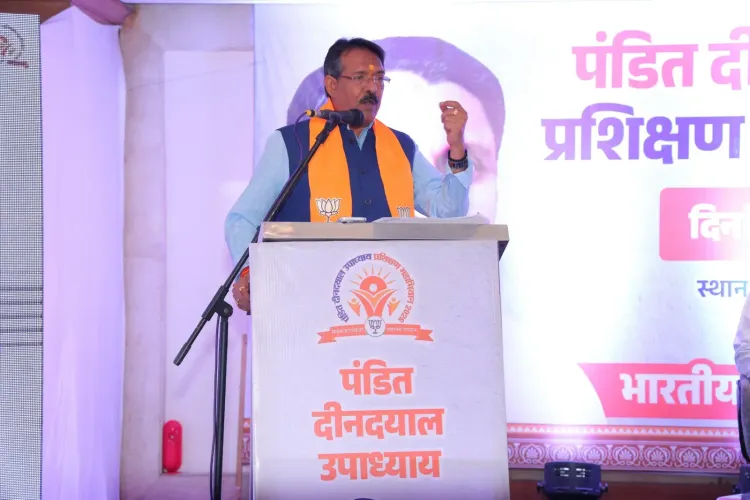
Delhi BJP President Harsh Malhotra addressed concluding sessions of the Pandit Deendayal Upadhyaya Maha Prashikshan Abhiyan on 31 May 2025 .
The triennial training programme covered all 14 districts and 252 mandals of Delhi BJP.
Malhotra stated BJP's goal is service through governance, not power alone, and cited the party's presence in 22 states .
BJP described as the world's largest political party with more than 170 million members .
Sessions in Chandni Chowk and Keshavpuram covered worker development, media strategy, and social media use.
Party programmes for June 2025 were also discussed at the sessions.
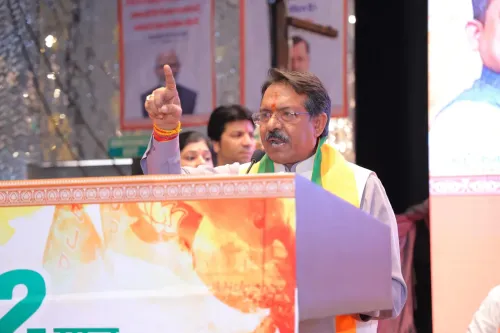
Delhi Bharatiya Janata Party (BJP) President Harsh Malhotra on Sunday, 31 May declared that the party's core objective is not the acquisition of power but the service of citizens through effective governance — and, ultimately, the transformation of India into a developed nation and a global leader. Malhotra made the remarks at the concluding sessions of the Pandit Deendayal Upadhyaya Maha Prashikshan Abhiyan, a triennial training drive covering all 14 districts and 252 mandals of the Delhi BJP.
What the Training Programme Covered
The Maha Prashikshan Abhiyan wrapped up its final sessions in the Chandni Chowk and Keshavpuram districts of Delhi, where senior leaders addressed party workers on a range of organisational and political themes. Outgoing Delhi BJP President Virendra Sachdeva led sessions on worker development and welfare in both districts. Organisation General Secretary Pawan Rana addressed the concluding session in Chandni Chowk, while BJP Member of Parliament Praveen Khandelwal closed the session in Keshavpuram.
Delhi BJP Media Head Praveen Shankar Kapoor addressed both districts on the role of media in the current political landscape. Senior BJP leader Yogesh Atreya spoke on practical communication in Chandni Chowk, and BJP MLA Ashok Goyal took up the same subject in Keshavpuram. Social Media Head Rohit Upadhyay addressed both districts on leveraging social media effectively.
Malhotra on BJP's Ideology and Responsibility
Malhotra emphasised that the BJP, as the world's largest political party with more than 170 million members, carries a commensurate weight of responsibility. He noted that the party has weathered significant challenges over the decades and currently holds power in 22 states across India.
'A political party has its own goals, and BJP's goal is not merely to come to power but to serve the people through governance and contribute to making India a developed nation and a global leader. For this, discipline and an efficient work culture are indispensable,' Malhotra said.
He attributed the BJP's three consecutive terms at the Centre to what he described as its nationalist and positive ideology, and credited the dedication of grassroots workers as the party's most valuable asset.
The Deendayal Upadhyaya Legacy
The training programme draws its name and philosophical grounding from Pandit Deendayal Upadhyaya, who in 1964 articulated a vision of political work that became the foundation of the BJP's organisational methodology. Leaders at the sessions also discussed the practical benefits of Delhi's three-tier government structure for residents of the capital.
What This Signals for Delhi BJP
'The dedication with which BJP workers serve is the party's greatest asset. Party workers are the medium through which the party reaches the people, making them the foundation of the organisation. Developing the qualities of party workers is a key aspect of BJP's identity,' Malhotra said. The sessions also included a briefing on party programmes scheduled for June 2025, signalling a push to consolidate organisational strength in the capital ahead of future electoral cycles.
Point of View
Triennial training event is worth noting. The Maha Prashikshan Abhiyan is less a philosophical exercise and more an organisational audit: it maps worker quality across every mandal and sets the ground game for the next electoral cycle. Delhi, where the BJP returned to power after a long gap, remains a high-stakes organisational laboratory. The emphasis on media literacy and social media training signals that the party is treating the capital's urban, digitally active electorate as a distinct challenge requiring dedicated communication strategy — not just ideological messaging.
NationPress
19 Sept 2026
Frequently Asked Questions
What is the Pandit Deendayal Upadhyaya Maha Prashikshan Abhiyan?
It is a triennial organisational training programme run by the BJP to train workers across all districts and mandals. The current edition covered all 14 districts and 252 mandals of Delhi BJP, concluding on 31 May 2025.
What did Delhi BJP chief Harsh Malhotra say at the training sessions?
Malhotra said the BJP's goal is not merely to come to power but to serve people through governance and help make India a developed nation and global leader. He stressed that discipline and an efficient work culture are essential to that mission.
Who else spoke at the Delhi BJP training sessions?
Outgoing Delhi BJP President Virendra Sachdeva, Organisation General Secretary Pawan Rana, MP Praveen Khandelwal, Media Head Praveen Shankar Kapoor, senior leader Yogesh Atreya, MLA Ashok Goyal, and Social Media Head Rohit Upadhyay all addressed sessions across the two districts.
Why does the BJP hold this training programme every three years?
The programme is rooted in the organisational philosophy of Pandit Deendayal Upadhyaya, who in 1964 defined a structured working methodology for the party. Held every three years, it is designed to refresh worker skills, reinforce ideology, and align grassroots cadre with the party's current priorities.
How significant is the BJP's current organisational reach?
According to Malhotra, the BJP is the world's largest political party with more than 170 million members and currently holds power in 22 states across India.