Is Delhi Suffocating Under Severe Air Pollution?
Click to start listening
Synopsis
Delhi is grappling with a health crisis as severe air pollution and dense fog create hazardous conditions, pushing the air quality index beyond 400. Residents are urged to limit exposure and authorities are on alert for possible disruptions in transportation.
Key Takeaways
- Delhi experiences severe air pollution with AQI over 400.
- Thick fog is reducing visibility across the city.
- Authorities advise limiting outdoor exposure.
- Flight and rail services face significant disruptions.
- Health experts urge caution for vulnerable populations.
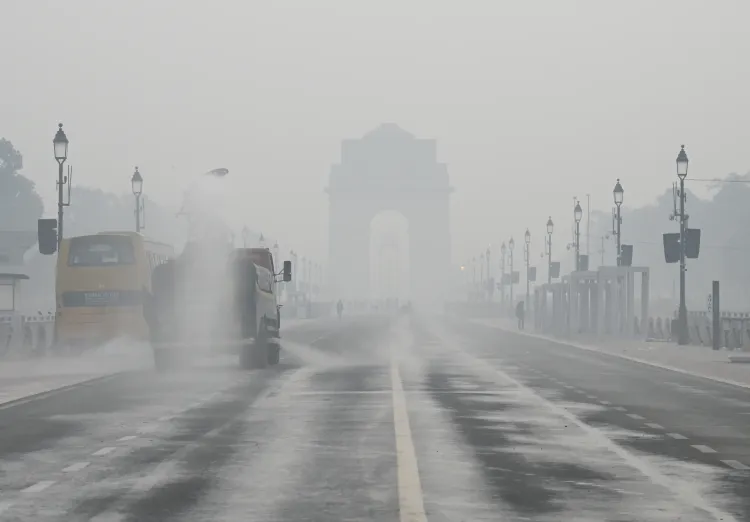
New Delhi, Dec 29 (NationPress) On Monday, the residents of Delhi faced yet another perilous winter morning as a hazardous combination of thick fog and extreme air pollution enveloped the national capital, causing the Air Quality Index (AQI) to soar past 400 and significantly diminishing visibility.
The city was shrouded in dense smog, with an overall AQI of 402 recorded at 7 a.m., firmly placing it in the ‘severe’ category.
Pollution levels exceeded 400 at over half of Delhi’s air quality monitoring stations, signaling perilous conditions across extensive areas of the city.
Among 40 monitoring stations, 25 indicated AQI levels within the ‘severe’ range.
Vivek Vihar reported an AQI of 458, marking it as the most polluted area, trailed by Anand Vihar at 459, Wazirpur at 444, and Rohini at 445. The predominant pollutant remained fine particulate matter (PM2.5).
Data from Lodhi Road and RK Puram stations was missing.
The pollution emergency was exacerbated by thick fog, which drastically hampered visibility throughout Delhi and adjacent areas.
The India Meteorological Department (IMD) issued a ‘red alert’ for very dense fog covering most parts of the capital between 5:31 a.m. and 8:31 a.m., urging the public to drive carefully, use fog lights, avoid unnecessary travel, and cover their faces when outside.
Visibility began to sharply decline late Sunday night, remaining poor into Monday morning, causing traffic slowdowns and posing travel risks. Visibility at Delhi airport dropped to approximately 125 meters, with runway visibility fluctuating between 100 and 150 meters.
In a passenger advisory posted on X, Delhi Airport stated, “Flight operations are being carried out under CAT III conditions due to dense fog, which may lead to delays or cancellations.”
Authorities cautioned that interruptions could persist and advised passengers to verify flight statuses with their respective airlines. Ground staff were stationed across terminals to assist travelers.
Multiple airlines also issued advisories. IndiGo noted that fog and cold winter conditions at Delhi and Hindon airports had resulted in variable visibility and slower operations, reaffirming that passenger safety remained paramount. The airline encouraged travelers to keep an eye on flight updates and mentioned rebooking and refund options.
Air India, in a late-night advisory, stated, “The weather forecast for tomorrow morning suggests dense fog with low visibility in parts of northern India, including Delhi, likely impacting flight operations. We have implemented proactive measures to minimize disruptions. However, in case of unexpected delays, diversions, or cancellations, rest assured that our ground teams will provide all necessary assistance.”
Rail services were also disrupted, with numerous trains, including the Rajdhani Express, Vande Bharat, and Jan Shatabdi, running behind schedule.
As air quality remains in the ‘severe’ category, health experts have advised residents to limit outdoor exposure while authorities continue to monitor the evolving situation.
Point of View
I want to emphasize the importance of addressing our air quality crisis. The current situation in Delhi underscores the urgent need for action from both government and citizens. Health impacts are severe, and community awareness and responsibility are crucial in mitigating this ongoing issue.
NationPress
08/01/2026
Frequently Asked Questions
What is the current AQI in Delhi?
The current AQI in Delhi is recorded at 402, which falls in the 'severe' category.
What precautions should residents take during this pollution crisis?
Residents should limit outdoor activities, wear masks when outside, and keep windows closed to minimize exposure to pollution.
How is transportation affected by the fog and pollution?
Dense fog has led to significant disruptions in flight and rail services, with many delays and cancellations reported.
What measures are being taken by authorities?
The India Meteorological Department has issued alerts and authorities are advising the public to stay indoors and monitor transportation updates.
What are the health impacts of severe air pollution?
Severe air pollution can lead to respiratory issues, cardiovascular problems, and other serious health risks, especially for vulnerable populations.