Delhi CM Rekha Gupta attends Jain temple ceremony in Pitampura
Synopsis
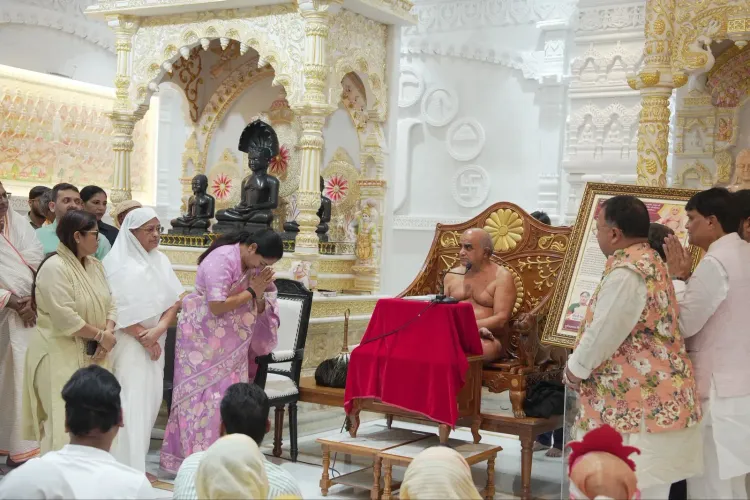
Delhi Chief Minister Rekha Gupta attended the grand altar consecration and idol installation ceremony at Shri 1008 Digambar Jain Mandir in Pitampura on 27 June 2026, receiving blessings from ascetic Mahayogi Upadhyay Shri 108 Guptisagar Ji Maharaj and invoking Jain values of non-violence, truth, and self-restraint as foundations of a harmonious society.
Key Takeaways
Delhi Chief Minister Rekha Gupta attended the Vedi Pratistha and Jin Bimb Sthapna ceremony at Shri 1008 Digambar Jain Mandir, Pitampura on 27 June 2026 .
She received blessings from revered Digambar Jain ascetic Mahayogi Upadhyay Shri 108 Guptisagar Ji Maharaj .
Gupta cited ahimsa, satya, tapa and sanyam — core Jain philosophical tenets — as eternal values guiding humanity toward compassion and self-discipline.
She described these values as the 'foundation of a sensitive, harmonious, and empowered society.' The event is significant for Delhi's Jain community , which forms an influential part of the capital's social and commercial landscape.
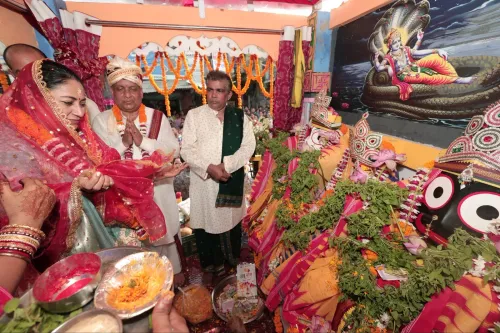
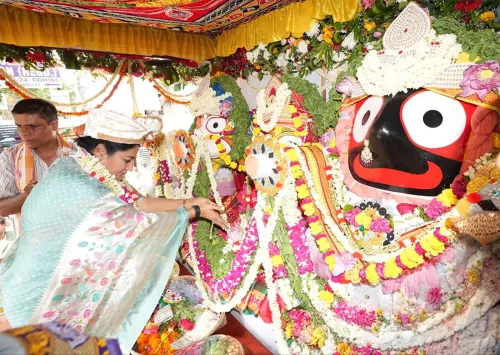
Delhi Chief Minister Rekha Gupta attended the grand Vedi Pratistha (altar consecration) and Jin Bimb Sthapna (idol installation) ceremony at Shri 1008 Digambar Jain Mandir in Pitampura, Delhi, on Saturday, 27 June 2026. The Chief Minister received the blessings of revered ascetic Mahayogi Upadhyay Shri 108 Guptisagar Ji Maharaj at the occasion.
What the Chief Minister said
Sharing her participation on X, Gupta described it as an honour to attend the ceremony, writing: 'इस पावन अवसर पर पूज्य महायोगी उपाध्याय श्री 108 गुप्तीसागर जी महाराज का सानिध्य और आशीर्वाद प्राप्त हुआ' ('On this sacred occasion, I received the company and blessings of revered Mahayogi Upadhyay Shri 108 Guptisagar Ji Maharaj'). She invoked the core tenets of Jain philosophy — ahimsa (non-violence), satya (truth), tapa (austerity), and sanyam (self-restraint) — as eternal values that guide humanity toward self-discipline, compassion, and righteous conduct.
Gupta concluded that these values form the foundation of a 'sensitive, harmonious, and empowered society,' connecting Jain philosophical thought to her broader vision of social cohesion in the capital.
Context
The Vedi Pratistha and Jin Bimb Sthapna are among the most significant consecration rituals in the Digambar Jain tradition, marking the formal installation of a deity's idol on a newly consecrated altar. Such ceremonies are considered rare and auspicious events for a temple and its community, typically drawing large congregations of devotees from across the city.
Pitampura, located in north-west Delhi, is home to a sizeable Jain community. The Shri 1008 Digambar Jain Mandir serves as a key religious and cultural institution for that community.
Policy backdrop
Indian political leaders across party lines have a long tradition of attending consecration ceremonies, festivals, and religious observances at temples, gurudwaras, mosques, and churches as a means of engaging with faith communities. BJP functionaries in particular have consistently framed Jain, Buddhist, and Hindu philosophical tenets as foundational pillars of national culture and social harmony.
Delhi's plural religious landscape has seen successive governments facilitate and participate in such public religious events. No direct policy announcement or scheme linked to this specific temple event has been confirmed.
Stakeholders and impact
The event holds significance for Delhi's Jain community, which forms an influential segment of the capital's social and commercial fabric. The Chief Minister's presence at such a ceremony signals continued engagement between the city's political leadership and minority religious communities.
Mahayogi Upadhyay Shri 108 Guptisagar Ji Maharaj, a respected Digambar Jain ascetic, lent the ceremony additional religious weight. The participation of a senior political figure alongside a revered religious leader underscores the community's standing in Delhi's public life.
What's next
It remains to be seen whether the Delhi government will follow up with cultural heritage announcements or initiatives involving minority religious sites in the capital. Gupta's emphasis on Jain values of non-violence and self-restraint as societal cornerstones may also feature in future public messaging from the administration.
Point of View
Gupta signals cultural alignment with an economically influential community in Delhi. The gesture carries little direct policy weight but reinforces the administration's broader messaging around civilisational values and pluralistic outreach. Watch for whether such engagements translate into concrete heritage or cultural policy announcements for minority religious sites in the capital.
NationPress
26 Sept 2026
Frequently Asked Questions
Why did Delhi CM Rekha Gupta visit a Jain temple in Pitampura?
Delhi Chief Minister Rekha Gupta attended the grand Vedi Pratistha and Jin Bimb Sthapna ceremony at Shri 1008 Digambar Jain Mandir in Pitampura on 27 June 2026, a significant consecration event for the local Jain community.
What is a Vedi Pratistha ceremony in Jain tradition?
A Vedi Pratistha is a sacred altar consecration ritual in the Jain tradition, typically accompanied by the formal installation of a deity's idol (Jin Bimb Sthapna). It is considered one of the most auspicious events a temple can host.
Who is Mahayogi Upadhyay Shri 108 Guptisagar Ji Maharaj?
Mahayogi Upadhyay Shri 108 Guptisagar Ji Maharaj is a revered Digambar Jain ascetic who presided over the ceremony at the Pitampura temple and gave his blessings to Chief Minister Rekha Gupta.
What Jain values did Rekha Gupta highlight at the ceremony?
Rekha Gupta highlighted the four core Jain tenets of ahimsa (non-violence), satya (truth), tapa (austerity), and sanyam (self-restraint), calling them eternal values that form the foundation of a compassionate and harmonious society.
Where is Shri 1008 Digambar Jain Mandir located?
Shri 1008 Digambar Jain Mandir is located in Pitampura, a locality in north-west Delhi, and serves as a key religious institution for the Jain community in that area.