How is Delhi CM addressing air pollution with electric heaters for watchmen?
Click to start listening
Synopsis
In a bold initiative to combat air pollution, Delhi's Chief Minister Rekha Gupta has begun distributing electric heaters to watchmen of various RWAs. This measure aims to reduce smoke and pollution from open burning during winter months. The government's commitment to a cleaner capital relies on public participation and innovative solutions.
Key Takeaways
- Electric heaters are being distributed to watchmen to combat pollution.
- The initiative aims to reduce smoke from open fires during winter.
- Delhi government is committed to ongoing pollution control measures.
- Public participation is essential for sustained improvement in air quality.
- Innovative technologies are being implemented for effective dust mitigation.
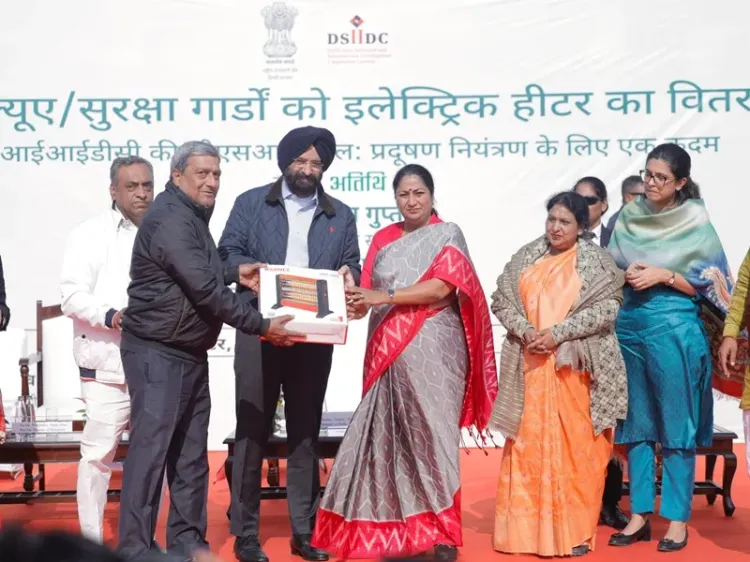
New Delhi, Dec 7 (NationPress) In an effort to tackle air pollution in the capital, Chief Minister Rekha Gupta distributed electric heaters to watchmen of several RWAs on Sunday. This initiative aims to minimize smoke and pollution generated from lighting open fires during the winter months, as stated by an official.
The Chief Minister reiterated that the Delhi government is committed to implementing ongoing measures to ensure the city remains clean, safe, and free from pollution.
She highlighted that electric heaters present a secure, clean, and eco-friendly solution that can significantly aid in combating pollution. According to her, the government is operating in a mission-oriented manner to address pollution.
The distribution occurred at Dilli Haat, Pitampura, utilizing CSR funds from DSIIDC. The Chief Minister expressed her gratitude to Environment and Industries Minister Manjinder Singh Sirsa and DSIIDC for their assistance.
She pointed out that the practice of lighting open fires during winter significantly contributes to pollution, creating dense smoke in the atmosphere. The heaters provided to night guards will be instrumental in alleviating this issue.
The Chief Minister noted that the Delhi Government is adopting an aggressive strategy to reduce pollution.
Measures such as mechanical street cleaning and water-sprinkling systems on roads have been expanded. Additionally, mist-spray technology is being installed on electricity poles, and a comprehensive dust-control plan is being executed across the city. Furthermore, strict regulations have been imposed to manage emissions from industrial units.
She announced that wall-to-wall carpeting of approximately 1,400 km of Delhi's roads is currently in progress to minimize dust dispersion.
Open burning of waste or firewood remains strictly forbidden. In addition, gas connections are being offered to families in need to reduce reliance on firewood.
The Chief Minister remarked that, as a result of these initiatives, pollution levels have shown positive trends, but ongoing reductions can only be achieved with active public involvement.
She urged RWAs, residents, and local communities to take swift action if they observe wood, coal, or waste being burned anywhere. She emphasized that every citizen plays a vital role in this collective fight against pollution, stating that it is a shared responsibility between the government and the public.
During the event, Sirsa remarked that under the Chief Minister's leadership, Delhi is vigorously addressing pollution.
He noted that despite a 10% increase in vehicles this year and a more than 20% rise in construction activities, the city has still experienced consistent and significant improvements in its Air Quality Index compared to previous years.
Nearly 40% of legacy waste piles have been cleared, with a significant portion of the reclaimed land being utilized for tree plantation initiatives, showcasing the scope of the government’s pollution-control strategy.
Sirsa emphasized the necessity of public participation, stating that a change in behavior is critical to making Delhi cleaner and greener.
He called on citizens, contractors, and community groups to embrace eco-friendly practices and actively contribute to this collective mission of achieving a pollution-free Delhi.
Point of View
It is crucial to recognize the Delhi government's proactive measures in addressing air pollution. The distribution of electric heaters represents a significant step towards reducing environmental hazards, but success hinges on community cooperation. This initiative not only highlights the government's commitment to a sustainable future but also underscores the shared responsibility between the authorities and citizens in combating pollution.
NationPress
08/12/2025
Frequently Asked Questions
What is the purpose of distributing electric heaters to watchmen?
The initiative aims to minimize smoke and pollution generated from open fires during winter, thus improving air quality in Delhi.
How is the Delhi government tackling air pollution?
The government is implementing various measures including distributing electric heaters, enhancing street cleaning efforts, and enforcing stricter regulations on emissions.
What other initiatives are in place to reduce pollution in Delhi?
Initiatives include wall-to-wall carpeting of roads, installation of mist-spray technology, and providing gas connections to families to reduce firewood use.
What role do citizens play in combating pollution?
Citizens are encouraged to actively participate by reporting instances of burning waste and adopting environmentally friendly practices.
Has there been any improvement in air quality in Delhi?
Yes, despite increased vehicle numbers and construction activities, Delhi has recorded significant improvements in its Air Quality Index compared to previous years.