Delhi CM Rekha Gupta Marks National Broadcasting Day

Synopsis
Delhi Chief Minister Rekha Gupta marked National Broadcasting Day on 23 July 2026, celebrating broadcasting as a unifying national medium and linking the centenary-era occasion to the Viksit Bharat vision for a developed India by 2047.
Key Takeaways
Delhi CM Rekha Gupta posted a National Broadcasting Day message on 23 July 2026 .
National Broadcasting Day marks India's first experimental radio broadcast on 23 July 1923 .
Gupta linked the occasion to Viksit Bharat , the BJP-promoted vision for a developed India by 2047 .
All India Radio , established in the 1930s, remains India's principal public radio service under the Prasar Bharati Act enacted in 1990 and implemented in 1997 .
The message reflects a broader pattern of aligning commemorative media occasions with central government development narratives.
Delhi Chief Minister Rekha Gupta on Thursday, 23 July 2026, marked National Broadcasting Day with a social media message celebrating broadcasting as a medium that 'informs, inspires and unites the nation,' while linking the occasion to the vision of a Viksit Bharat.
Context
National Broadcasting Day is observed every year on 23 July to commemorate the first experimental radio broadcast in India, which took place on 23 July 1923. The occasion marks more than a century of organised radio broadcasting in the country, tracing a lineage that eventually gave rise to All India Radio, India's principal public radio service established in the 1930s.
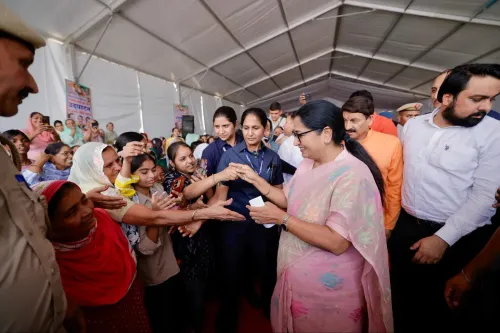
Gupta's post carried the hashtag #NationalBroadcastingDay and was accompanied by an image, reflecting the standard social media observance pattern adopted by elected officials on media-related commemorations.
Policy Backdrop
All India Radio has historically served as a cornerstone of public information and national unity, reaching audiences across geographies and languages long before the arrival of television and digital platforms. Its institutional framework was formalised under the Prasar Bharati Act of 1990, which came into effect in 1997, granting statutory autonomy to public broadcasters including All India Radio and Doordarshan.
The reference to Viksit Bharat — the BJP-promoted national vision for a developed India by 2047 — follows a well-established pattern in government messaging, where commemorative occasions are used to reinforce long-term developmental goals. Broadcasting, both public and digital, is increasingly framed as an instrument of this broader national aspiration.
Stakeholders and Impact
Public broadcasters, media professionals, and the broader consuming public are the primary stakeholders on this occasion. All India Radio continues to serve millions of listeners, particularly in rural and remote areas where digital connectivity remains limited, making it a critical vehicle for public communication.
Political leaders across parties routinely use National Broadcasting Day to acknowledge the role of broadcast media in shaping public discourse. CM Gupta's message aligns Delhi's voice with the central government's communication priorities, underscoring the continued relevance of traditional media alongside emerging digital platforms.
What's Next
Attention will turn to the Ministry of Information and Broadcasting for any policy announcements around digital radio expansion or modernisation of public broadcaster infrastructure in the coming months. As India advances toward its 2047 development targets, the role of broadcast media — both legacy and digital — in public outreach is expected to remain a recurring theme in government communication.
Point of View
Tying a century-old media milestone to the ruling party's flagship Viksit Bharat narrative. The invocation of broadcasting as a tool for national unity carries symbolic weight at a time when the government is navigating questions about public broadcaster autonomy and digital media regulation. By speaking in the register of inspiration rather than policy, the message avoids specifics while reinforcing ideological continuity. It reflects a broader BJP communication strategy of using cultural and historical observances to anchor contemporary governance goals.
NationPress
23 Jul 2026
Frequently Asked Questions
Why is National Broadcasting Day celebrated on 23 July?
National Broadcasting Day is observed on 23 July because India's first experimental radio broadcast took place on that date in 1923, marking the beginning of organised radio broadcasting in the country.
What is Viksit Bharat?
Viksit Bharat is a BJP-promoted national vision that aims to make India a fully developed nation by 2047, the centenary of its independence. It is frequently referenced in government messaging across policy and commemorative contexts.
What did Delhi CM Rekha Gupta say on National Broadcasting Day 2026?
Delhi CM Rekha Gupta posted a message on 23 July 2026 calling broadcasting a medium that 'informs, inspires and unites the nation,' and linked the occasion to the spirit of Viksit Bharat.
What is All India Radio and when was it established?
All India Radio is India's principal public radio service, established in the 1930s. It operates under Prasar Bharati, which was granted statutory autonomy through the Prasar Bharati Act of 1990, implemented in 1997.