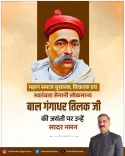
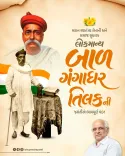
Smriti Irani Pays Tribute to Bal Gangadhar Tilak on Jayanti
Synopsis
BJP leader Smriti Irani marked Lokmanya Bal Gangadhar Tilak's birth anniversary on 23 July 2026, praising the nationalist leader's role in turning Swaraj into a mass resolve and giving the freedom struggle new direction and energy.
Key Takeaways
BJP leader Smriti Irani paid tribute to Lokmanya Bal Gangadhar Tilak on his birth anniversary, 23 July 2026 .
Irani credited Tilak with reviving national consciousness by making Swaraj 'the resolve of every citizen.' Tilak co-founded the Deccan Education Society and launched newspapers Kesari and The Maratha in 1881 .
He launched the Home Rule League in 1916 to mobilise mass support for self-rule.
BJP leaders regularly invoke Tilak and other pre-Gandhian Maharashtra-linked figures to connect governance narratives with the independence movement.
State-level Tilak Jayanti programmes in Maharashtra are observed annually across political lines.
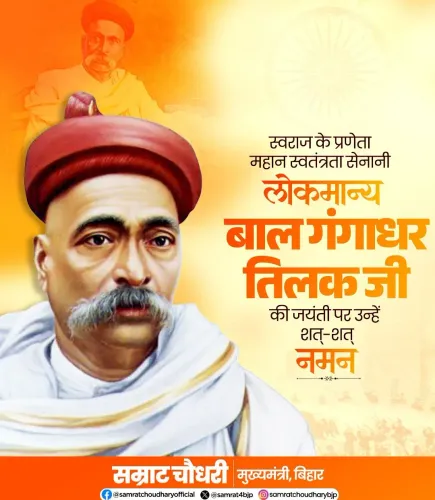
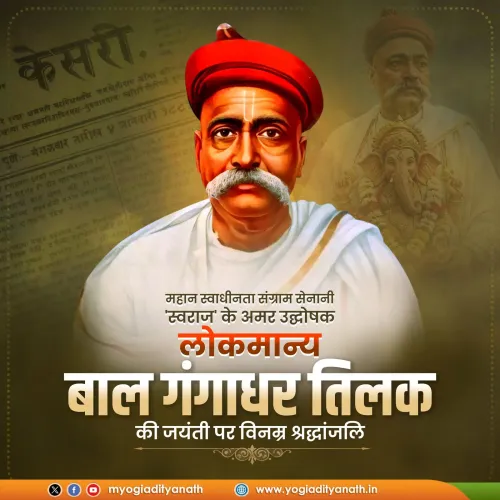
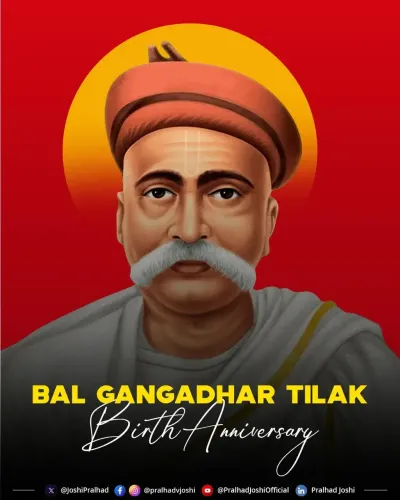
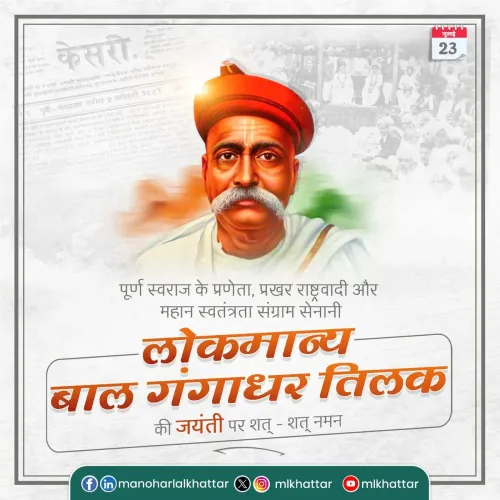
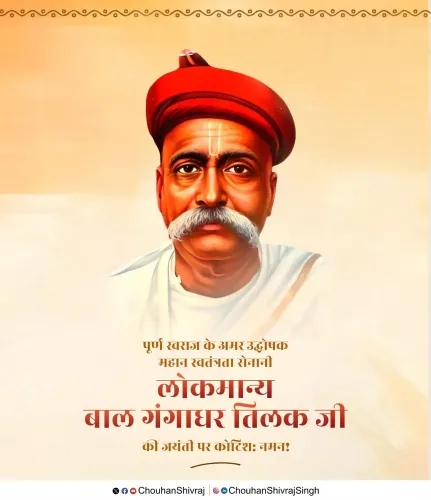
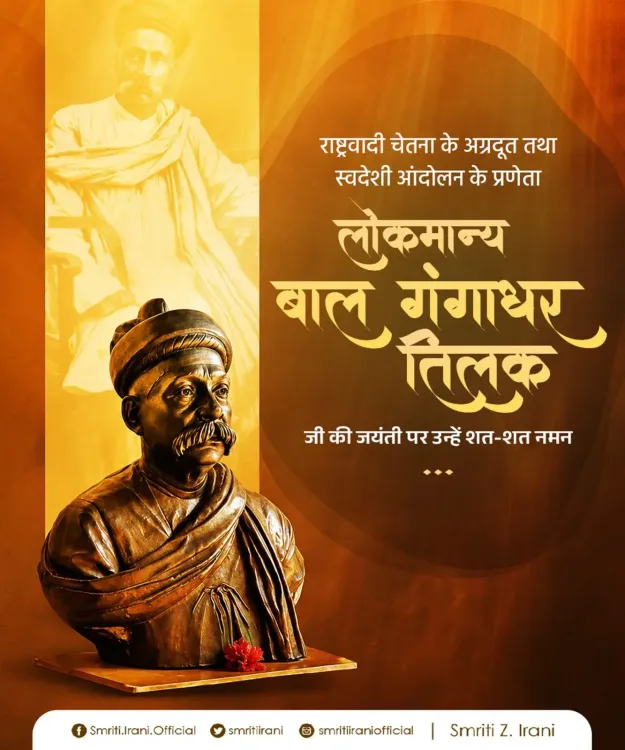
BJP leader and former Union Minister Smriti Irani paid homage to freedom fighter Bal Gangadhar Tilak on his birth anniversary on Thursday, 23 July 2026, hailing him as a towering nationalist thinker and educationist who transformed the demand for Swaraj into a mass movement.
In her post on X, Irani wrote — translated from Hindi — that Tilak 'revived national consciousness by turning the idea of Swaraj into the resolve of every citizen.' She added that 'his thoughts, leadership, and unwavering dedication to the nation gave the freedom struggle a new direction and new energy,' and offered him a 'hundredfold salute' (shata-shata naman) on his birth anniversary.
Context
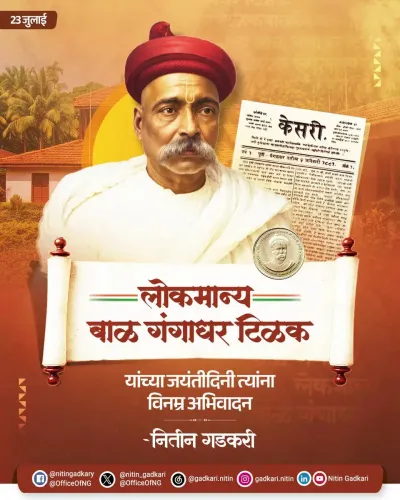
Bal Gangadhar Tilak, born 23 July 1856 in Ratnagiri, Maharashtra, was one of the foremost leaders of the Indian independence movement. Popularly known as Lokmanya — meaning 'accepted by the people as their leader' — he was among the first to demand complete self-rule, famously declaring 'Swaraj is my birthright and I shall have it.' He co-founded the Deccan Education Society and established the nationalist newspapers Kesari and The Maratha in 1881 to spread the message of self-governance and cultural pride.
Tilak emerged as the dominant voice of the Extremist faction within the Indian National Congress, most visibly at the landmark 1907 Surat session, where a split with the moderate faction underscored the sharpening edge of the independence movement. In 1916, he launched the Home Rule League to mobilise mass support for Swaraj, a campaign that drew lakhs of ordinary Indians into active political participation.
Policy Backdrop
Tilak's legacy as an educationist is embedded in the institutional fabric of Maharashtra. The Deccan Education Society, which he co-founded, continues to run educational institutions across the state. His twin newspapers — Kesari (Marathi) and The Maratha (English) — are regarded as pioneering examples of press-led nationalist mobilisation in colonial India.
BJP leaders have consistently invoked Tilak, alongside other Maharashtra-linked pre-Gandhian figures, as part of a broader effort to connect contemporary governance narratives with the cultural and political roots of the independence movement. Tilak Jayanti is observed with state-level programmes in Maharashtra each year, and references to his philosophy of self-rule often surface in parliamentary debates on education and cultural policy.
Stakeholders and Impact
Tilak Jayanti carries particular resonance for students, educators, and institutions affiliated with the Deccan Education Society network across Pune and wider Maharashtra. His articulation of Swaraj as a non-negotiable right rather than a distant aspiration continues to be cited in civics curricula and public discourse on constitutional values.
For the BJP, tributes to Tilak serve a dual purpose: honouring a figure venerated across political lines in Maharashtra while reinforcing a narrative of cultural nationalism that predates the Gandhian era. Irani's post, coming from a senior national leader, amplifies this messaging at the national level.
What's Next
State-level Tilak Jayanti commemorations in Maharashtra are expected to draw participation from political leaders across parties, given Tilak's pan-ideological stature. His philosophy of mass mobilisation through education and a free press remains a reference point in ongoing debates around education policy and press freedom in India.
Point of View
Particularly those linked to Maharashtra, to reinforce a narrative of cultural self-assertion and early Swaraj politics. Tilak occupies a rare cross-party pedestal in Indian public life, making such tributes politically low-risk yet symbolically significant. For the BJP, invoking Tilak's mass-mobilisation legacy also carries an implicit message about the party's own claims to nationalist continuity. The timing ahead of possible Maharashtra political events gives the tribute added strategic texture, even if its immediate form is purely ceremonial.
NationPress
23 Jul 2026
Frequently Asked Questions
Why is Bal Gangadhar Tilak Jayanti celebrated on 23 July?
Bal Gangadhar Tilak was born on 23 July 1856 in Ratnagiri, Maharashtra, and his birth anniversary is observed as Tilak Jayanti each year to honour his contributions to the Indian independence movement.
What did Smriti Irani say about Bal Gangadhar Tilak?
Smriti Irani said Tilak 'revived national consciousness by turning the idea of Swaraj into the resolve of every citizen' and that his leadership gave the freedom struggle 'a new direction and new energy.'
What is Lokmanya Tilak known for?
Lokmanya Tilak is known for popularising the demand for Swaraj, co-founding the Deccan Education Society, launching nationalist newspapers Kesari and The Maratha in 1881, and establishing the Home Rule League in 1916.
Why do BJP leaders pay tribute to Bal Gangadhar Tilak?
BJP leaders regularly honour Tilak and other pre-Gandhian nationalist figures to connect contemporary governance narratives with the cultural and political roots of India's independence movement, particularly those linked to Maharashtra.
What was Tilak's famous quote about Swaraj?
Bal Gangadhar Tilak is famously credited with the declaration 'Swaraj is my birthright and I shall have it,' which became one of the defining rallying cries of the Indian independence movement.