Khattar pays tribute to Lokmanya Tilak on his Jayanti
Synopsis
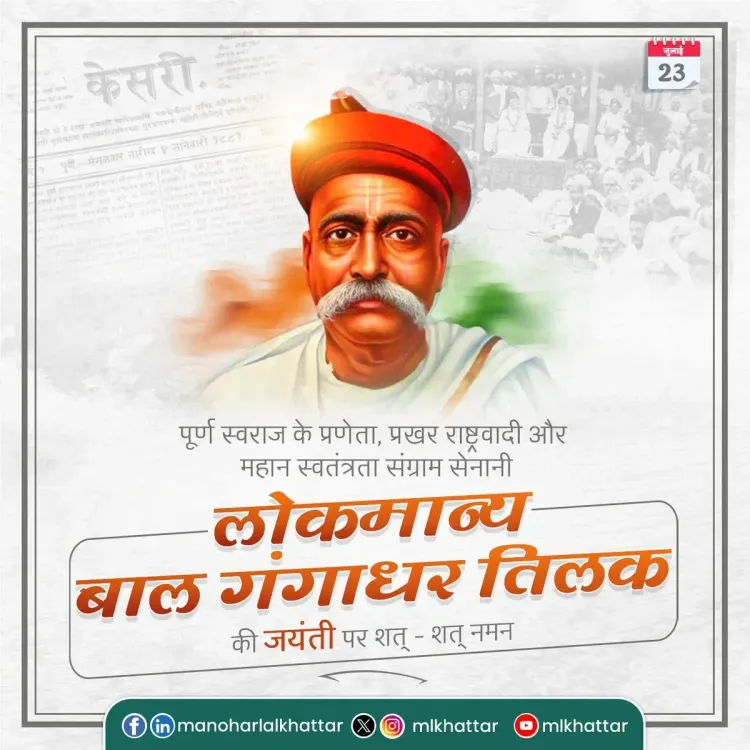
Union Power Minister Manohar Lal Khattar paid tribute to Lokmanya Bal Gangadhar Tilak on his birth anniversary on 23 July 2026, invoking Tilak's iconic 'Swaraj is my birthright' declaration and honouring his lifelong commitment to self-nation, self-language, and self-culture.
Key Takeaways
Union Power Minister Manohar Lal Khattar posted a Hindi tribute to Lokmanya Bal Gangadhar Tilak on his jayanti , 23 July 2026 .
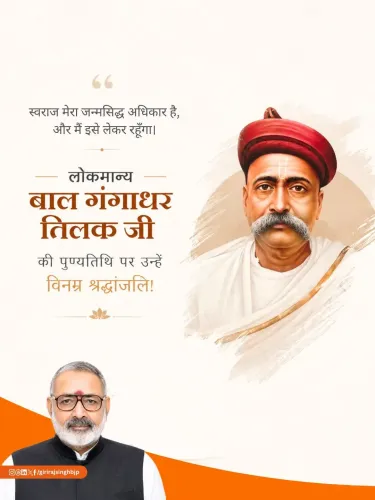
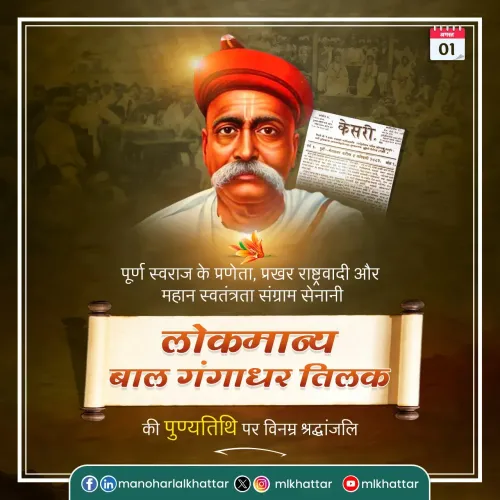
Khattar quoted Tilak's iconic slogan: 'Swaraj is my birthright and I shall have it.' The tribute described Tilak as a 'fervent nationalist thinker, eloquent orator, and great freedom fighter.' Khattar highlighted Tilak's dedication to self-nation, self-language, and self-culture ( swadesh, swabhasha, swasanskrti ).
The post is consistent with a broader BJP pattern of commemorating freedom-struggle icons to reinforce contemporary nationalist themes.
Tilak's death anniversary on 1 August is expected to prompt further tributes across the political spectrum.
Union Power Minister Manohar Lal Khattar on Thursday, 23 July 2026 paid tribute to Lokmanya Bal Gangadhar Tilak on his birth anniversary, invoking the legendary freedom fighter's immortal declaration on self-rule to honour his legacy of nationalism and cultural pride.
Context
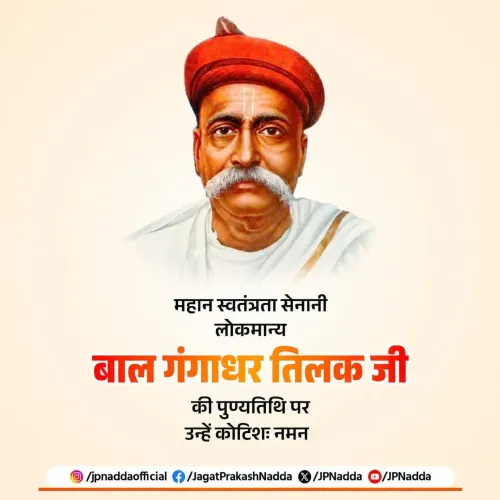
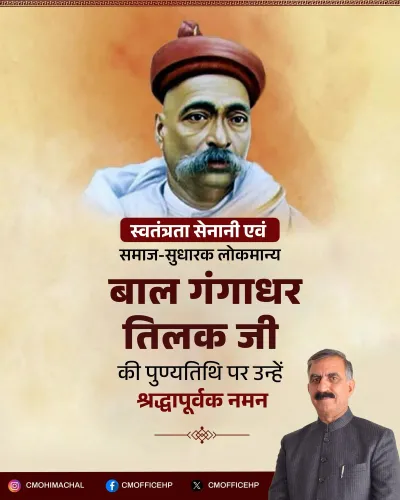
Khattar's post opens with Tilak's most celebrated declaration — 'Swaraj mera janmasiddh adhikar hai aur main ise lekar rahunga' ('Swaraj is my birthright and I shall have it') — and describes him as a 'fervent nationalist thinker, an eloquent orator, and a great freedom fighter.' The minister offered his 'countless salutations' (kotishः naman) to Tilak on his jayanti, noting that Tilak dedicated every moment of his life to the honour of self-nation, self-language, and self-culture (swadesh, swabhasha, aur swasanskrti).
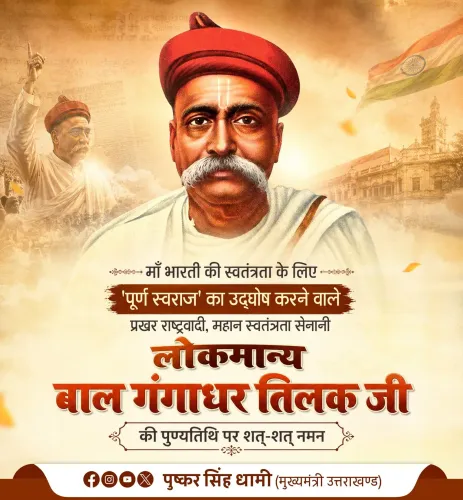
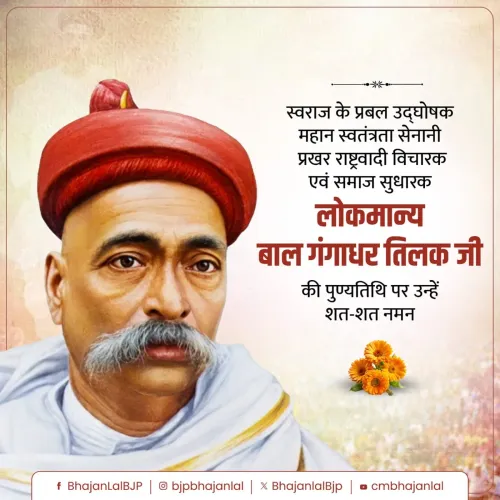
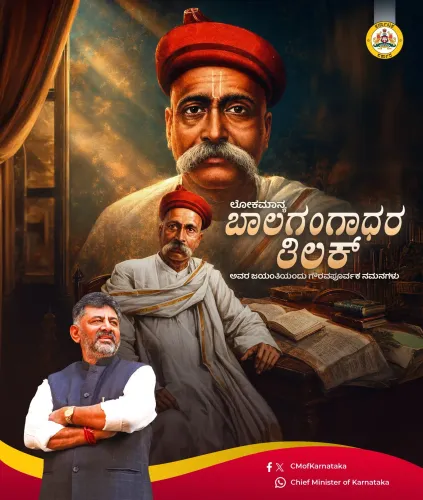
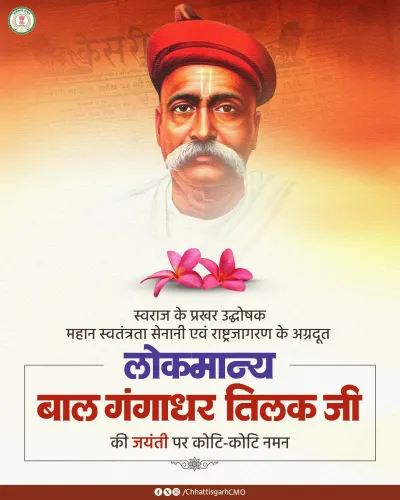
Khattar concluded that Tilak's life philosophy 'will continue to inspire us always.' The tribute was posted in Hindi and accompanied by an image, consistent with the solemn tone of a national commemoration.
Policy Backdrop
Bal Gangadhar Tilak (1856–1920), widely revered by the honorific 'Lokmanya' (accepted by the people), was one of the foremost architects of mass mobilisation against British colonial rule. He championed the Swadeshi movement, revived the Ganesh Chaturthi festival as a platform for collective nationalist sentiment, and edited influential Marathi and English newspapers to spread the message of self-rule.
His slogan on Swaraj remains one of the most quoted lines in Indian political history and has been invoked across party lines for over a century. Tilak's philosophy of swadesh (self-nation), swabhasha (self-language), and swasanskrti (self-culture) aligns closely with themes the current Bharatiya Janata Party government has emphasised through initiatives promoting Indian languages, cultural heritage, and domestic manufacturing.
Stakeholders and Impact
Tributes by senior Union ministers to independence-era icons form a consistent feature of the BJP's public communication, linking the party's contemporary nationalist platform to the moral authority of the freedom struggle. For BJP supporters and nationalist youth, such posts reinforce a cultural continuity between Tilak's era of anti-colonial resistance and present-day assertions of Indian identity.
Khattar, as a former Chief Minister of Haryana and a senior cabinet minister holding the Power and Housing and Urban Affairs portfolios, carries significant institutional weight. His personal tribute on a national platform amplifies the occasion beyond routine social-media ceremony.
What's Next
Similar commemorations are expected from across the political spectrum on Tilak's death anniversary (1 August), which is observed as Lokmanya Tilak Bal memorial day. Observers will watch whether Khattar or other ministers use such occasions to draw explicit policy parallels — particularly around self-reliance, language policy, or cultural preservation — in the months ahead.
Point of View
Particularly its assertively nationalist strand. By foregrounding Tilak's trinity of swadesh, swabhasha, and swasanskrti, the minister implicitly echoes the current government's policy emphases on domestic manufacturing, Indian languages, and cultural heritage. Senior cabinet ministers amplifying such tributes on their personal handles lends institutional heft to what might otherwise read as routine social-media commemoration. As national elections and state polls keep the political calendar busy, these commemorative posts serve a dual function: honouring historical icons while continuously reinforcing the party's ideological identity to its core base.
NationPress
21 Oct 2026
Frequently Asked Questions
Who is Lokmanya Bal Gangadhar Tilak and why is he remembered?
Lokmanya Bal Gangadhar Tilak (1856–1920) was one of India's foremost freedom fighters and nationalist thinkers. He is best remembered for the slogan 'Swaraj is my birthright and I shall have it,' his role in the Swadeshi movement, and his use of the Ganesh Chaturthi festival to mobilise mass nationalist sentiment against British rule.
When is Bal Gangadhar Tilak's birth anniversary (jayanti)?
Bal Gangadhar Tilak's birth anniversary falls on 23 July each year. His death anniversary is observed on 1 August , known as Lokmanya Tilak memorial day.
What did Manohar Lal Khattar say about Tilak on his jayanti?
Khattar quoted Tilak's iconic declaration — 'Swaraj is my birthright and I shall have it' — and described him as a fervent nationalist thinker, eloquent orator, and great freedom fighter. He said Tilak dedicated every moment of his life to the honour of self-nation, self-language, and self-culture, and that his life philosophy 'will continue to inspire us always.'
What is the meaning of 'Lokmanya' in Bal Gangadhar Tilak's title?
' Lokmanya ' is an honorific in Sanskrit and Marathi meaning 'accepted by the people' or 'respected by the masses.' It was bestowed on Bal Gangadhar Tilak in recognition of his immense popularity and moral authority among ordinary Indians during the freedom struggle.
Why do BJP leaders regularly pay tribute to Bal Gangadhar Tilak?
BJP leaders frequently commemorate Tilak because his emphasis on swadesh (self-nation), swabhasha (self-language), and swasanskrti (self-culture) resonates with the party's contemporary nationalist platform. Tributes to freedom-struggle icons also serve to link the party's ideological identity to the moral authority of India's independence movement.