Delhi Police cyber cell busts ₹15.74 lakh online investment scam, arrests three
Synopsis
A DRDO employee lost ₹15.74 lakh to a WhatsApp-and-Telegram work-from-home scam that used fake task rewards to build trust before demanding a 50% 'withdrawal penalty' to trap the victim. Delhi's cyber cell dismantled the layered banking network across three states in a four-day arrest sweep — a textbook case of how organised cyber fraud syndicates recruit ordinary citizens as account mules.
Key Takeaways
Delhi Cyber Police busted an online investment fraud network, arresting three accused between 7–9 June 2025 .
A DRDO employee in New Delhi was defrauded of ₹15,74,452 via fake work-from-home tasks on WhatsApp and Telegram .
Fraudsters demanded a 50% 'withdrawal penalty' on the displayed balance to prevent victims from recovering funds.
Arrested: Sandeep Sain (Karnal, Haryana), Parikshit (Hisar, Haryana), and Sachin Jhakkar (Sikar, Rajasthan) — each playing distinct roles in layering fraud proceeds.
Three mobile phones were recovered; investigation is ongoing to identify remaining syndicate members.
Citizens can report cyber fraud via the National Cyber Crime Helpline: 1930 .
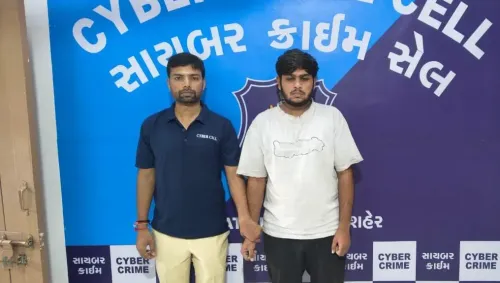
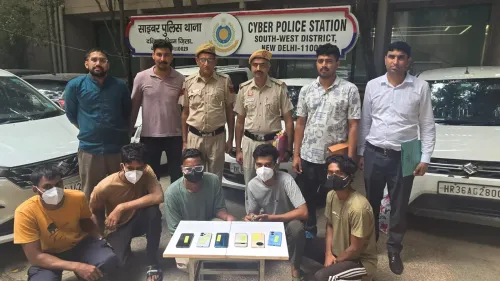
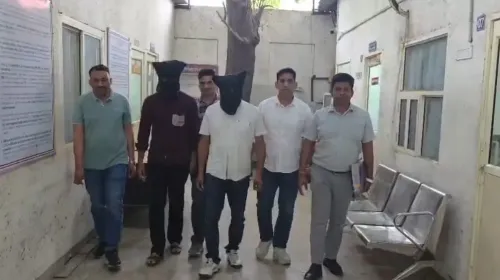
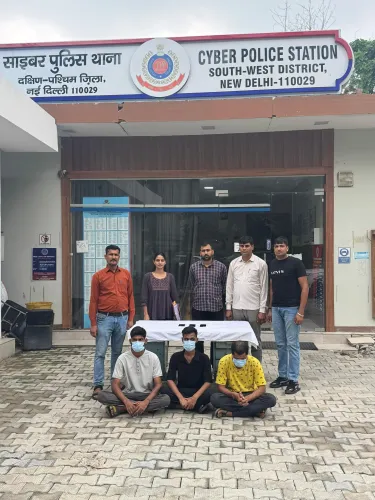
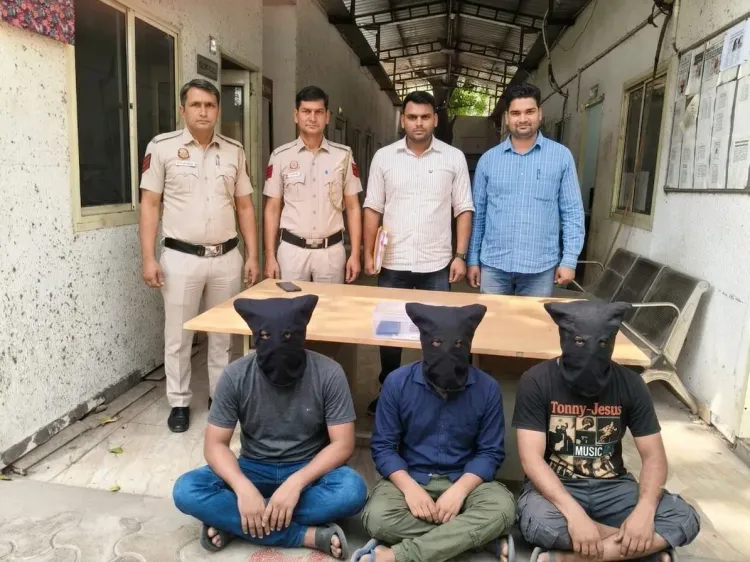
The Cyber Police Station of Delhi's Central District has dismantled a sophisticated online investment fraud network, arresting three accused individuals from Haryana and Rajasthan for allegedly cheating a Defence Research and Development Organisation (DRDO) employee of ₹15,74,452 through a work-from-home task-based scam operated via WhatsApp and Telegram. The arrests were made between 7 June and 9 June 2025, following a complaint registered on 14 July 2025.
How the Scam Worked
The victim, a government employee with DRDO residing in New Delhi, was first contacted on WhatsApp by individuals claiming to represent a work-from-home company dealing in property rental ratings and leasing tasks. He was subsequently added to a Telegram group, where he received training and was instructed to register on multiple websites.
Initially, the fraudsters paid out small profits after the victim completed assigned tasks and deposited money — a classic trust-building tactic. Once confidence was established, they introduced schemes labelled 'charter leases', 'bonus tasks', and other high-return investment opportunities, persuading the victim to transfer progressively larger sums.
When the complainant attempted to withdraw the balance shown in his online account, the accused demanded an additional payment equivalent to 50 per cent of the displayed balance as a so-called 'withdrawal penalty'. By this point, he had already transferred approximately ₹15,74,452. No withdrawal was ever permitted and none of the money was returned.
The Accused and Their Roles
Police identified the three arrested individuals as:
Parikshit, a student from Hisar, Haryana, who served as the first-layer account holder, directly receiving fraud proceeds into his account. Sandeep Sain, a barber from Karnal, Haryana, acted as the second-layer account holder, transferring the fraudulently obtained funds further through the network. Sachin Jhakkar, a student from Sikar, Rajasthan, allegedly supplied bank accounts to associates for routing and dispersing the cheated amount.
During the operation, police recovered three mobile phones allegedly used in the commission of the crime.
Investigation and Arrests
Following the registration of e-FIR No. 00005/2025 at the Cyber Police Station, Central District, a dedicated team was constituted under SHO Inspector Yograj Dalal and ACP Operations Padam Singh Rana, comprising Sub Inspector Kapil, Head Constable Manoj, HC Sunil, and Constable Anuj.
The team conducted extensive technical surveillance, analysed digital evidence, traced financial transaction trails, and carried out field enquiries. An initial raid in Hisar on 5 June failed to locate Parikshit. Acting on technical inputs, investigators then moved to Salwan village, Karnal, where Sandeep Sain was arrested on 7 June. Disclosures from Sain led the team to Bannu Enclave, Pitampura, Delhi, where Sachin Jhakkar was arrested on 8 June. Parikshit was finally traced and arrested on 9 June.
Police Advisory to the Public
Delhi Police have urged citizens to remain cautious of unsolicited work-from-home offers received via WhatsApp, Telegram, and other social media platforms that promise high returns for simple tasks. The public has been advised never to transfer money to unknown individuals or online platforms on assurances of guaranteed profits, and to verify the authenticity of any investment opportunity before making payments.
Victims of cyber fraud are advised to immediately report incidents through the National Cyber Crime Helpline (1930), the National Cyber Crime Reporting Portal, or the nearest police station. Investigators say the probe is ongoing to identify and apprehend remaining members of the fraud syndicate.
Point of View
Yet it continues to ensnare educated, salaried victims, including those working within defence institutions. Delhi Police's cross-state coordination is commendable, but the arrests of low-rung mules rarely dismantle the masterminds who design and operate these platforms. Until enforcement reaches the top layer of these syndicates — typically operating from outside India — the pipeline of victims will not dry up.
NationPress
26 Oct 2026
Frequently Asked Questions
How did the Delhi online investment scam work?
Fraudsters contacted a DRDO employee on WhatsApp, added him to a Telegram group, and had him complete small tasks with initial payouts to build trust. They then persuaded him to invest larger sums in schemes like 'charter leases' and 'bonus tasks', and when he tried to withdraw his balance, they demanded a 50% penalty — by which point he had already transferred ₹15,74,452.
Who were the three people arrested in the Delhi cyber fraud case?
The three arrested are Sandeep Sain, a barber from Karnal, Haryana (second-layer account holder); Parikshit, a student from Hisar, Haryana (first-layer account holder); and Sachin Jhakkar, a student from Sikar, Rajasthan (who allegedly supplied bank accounts to route the fraud proceeds).
What is the 'layered account' method used in cyber fraud?
In layered account fraud, proceeds from a scam are passed through multiple bank accounts held by different individuals to obscure the money trail. The first-layer holder receives funds directly from victims; subsequent layers transfer and disperse the money further, making it harder for investigators to trace the original fraudsters.
How can I report an online investment scam in India?
Victims of cyber fraud in India can call the National Cyber Crime Helpline at 1930, file a complaint on the National Cyber Crime Reporting Portal, or approach the nearest police station. Prompt reporting improves the chances of freezing fraudulent transactions before funds are dispersed.
How can I protect myself from work-from-home task scams on WhatsApp and Telegram?
Delhi Police advise citizens never to transfer money to unknown individuals or platforms on promises of guaranteed returns. Always verify the legitimacy of any work-from-home offer independently, be sceptical of groups that require upfront deposits before releasing earnings, and treat any 'withdrawal fee' or 'penalty' demand as a strong indicator of fraud.