Is Section 498A Being Misused in Dowry Cases?
Synopsis
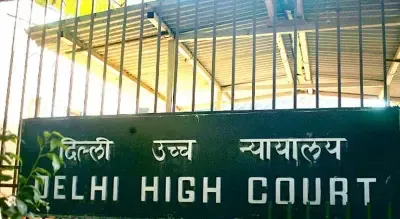
In a significant ruling, the Delhi High Court addressed the alarming trend of misusing Section 498A, warning against the indiscriminate targeting of distant relatives in dowry cases. This judgement underscores the need for substantiated claims and aims to protect the integrity of the law.
Key Takeaways
Delhi High Court warns against misuse of Section 498A.
Vague allegations weaken legal integrity .
Court emphasizes evidence-based prosecution .
Judiciary's role in protecting rights highlighted.
Trial courts retain authority for future actions .
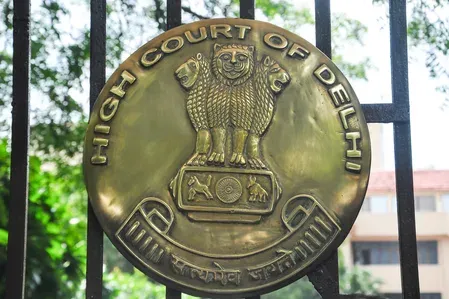
New Delhi, Nov 4 (NationPress) The Delhi High Court has raised concerns about the increasing misuse of Section 498A of the Indian Penal Code (IPC), highlighting the issue of implicating distant relatives of husbands in matrimonial conflicts without substantiating evidence of their involvement. A single-judge Bench led by Justice Amit Mahajan made this observation while dismissing an FIR filed under Sections 498A, 406, and 34 of the IPC against the husband’s maasi (maternal aunt) and her daughter in a dowry harassment case initiated by the wife.
The Court pointed out that the petitioners did not live with the complainant-wife or her husband, and the accusations against them were described as “vague, generic, and omnibus”.
“Casual remarks, ambiguous claims, or general family disputes that are part of everyday marital life do not constitute ‘cruelty’ as defined under Section 498A of the IPC,” Justice Mahajan emphasized.
By stating that such allegations “undermine the purpose and integrity” of the anti-dowry violence legislation, the Delhi High Court noted that Section 498A is frequently used to involve even distant relatives of husbands, such as uncles and aunts, who do not reside in the complainant's household.
Quoting several Supreme Court judgments, Justice Mahajan reiterated the necessity for courts to be vigilant against “over-implication” and “exaggerated claims” aimed at pressuring the primary accused. “If the claims are implausible and it appears that Section 498A is being misused, the Court can intervene using its powers under Section 482 of the CrPC,” the Delhi High Court stated.
Finding no “serious suspicion” against the petitioners, Justice Mahajan annulled the proceedings while clarifying that the trial court retains the authority to act against them should new evidence arise.
“In this Court’s view, there exists no serious suspicion against the petitioners concerning the framing of charges under Sections 498A/406 of the IPC, leading to the decision to quash the resulting proceedings from the current FIR.
However, should the trial court later discover evidence warranting action against the petitioners, it is within the trial court’s right to take necessary steps as per the CrPC,” declared the Delhi High Court.
Point of View
It is essential to approach the issue of dowry laws with a balanced view. The Delhi High Court's ruling demonstrates the judiciary's role in ensuring that legal provisions are not misused, while also protecting the rights of individuals who may be wrongfully implicated. Upholding justice requires careful examination of each case to prevent the dilution of laws meant to protect victims.
NationPress
22 Sept 2026
Frequently Asked Questions
What is Section 498A of the IPC?
Section 498A of the Indian Penal Code addresses cruelty by a husband or his relatives against a woman, particularly in the context of dowry.
What did the Delhi High Court rule regarding distant relatives?
The Delhi High Court ruled that distant relatives should not be implicated in dowry cases without clear evidence of their involvement.
What constitutes misuse of Section 498A?
Misuse of Section 498A refers to instances where the law is invoked without factual basis, often targeting individuals who are not directly involved in the marital issues.
What was Justice Mahajan's stance on vague allegations?
Justice Mahajan stated that vague and general allegations do not meet the legal definition of cruelty under Section 498A.
What happens if new evidence arises against the petitioners?
If new evidence is found, the trial court can proceed against the petitioners as per the provisions of the CrPC.