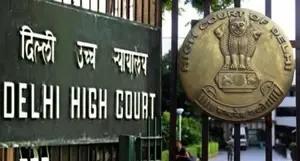
Delhi HC grants bail to Khurram Parvez after 4.5 years in UAPA custody
Synopsis
After more than four-and-a-half years behind bars and a trial still stuck at the charge-framing stage — with 197 witnesses yet to be examined — the Delhi High Court ruled that Khurram Parvez's constitutional right to liberty could override UAPA's stringent bail bar. The ruling is a significant judicial signal on the limits of indefinite pre-trial detention under anti-terror law.
Key Takeaways
The Delhi High Court granted bail to Khurram Parvez on 10 June 2025 , overturning a December 2024 trial court refusal.
Parvez has been in NIA custody since November 2021 — over four-and-a-half years — on charges under the UAPA and IPC .
The trial remains at the charge-framing stage; the prosecution intends to examine 197 witnesses if charges are framed.
The court held that Article 21 rights to personal liberty 'may even trump' the bail restriction under Section 43D(5) of the UAPA .
The NIA's case rests primarily on the statement of co-accused Muneer Ahmad Kataria , who turned approver — testimony yet to be tested at trial.
Parvez must furnish a bond of ₹2 lakh , surrender his passport, and remain in Delhi pending trial.
The Delhi High Court on Wednesday, 10 June granted bail to Kashmiri human rights activist Khurram Parvez in a terror conspiracy case investigated by the National Investigation Agency (NIA), ruling that his prolonged incarceration of over four-and-a-half years — combined with the remote prospect of an early trial conclusion — warranted release despite the stringent statutory bar under the Unlawful Activities (Prevention) Act (UAPA).
A Division Bench of Justice Navin Chawla and Justice Ravinder Dudeja set aside a 13 December 2024 trial court order that had rejected Parvez's bail plea, directing his release subject to strict conditions.
Why the Court Intervened
The bench recorded that the trial remained at the stage of arguments on the framing of charges — with the prosecution indicating it intends to examine 197 witnesses if charges are formally framed. At the current pace, a conclusion of the trial in the near future was described as unlikely.
'The stage of the trial is at the arguments for framing of charge. We are further informed that the prosecution intends to examine 197 witnesses in case the charge is framed against the appellant,' the judgment noted.
Invoking a series of Supreme Court precedents on prolonged detention under special statutes, the bench held that Parvez's right to personal liberty under Article 21 of the Constitution had to be weighed against the restrictions in Section 43D(5) of the UAPA. 'The appellant's rights under Article 21 of the Constitution of India need to be balanced and may even trump the restriction imposed under Section 43D(5) of the UAPA,' the bench said. The court also took note of the fact that Parvez is physically infirm, having lost a leg in a landmine blast in 2004.
The NIA's Allegations
The NIA has accused Parvez — associated with the Jammu and Kashmir Coalition of Civil Society (JKCCS) — of operating under the cover of human rights work while allegedly collecting sensitive information on security forces, maintaining dossiers on Army officers, promoting separatist activities, recruiting overground workers for the Pakistan-based terror outfit Lashkar-e-Taiba (LeT), and facilitating contacts with Pakistan-based handlers.
The agency also alleged that Parvez attempted to secure the release of seized digital devices through illegal gratification paid to a former NIA officer, relying on the statement of co-accused Muneer Ahmad Kataria, who subsequently turned approver.
Court's Assessment of the Evidence
The bench, however, observed that the prosecution's case against Parvez was 'primarily based' on Kataria's statement, whose testimony is yet to be tested at trial. 'While the above statement raises serious allegations against the appellant, these allegations are based on the statement of a co-accused who has since turned approver and who himself claims to be an NIA informer. His evidence is yet to be tested in trial,' the court noted, explicitly refraining from expressing any opinion on the merits.
Bail Conditions
Parvez has been directed to furnish a personal bond of ₹2 lakh with two sureties, surrender his passport, remain within Delhi unless permitted by the trial court, report periodically to the investigating officer, and refrain from influencing witnesses or making public comments on the case's merits. The court additionally barred him from uploading or circulating any anti-national material and from engaging in any activity prejudicial to public order or the integrity of the trial.
Parvez has been in custody since November 2021. The trial court had earlier rejected his bail in December 2024, holding that allegations against him appeared prima facie true under the UAPA's stringent provisions. The High Court's intervention now shifts the matter back to the trial, where the weight of evidence — particularly Kataria's approver testimony — will face its first real test.
Point of View
If implicit, rebuke of investigative and prosecutorial timelines under special statutes. What the judgment does not resolve is whether the underlying allegations — LeT linkages, dossiers on Army officers, alleged bribery of an NIA officer — have substance; that reckoning is deferred to trial. The approver testimony of Kataria, flagged as the prosecution's primary pillar, will now face cross-examination under intense scrutiny.
NationPress
26 Oct 2026
Frequently Asked Questions
Why did the Delhi High Court grant bail to Khurram Parvez?
The Delhi High Court granted bail primarily because Parvez had already spent over four-and-a-half years in custody and the trial had not yet progressed beyond the charge-framing stage, with 197 witnesses still to be examined. The bench held that his constitutional right to personal liberty under Article 21 could override the stringent bail restrictions of Section 43D(5) of the UAPA.
What charges does the NIA have against Khurram Parvez?
The NIA has accused Parvez of being part of a larger conspiracy linked to the Pakistan-based terror outfit Lashkar-e-Taiba (LeT), with alleged offences including terrorism, terror funding, recruitment of overground workers, criminal conspiracy, and anti-national activities under the UAPA and IPC. He is also alleged to have collected sensitive information on security forces and maintained dossiers on Army officers.
What conditions has the court imposed on Khurram Parvez?
Parvez must furnish a personal bond of ₹2 lakh with two sureties and surrender his passport. He must remain within Delhi unless permitted by the trial court, report periodically to the investigating officer, refrain from influencing witnesses or commenting publicly on the case, and not upload or circulate any anti-national material.
Who is the key witness in the NIA case against Parvez?
The NIA's case is primarily based on the statement of co-accused Muneer Ahmad Kataria, who later turned approver. The Delhi High Court noted that Kataria's testimony has not yet been tested at trial and that he himself claims to have been an NIA informer — factors the bench weighed while assessing the strength of the prosecution's case at this stage.
What is UAPA and why does it make bail difficult?
The Unlawful Activities (Prevention) Act (UAPA) is India's primary anti-terror law. Section 43D(5) of the UAPA prohibits courts from granting bail if the court, on a perusal of the case diary or report, is of the opinion that there are reasonable grounds for believing the accusations are prima facie true — a far higher bar than regular bail provisions. The Delhi High Court's ruling signals that even this bar can yield to prolonged pre-trial detention under Article 21.