Is the Delhi HC right to express ‘serious concern’ over bail plea delays?
Synopsis
The Delhi High Court has expressed significant concern over the delays in bail plea decisions, highlighting the distress caused to incarcerated individuals. The court emphasized that such delays violate fundamental rights and must be addressed promptly. This ruling raises vital questions about the judicial process and the treatment of accused individuals awaiting justice.
Key Takeaways
The Delhi High Court has expressed serious concerns over bail plea delays.
Prolonged delays can cause trauma to incarcerated individuals.
The court emphasized that such delays violate fundamental rights.
Judicial precedents stress the need for timely disposal of bail matters.
In this case, the bail plea was pending for 25 months .
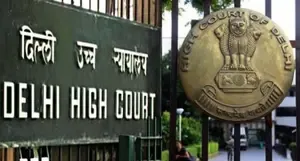
New Delhi, Feb 13 (NationPress) The Delhi High Court has raised a “serious concern” regarding the excessive delays in the resolution of bail applications, stating that keeping such requests unresolved for extended periods leads to significant distress for the accused and infringes upon their fundamental rights. In a ruling granting regular bail to an individual involved in a 2021 murder case, a single-judge Bench led by Justice Girish Kathpalia pointed out that the bail request had been pending for 25 months in the trial court, and had not progressed in the Delhi High Court either.
“I must document the genuine and respectful anguish expressed by the learned counsel for the accused/applicant, who noted that for 25 months, his bail application remained unresolved in the trial court despite having submitted an early hearing request. Even before this court, the suffering persisted, as this application remains unresolved to this day,” Justice Kathpalia noted in his order on Thursday.
The accused, identified as Amir, had sought regular bail concerning an FIR filed at the Seemapuri police station under Sections 302, 307, and 34 of the IPC. The prosecution claimed that on the day of the incident, the complainant Anees and his companions—Subhan, Sohail, Arshad, and Sameer—were gathered when three accused individuals allegedly arrived at the scene, leading to a quarrel.
It was alleged that one of the co-accused stabbed Shoaib, who later succumbed to his injuries, and also attacked Sohail when he attempted to intervene.
Amir was accused of restraining Sohail from behind during the assault.
The defense counsel argued that Amir has been in custody since October 24, 2021, and contended that the incident was a spontaneous occurrence. It was also emphasized that Sohail, the injured witness who was allegedly restrained by the applicant, survived and has already provided testimony in the trial court.
While opposing the bail plea, the prosecution maintained that the charges were serious. However, they conceded that all public witnesses had already been examined, and there was no risk of the accused tampering with evidence if released on bail.
Describing the delay in processing bail requests as intolerable, the Delhi High Court observed: “It is a matter of serious concern that bail applications remained pending for such an inordinately long period before the Court of Sessions as well as this court.” The court further stated that judicial precedents consistently emphasize the importance of resolving bail matters expeditiously.
“It has been repeatedly noted in numerous judicial rulings that whether a bail application is approved or denied, it should not remain unresolved for such lengthy periods. This delay constitutes trauma for the incarcerated accused and a violation of their fundamental rights,” Justice Kathpalia remarked.
Taking into account the prolonged detention and the current stage of the trial, the Delhi High Court concluded that there was no justification for further denying the applicant's liberty.
“Given the circumstances, I see no reason to continue restricting the accused/applicant's liberty,” Justice Kathpalia stated, permitting his release on bail upon provision of a personal bond of Rs 10,000 along with one surety of the same amount to the satisfaction of the trial court.
The Delhi High Court also instructed that a copy of the order be immediately sent to the appropriate Jail Superintendent to notify the accused.
Point of View
It is imperative to recognize the Delhi High Court’s stance on the unacceptable delays in bail plea resolutions. This reflects a pressing need for judicial reforms to ensure that fundamental rights of the accused are upheld timely. The Nation stands firmly in advocating for justice and the prompt handling of legal matters to mitigate undue suffering.
NationPress
7 Oct 2026
Frequently Asked Questions
What is the main issue raised by the Delhi High Court?
The Delhi High Court has raised serious concerns about the excessive delays in resolving bail applications, which can lead to trauma for incarcerated individuals.
How long did the bail plea remain pending in this particular case?
In this case, the bail plea remained pending for 25 months before the trial court and continued to be unresolved in the Delhi High Court.
What were the charges against the accused?
The accused, Amir, faced charges under Sections 302 , 307 , and 34 of the IPC related to a murder case.
What did the Delhi High Court conclude about the bail application?
The court concluded that there was no reason to further deny the accused’s liberty and allowed his release on bail.
What does this ruling imply for the judicial system?
This ruling underscores the urgent need for reform in the judicial process to ensure timely resolutions of bail applications.