Does the presence of an open dustbin and urinal violate the right to a clean environment?
Synopsis
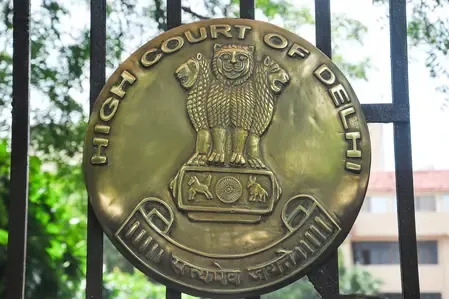
The Delhi High Court has taken a significant step towards ensuring residents' right to a dignified life by ordering the demolition of an open garbage bin and public urinal in old Delhi. This ruling upholds the principle of living in a clean and healthy environment, reinforcing the importance of sanitary conditions for local communities.
Key Takeaways
Delhi High Court ruled against open garbage disposal near residences.
The ruling emphasizes the right to live with dignity as per Article 21.
Public hygiene is critical for community health and well-being.
Civic authorities are mandated to maintain sanitary conditions.
Residents deserve access to proper sanitation facilities.
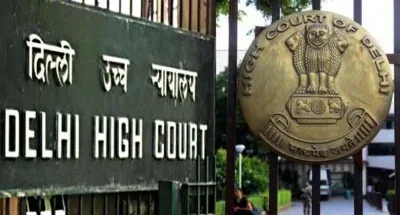
New Delhi, February 20 (NationPress) - The High Court of Delhi has instructed the Municipal Corporation of Delhi (MCD) to remove an open garbage bin and a public urinal that have been set up next to a residential home in old Delhi. The court ruled that their existence infringes upon the resident's right to live in dignity within a clean and healthy environment as guaranteed by Article 21 of the Constitution.
Addressing a writ petition filed by a local advocate, a single-judge bench led by Justice Amit Bansal acknowledged that the presence of the open dustbin and public urinal adjacent to a residence creates significant nuisance and forces residents into unhygienic living conditions.
The Delhi High Court mandated the civic authority to “immediately demolish the open dustbin and the urinal positioned next to the petitioner's house” within a period of four weeks.
The petitioner claimed that the concerned authorities had set up an unauthorized open garbage bin and urinal along the eastern boundary of his property, where approximately 150 local residents dispose of waste and use the urinal, resulting in severe inconvenience and unsanitary living conditions.
His plea indicated that despite numerous requests made to the civic authorities for maintaining sanitary conditions and relocating these facilities, no substantial action was taken.
In a status report submitted to the Delhi High Court, the MCD mentioned that they were conducting routine inspections and cleaning of the urinal. They also informed that a joint inspection was carried out following a prior order; however, the alternative site proposed by the petitioner was deemed unsuitable.
In response, the petitioner argued that the area is predominantly residential and that residents should have access to toilets within their homes, making a public urinal unnecessary. He further asserted that under the Solid Waste Management Rules, the MCD is obligated to collect waste directly from households rather than relying on open dumping sites.
After considering the arguments, Justice Bansal remarked: “In my well-founded opinion, the existence of an open garbage bin and a public urinal constitutes a clear nuisance for the residents, including the petitioner, whose home is adjacent to these facilities.”
“A vital aspect of healthy living is having a hygienic environment. The absence of such an environment undermines the petitioner's right to live with dignity,” the Delhi High Court stated.
The court added that the existence of the public urinal and open garbage bin “blatantly violates his right to life as protected under Article 21 of the Constitution, which encompasses the right to live with dignity in a clean and healthy environment.”
In its directive, the Delhi High Court ordered the MCD to demolish the open dustbin and urinal adjacent to the petitioner’s residence within four weeks and additionally instructed the civic body to install a covered dustbin for the segregation of dry and wet waste at a suitable distance from the petitioner’s property.
Point of View
I believe this ruling by the Delhi High Court reinforces our commitment to uphold the rights of citizens to live in a clean and dignified environment. It underlines the importance of accountability for municipal authorities in maintaining public hygiene and ensuring that urban spaces are livable for all residents.
NationPress
17 Sept 2026
Frequently Asked Questions
What was the Delhi High Court's ruling regarding the open garbage bin and urinal?
The Delhi High Court ordered the Municipal Corporation of Delhi (MCD) to demolish an open garbage bin and public urinal located next to a residential property, asserting that their presence violated the resident's right to a clean and healthy environment.
Why did the petitioner challenge the existence of the dustbin and urinal?
The petitioner argued that the open garbage bin and urinal created unsanitary conditions and were a nuisance, impacting the dignity and health of residents in the area.
What does Article 21 of the Constitution state?
Article 21 of the Constitution guarantees the right to life, including the right to live with dignity in a clean and healthy environment.
What actions had the petitioner taken before approaching the court?
The petitioner had made several representations to civic authorities requesting the maintenance of sanitary conditions and the relocation of the facilities, but no effective action was taken.
What additional directives did the court issue to the MCD?
The court directed the MCD to provide a covered dustbin for waste segregation at an appropriate distance from the petitioner's property.