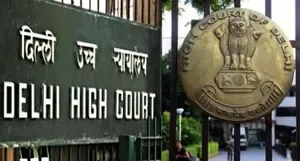
Delhi HC allows POCSO accused to sit IGNOU exam under police custody

Synopsis
The Delhi High Court refused to free a rape and POCSO accused on interim bail but found a middle ground — ordering jail authorities to escort him under police custody to his IGNOU examination centre on 8 July. It is a rare judicial balancing act between the right to education and the gravity of charges involving the alleged sexual assault of an eight-year-old girl.
Key Takeaways
The Delhi High Court on 1 July 2025 denied interim bail to an accused facing trial under Section 376 IPC and Section 6 of the POCSO Act .
Justice Girish Kathpalia ordered jail authorities to escort the accused under custody to his IGNOU exam centre on 8 July between 10 am and 7 pm .
The accused allegedly committed penetrative sexual assault on an eight-year-old girl who attended his tuition classes.
The prosecution cited DNA profiling evidence against the accused and flagged flight risk as grounds to oppose bail.
The accused must submit his IGNOU hall ticket to the Jail Superintendent before the exam date.
The court clarified its observations will not prejudice the accused's defence during trial.
The Delhi High Court on Wednesday, 1 July 2025, declined to grant interim bail to a man facing trial for rape and offences under the Protection of Children from Sexual Offences (POCSO) Act, but directed jail authorities to escort him under custody to his examination centre so he can appear in an Indira Gandhi National Open University (IGNOU) exam on 8 July. The ruling by a single-judge Bench of Justice Girish Kathpalia attempts to balance the accused's right to education against the prosecution's concerns about flight risk.
Background of the Case
The accused is facing trial in connection with an FIR registered at Uttam Nagar police station under Section 376 of the Indian Penal Code and Section 6 of the POCSO Act. According to the prosecution, the accused allegedly committed penetrative sexual assault on an eight-year-old girl who used to visit him for tuition classes. The trial is reportedly at an advanced stage, with the Investigating Officer having already been partly cross-examined.
What the Court Ordered
Justice Kathpalia directed that on 8 July, between 10 am and 7 pm, the accused be taken under custody to the examination centre — not released on bail. The court also directed the accused to furnish a copy of his IGNOU hall ticket or admit card to the concerned Jail Superintendent at the earliest to ensure compliance. The order was further directed to be communicated to the Jail Superintendent concerned.
The court clarified: 'It is made clear that none of the above observations shall be read to the prejudice of defence of the accused/applicant during trial,' Justice Kathpalia noted in the order.
Why Interim Bail Was Denied
Counsel for the accused had sought interim bail specifically to appear in the 8 July examination, submitting that he had previously been granted interim bail for similar purposes and that the exam was important for his career. However, the prosecution strongly opposed the plea, arguing that forensic evidence — including DNA profiling — was against the accused, and expressing apprehension that he could abscond if released. The prosecution also questioned why the accused had not approached authorities for allotment of an examination centre inside the jail itself.
The Legal Balancing Act
'Considering the overall circumstances and balancing the rival rights,' Justice Kathpalia opted for the middle path: custody escort rather than bail. This approach allows the accused to exercise his right to education without compromising the integrity of the ongoing trial. Notably, courts in India have previously grappled with similar requests, and the custody-escort mechanism has emerged as a recognised judicial tool to balance competing rights in such cases. The decision underscores that the right to pursue education does not automatically translate into a right to temporary liberty, particularly where prosecution evidence is described as substantial.
What Happens Next
The accused must submit his IGNOU hall ticket to the Jail Superintendent before 8 July. The trial proceedings — including the cross-examination of the Investigating Officer — are expected to continue thereafter. The court's observations are explicitly ring-fenced from influencing the trial outcome.
Point of View
But it raises an uncomfortable question: why was an exam centre inside the jail not arranged in the first place — as the prosecution itself pointed out? Courts routinely recognise the right to education, yet that right cannot be allowed to become a periodic bail-by-another-name mechanism in serious POCSO cases where DNA evidence is reportedly on record. The more systemic issue is whether Indian jails have adequate infrastructure for inmates to pursue open-university education without requiring court intervention each time an exam approaches. Until that gap is addressed, these orders will keep recurring.
NationPress
30 Sept 2026
Frequently Asked Questions
What did the Delhi High Court order in the POCSO accused IGNOU exam case?
The Delhi High Court directed jail authorities to escort the accused under police custody to his IGNOU examination centre on 8 July 2025, between 10 am and 7 pm. The court declined to grant him interim bail but ensured he could appear for the exam without being released.
Why was interim bail denied to the accused?
The prosecution argued that the trial was at an advanced stage, that forensic evidence including DNA profiling was against the accused, and that there was a risk he could abscond if released. The court accepted these concerns and refused bail while allowing the custody-escort alternative.
What are the charges against the accused?
The accused faces trial under Section 376 of the Indian Penal Code (rape) and Section 6 of the POCSO Act, which pertains to aggravated penetrative sexual assault. He is alleged to have sexually assaulted an eight-year-old girl who attended his tuition classes.
Who presided over the Delhi High Court hearing?
A single-judge Bench of Justice Girish Kathpalia of the Delhi High Court heard and decided the matter on 1 July 2025.
What must the accused do before the exam on 8 July?
The accused must furnish a copy of his IGNOU hall ticket or admit card to the concerned Jail Superintendent at the earliest so that the custody-escort arrangement can be operationalised in compliance with the court's order.