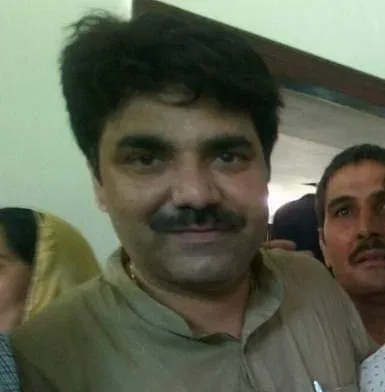
Delhi HC rejects Naresh Balyan's bail plea in MCOCA organised crime case
Synopsis
The Delhi High Court has denied bail to former AAP MLA Naresh Balyan in the MCOCA organised crime case — even as a separate Delhi court discharged him in a parallel extortion matter, citing a near-total absence of credible evidence. The contrasting verdicts highlight the legal tightrope Balyan walks, and raise pointed questions about the quality of the Delhi Police investigation.
Key Takeaways
The Delhi High Court on 3 August rejected former AAP MLA Naresh Balyan 's bail plea in the MCOCA organised crime case.
Justice Manoj Jain of the Delhi HC delivered the ruling after reserving the verdict the previous week.
Balyan was rearrested in December 2024 under MCOCA minutes after securing bail in a separate extortion case — inside the Rouse Avenue Court premises.
A supplementary charge sheet names four accused , alleging a structured syndicate involved in extortion and arms trafficking in Delhi.
In a parallel case, a Delhi court on 31 July discharged Balyan from the extortion FIR, finding 'not a single piece of evidence' linking him to gangster Kapil Sangwan .
The trial court criticised the police probe for 'lost time', unexplained delays, and failure to seize original devices containing alleged audio recordings.
The Delhi High Court on Monday, 3 August dismissed the bail plea of former Aam Aadmi Party (AAP) MLA Naresh Balyan in a case registered under the stringent Maharashtra Control of Organised Crime Act (MCOCA). A single-judge bench of Justice Manoj Jain, who had reserved the order last week, declined to grant relief to the former Uttam Nagar legislator, keeping him in custody in the organised crime matter registered by the Delhi Police Crime Branch.
Background: Arrest and Charges
Balyan was first arrested on 30 November 2024 after audio clips allegedly featuring him in conversation with gangster Kapil Sangwan, also known as Nandu, surfaced online. The clips purportedly suggested plans to threaten and extort money from builders and other individuals in Delhi.
He was rearrested by the Crime Branch in December 2024 under the MCOCA — within minutes of securing bail in a separate extortion case from the Rouse Avenue Court. Police arrested him inside the court premises itself and took him into custody in connection with the organised crime case.
What the Prosecution Alleges
According to the Delhi Police, Balyan is allegedly part of a structured criminal syndicate operating in Delhi and adjoining areas, involved in organised crimes including extortion and arms trafficking. A supplementary charge sheet names four accused: Vijay alias Kalu, Sahil alias Poli, Naresh Balyan, and Jyoti Prakash alias Baba. Police had opposed bail, contending that the investigation was at a critical stage and that Balyan's release could compromise the probe.
Balyan has consistently maintained that the prosecution is politically motivated and that the allegations were fabricated as part of a larger conspiracy against him.
Parallel Case: Discharge in Extortion Matter
In a significant development running parallel to the MCOCA proceedings, a Delhi court on 31 July discharged Balyan of all charges in a separate extortion case arising from an FIR registered at Mohan Garden police station. Additional Chief Judicial Magistrate Paras Dalal held that the prosecution had failed to cross the 'foundational threshold test' required for framing of charges.
The magistrate observed that there was 'not a single piece of evidence' to prima facie establish any prior meeting of minds between Balyan and absconding gangster Kapil Sangwan. The trial court was sharply critical of the police investigation, noting it suffered from 'lost time', unexplained delays, and over-reliance on secondary electronic evidence.
Crucially, the court found that the original devices containing the alleged audio recordings were never seized, no effort was made to trace the source of recordings uploaded on Facebook, and the investigation proceeded on assumptions rather than objective evidence. 'There is no iota of evidence that both accused persons ever conversed before receipt of threatening messages/audio recordings by the complainant,' the court stated.
What Happens Next
With the Delhi High Court rejecting bail in the MCOCA case, Balyan remains in custody. The MCOCA proceedings before the trial court will continue. The contrasting outcomes — discharge in the extortion matter, bail denial in the MCOCA case — set up a legally complex path ahead for the former legislator. His legal team is expected to weigh further options, including a challenge before a higher bench.
Point of View
Discharged in extortion — expose the fault lines in how Delhi Police has handled the Balyan case. A trial court finding 'not a single piece of evidence' and criticising the probe for over-reliance on secondary electronic evidence is a damning indictment, yet the MCOCA case, with its far higher threshold for bail, keeps Balyan behind bars regardless. MCOCA is a law designed for organised crime syndicates; its application to a sitting legislator on the basis of audio clips whose original devices were never seized will face intense judicial scrutiny as the trial progresses. The political dimension — Balyan's claim of fabrication, the timing of his rearrest inside a courtroom — means this case will remain a flashpoint between the AAP and the Delhi Police long after the bail hearings conclude.
NationPress
17 Sept 2026
Frequently Asked Questions
Why did the Delhi High Court reject Naresh Balyan's bail?
The Delhi High Court rejected Naresh Balyan's bail on 3 August in the MCOCA organised crime case, with Justice Manoj Jain upholding the trial court's earlier refusal. The Delhi Police had argued that the investigation was at a critical stage and that releasing him could hamper the probe.
What is the MCOCA case against Naresh Balyan?
The Maharashtra Control of Organised Crime Act (MCOCA) case against Balyan was registered by the Delhi Police Crime Branch following the surfacing of audio clips in November 2024 that allegedly feature him in conversation with gangster Kapil Sangwan alias Nandu. The clips purportedly discussed plans to extort builders and other individuals. Police allege he is part of a structured criminal syndicate involved in extortion and arms trafficking.
How was Naresh Balyan rearrested in December 2024?
Balyan was rearrested by the Delhi Police Crime Branch in December 2024 within minutes of being granted bail in a separate extortion case by the Rouse Avenue Court. Police arrested him inside the court premises itself and took him into custody under the MCOCA.
What happened in the parallel extortion case against Balyan?
On 31 July, a Delhi court discharged Balyan of all charges in the extortion case registered at Mohan Garden police station. Additional Chief Judicial Magistrate Paras Dalal held that the prosecution failed to establish the foundational facts needed to frame charges, noting there was no evidence of any prior contact between Balyan and gangster Kapil Sangwan.
What did the court say about the Delhi Police investigation?
The trial court was sharply critical of the Delhi Police probe in the extortion case, citing 'lost time', unexplained delays, and over-reliance on secondary electronic evidence. It noted that the original devices containing the alleged audio recordings were never seized and that no effort was made to trace the source of recordings uploaded on Facebook.