Delhi Lakshmi Yojana: Women to register from Aug 1 for ₹2,500 monthly aid
Synopsis
Delhi's ₹2,500-a-month women's aid scheme goes live for registration on 1 August, with the first payments timed to Raksha Bandhan. The Cabinet-cleared Delhi Lakshmi Yojana — a renamed Mahila Samriddhi Yojana — comes with strict eligibility: 10-year residency, income below ₹2.5 lakh, no four-wheeler, and one woman per family.
Key Takeaways
The Delhi Cabinet under Chief Minister Rekha Gupta approved the Delhi Lakshmi Yojana on 28 July 2025 .
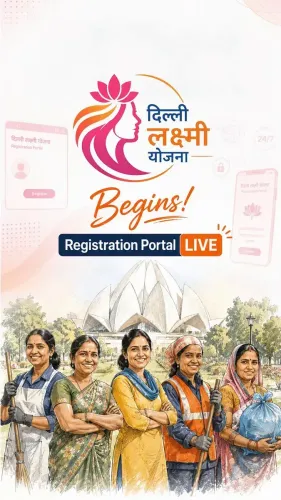
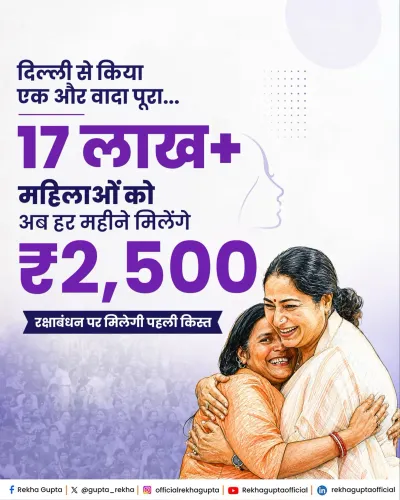
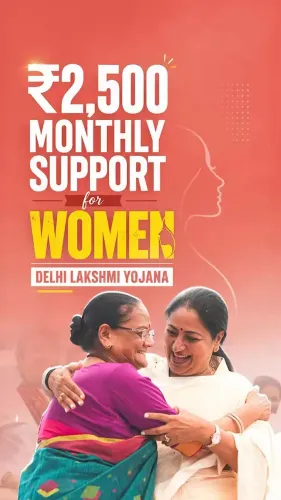
Eligible women aged 21–60 will receive ₹2,500 per month ; registration portal opens 1 August .
First disbursement is targeted for Raksha Bandhan 2025 for the initial batch of verified beneficiaries.
Eligibility requires at least 10 years of Delhi residency, annual family income below ₹2.5 lakh , no four-wheeler ownership, and no existing government pension.
Only the eldest eligible woman per family qualifies; families with a criminal record are excluded.
The scheme was previously called Mahila Samriddhi Yojana before being officially renamed.
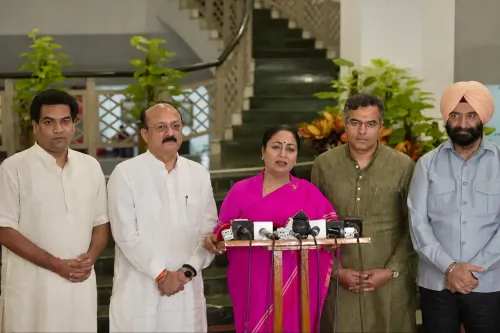
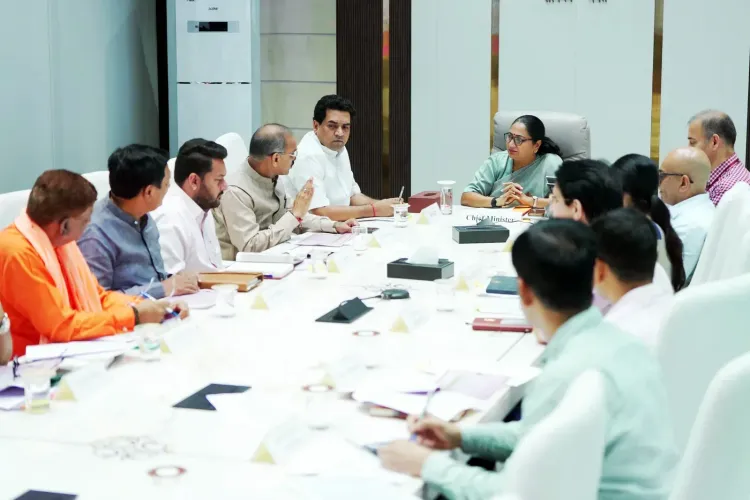
The Delhi Cabinet, chaired by Chief Minister Rekha Gupta, on Tuesday, 28 July 2025, approved the launch of the Delhi Lakshmi Yojana — a monthly financial assistance scheme offering ₹2,500 to eligible women in the capital. The registration portal will go live on 1 August, with the first disbursement targeted for Raksha Bandhan this year.
How the Scheme Works
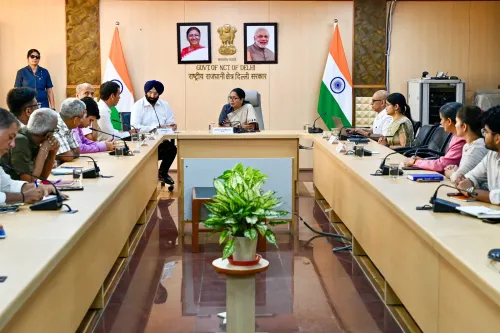
Eligible women will be able to apply through an online portal from 1 August. Applications will undergo a verification process before disbursement is approved. Chief Minister Gupta said the government's aim is to implement the scheme with complete transparency and accountability, and instructed officials during a review meeting to ensure strict adherence to all guidelines so that only genuine beneficiaries are covered.
The scheme was earlier known as the Mahila Samriddhi Yojana, which the Delhi government officially renamed to the Delhi Lakshmi Yojana ahead of its rollout.
Who Is Eligible
Women aged between 21 and 60 years are eligible, provided they — or their families — have been residents of Delhi for at least 10 years. The family's annual income must not exceed ₹2.5 lakh. Only the eldest eligible woman in a family qualifies, meaning just one woman per household can avail the benefit.
Women who already receive any government pension or regular financial assistance are excluded. Families that own a four-wheeler are also ineligible. Additionally, neither the applicant nor her family should have any criminal record.
What the Government Said
Chief Minister Gupta described 28 July as a day of celebration for women in Delhi, saying the first instalment for the initial batch of beneficiaries would be disbursed by Raksha Bandhan. She credited the broader vision of Prime Minister Narendra Modi, under whose leadership, she said, women-led development has become a cornerstone of national progress.
Gupta added that when a woman in a household achieves financial security, it accelerates the progress of the family, society, and the nation. The Delhi government estimates the scheme will directly benefit lakhs of women across the capital.
Context and Significance
The Delhi Lakshmi Yojana is the latest in a series of direct-benefit transfer schemes targeting women across Indian states — a model that has gained traction in Maharashtra, Karnataka, and Madhya Pradesh, among others. For Delhi, where a significant share of households fall in the lower-income bracket, a monthly transfer of ₹2,500 could meaningfully supplement household income for those who qualify. The scheme's 10-year residency requirement and single-beneficiary-per-family rule are designed to focus resources on long-term residents and avoid duplication.
With registration opening on 1 August and the first payments expected around Raksha Bandhan, the government's delivery timeline will be closely watched as a test of administrative readiness.
Point of View
Timed to a culturally resonant occasion, with a renamed scheme to signal a fresh political identity. The eligibility architecture — 10-year residency, income cap, no four-wheeler, one per family — is tighter than comparable state schemes, which may limit reach but also reduces fiscal bleed and targeting errors. The real accountability test will be whether the Raksha Bandhan disbursement deadline is met without verification shortcuts, and whether 'lakhs of women' is a verifiable figure or an aspirational one. Delhi's administrative capacity for large-scale DBT at speed has historically been uneven, and the portal's performance on 1 August will be an early signal.
NationPress
26 Oct 2026
Frequently Asked Questions
What is the Delhi Lakshmi Yojana?
The Delhi Lakshmi Yojana is a monthly financial assistance scheme approved by the Delhi Cabinet on 28 July 2025, offering ₹2,500 per month to eligible women in Delhi. It is a renamed version of the earlier Mahila Samriddhi Yojana.
When does registration for Delhi Lakshmi Yojana begin?
The online registration portal for the Delhi Lakshmi Yojana opens on 1 August 2025. Women can apply through the portal, after which their applications will be verified before disbursement.
Who is eligible for the Delhi Lakshmi Yojana?
Women aged 21 to 60 who have been Delhi residents for at least 10 years are eligible, provided their family's annual income does not exceed ₹2.5 lakh. Only the eldest eligible woman per family qualifies, and families owning a four-wheeler or receiving other government financial assistance are excluded.
When will the first payment be made under the scheme?
The first instalment for the initial batch of verified beneficiaries is expected to be disbursed by Raksha Bandhan 2025, according to Chief Minister Rekha Gupta.
How many women will benefit from the Delhi Lakshmi Yojana?
The Delhi government estimates the scheme will directly benefit lakhs of women across the capital, though a precise figure has not been officially confirmed.