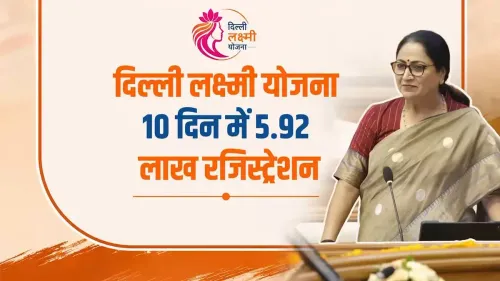
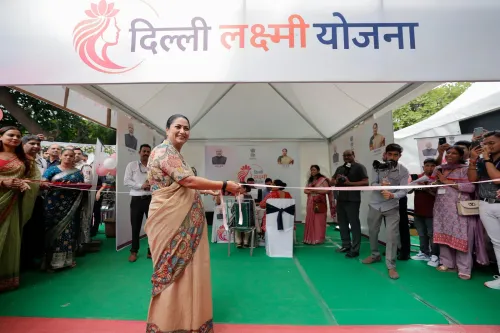
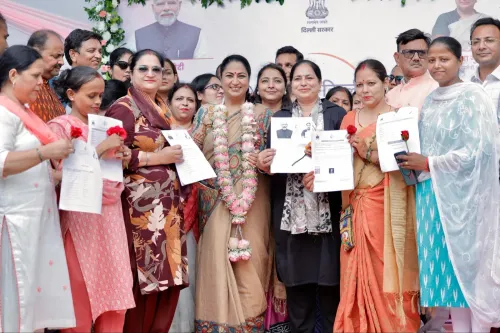
Delhi Lakshmi Yojana launches today: ₹2,500/month for 17 lakh women
Synopsis
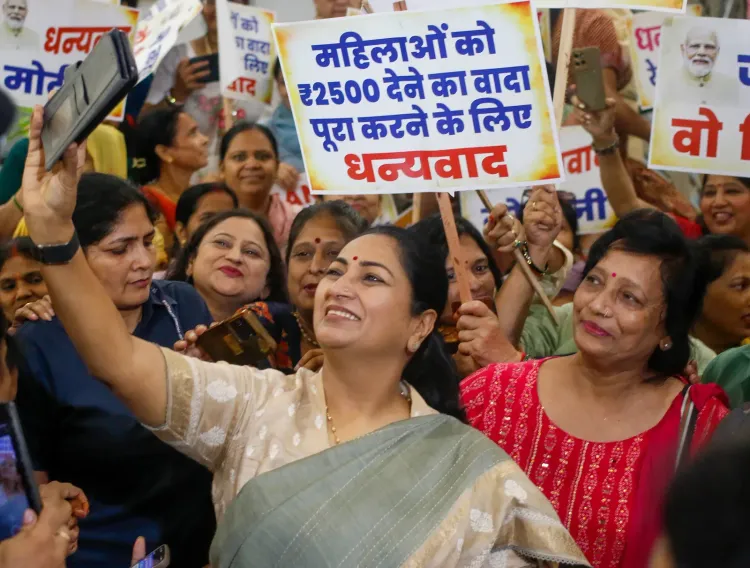
The Delhi government's Lakshmi Yojana goes live on 1 August, promising ₹2,500 a month to over 17 lakh women — with a twist: part of the payout will flow through a CBDC wallet, making it one of the first state-level schemes to route welfare money through digital currency. The ₹5,110 crore commitment is the Rekha Gupta government's biggest welfare bet yet.
Key Takeaways
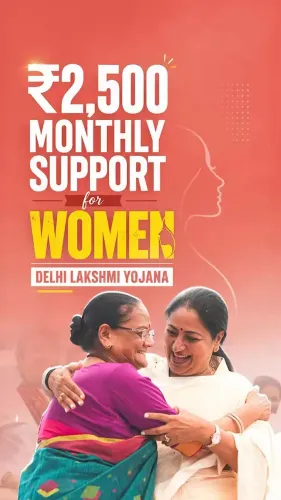
The Delhi Lakshmi Yojana launches on 1 August 2025 , offering ₹2,500 per month to eligible women.
More than 17 lakh women across Delhi are expected to benefit once the scheme is fully operational.
The Delhi government has allocated ₹5,110 crore in the 2026-27 Budget for the scheme.
Eligible women must be aged 21–60 years with a household annual income of up to ₹2.5 lakh .
Beneficiaries can receive ₹1,500 in a bank deposit and ₹1,000 via a CBDC wallet , or the full ₹2,500 in a deposit account.
Income tax payers, GST filers, government employees, and PSU family members are among those excluded.
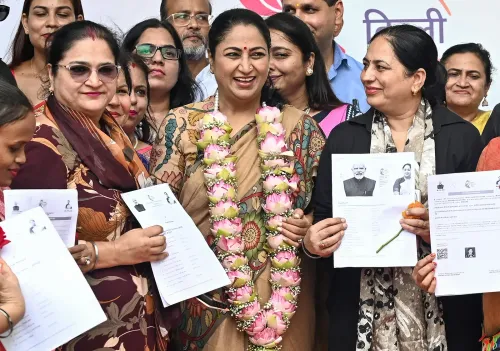
The Rekha Gupta-led Delhi government is set to formally launch the Delhi Lakshmi Yojana on 1 August 2025, under which eligible women will receive a monthly financial assistance of ₹2,500. The scheme, budgeted at ₹5,110 crore in the 2026-27 Delhi Budget, is expected to benefit more than 17 lakh women across the national capital once fully operational.
Who Qualifies
Women aged between 21 and 60 years from households with an annual income of up to ₹2.5 lakh are eligible to apply. The application process will be conducted entirely through a dedicated online portal, which will go live immediately after the formal launch.
Several categories are excluded from the scheme. Women who are income tax payers, GST filers, government employees, or are already receiving benefits under other government welfare programmes will not qualify. Families that own a four-wheeler, consume more than 2,400 units of electricity annually, or have members serving in government departments or Public Sector Undertakings (PSUs) are also ineligible. Women with more than three living children or those with a criminal record are similarly excluded.
How the Money Will Be Disbursed
Beneficiaries will have two options for receiving the monthly assistance. Under the first, ₹1,500 will be deposited into a recurring deposit or fixed deposit account each month, while the remaining ₹1,000 will be credited to a Central Bank Digital Currency (CBDC) wallet for approved essential purchases. Alternatively, beneficiaries may opt to receive the full ₹2,500 directly into a recurring deposit or fixed deposit account, bypassing the CBDC wallet split entirely.
Beyond Cash: Social Welfare Linkages
The Delhi Lakshmi Yojana is structured to promote broader social objectives alongside direct financial support. These include encouraging school enrolment, creation of APAAR and ABHA IDs, timely vaccination, registration on the POSHAN Tracker, and participation in campaigns such as 'Ek Ped Maa Ke Naam' and the Swachh Bharat Abhiyan. Women are also being encouraged to join self-help groups and skill development programmes as part of the scheme's conditions.
Implementation and Oversight
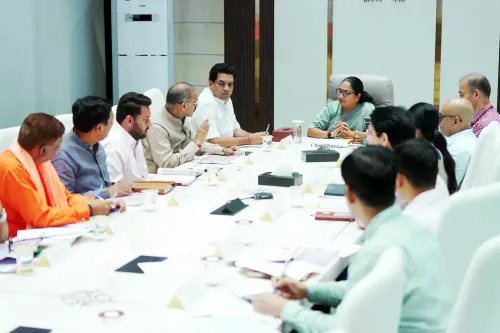
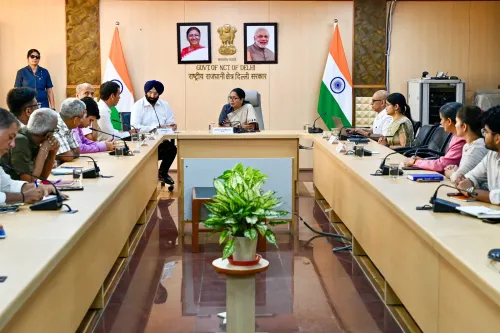
District-level committees will be responsible for scrutinising applications, granting approvals, and resolving grievances, with the stated aim of ensuring transparent and efficient rollout. This comes amid growing competition among state governments to introduce direct benefit transfer schemes targeting women voters — a trend that has intensified across several states in recent years. The Delhi scheme's CBDC wallet component is notably among the first of its kind at the state level, signalling a push toward digitally traceable welfare spending.
With applications opening online on the day of launch, the government's ability to manage portal traffic and district-level verification at scale will be an early test of the scheme's execution capacity.
Point of View
From Madhya Pradesh's Ladli Behna to Telangana's Gruha Lakshmi. What distinguishes this one is the CBDC wallet component, which channels a portion of the payout through digitally traceable currency — a mechanism that limits spending to approved categories and gives the government real-time data on utilisation. That is either smart accountability design or paternalistic gatekeeping, depending on your vantage point. The exclusion criteria are also unusually detailed, covering electricity consumption and vehicle ownership, suggesting an attempt at genuine targeting — but district-level committees processing 17 lakh applications will face enormous administrative pressure, and past state welfare rollouts have shown that bottlenecks at this stage can delay benefits for months.
NationPress
15 Sept 2026
Frequently Asked Questions
What is the Delhi Lakshmi Yojana?
The Delhi Lakshmi Yojana is a monthly financial assistance scheme launched by the Rekha Gupta -led Delhi government on 1 August 2025 , providing ₹2,500 per month to eligible women from economically weaker households. The scheme has a budget allocation of ₹5,110 crore for 2026-27 and is expected to cover more than 17 lakh women across the capital.
Who is eligible for the Delhi Lakshmi Yojana?
Women aged between 21 and 60 years from families with an annual income of up to ₹2.5 lakh are eligible. Excluded categories include income tax payers, GST filers, government employees, PSU family members, four-wheeler owners, households consuming more than 2,400 units of electricity annually, women with more than three living children, and those with a criminal record.
How will the ₹2,500 monthly assistance be paid?
Beneficiaries can choose between two options: receiving ₹1,500 in a recurring or fixed deposit account and ₹1,000 in a CBDC wallet for approved purchases, or receiving the full ₹2,500 directly into a deposit account. Applications are processed through the dedicated Delhi Lakshmi Yojana online portal.
When can women apply for the Delhi Lakshmi Yojana?
Applications open online immediately after the formal launch on 1 August 2025 . The entire process is conducted through a dedicated online portal, with district-level committees responsible for scrutiny, approval, and grievance redressal.
What is the CBDC wallet component of the scheme?
Under one disbursement option, ₹1,000 of the monthly assistance is credited to a Central Bank Digital Currency (CBDC) wallet , which can only be used for approved essential purchases. This makes the Delhi Lakshmi Yojana one of the first state-level welfare schemes in India to route a portion of benefits through digital currency.