Kejriwal: Delhi Joins Punjab in Free Buses for NEET Students
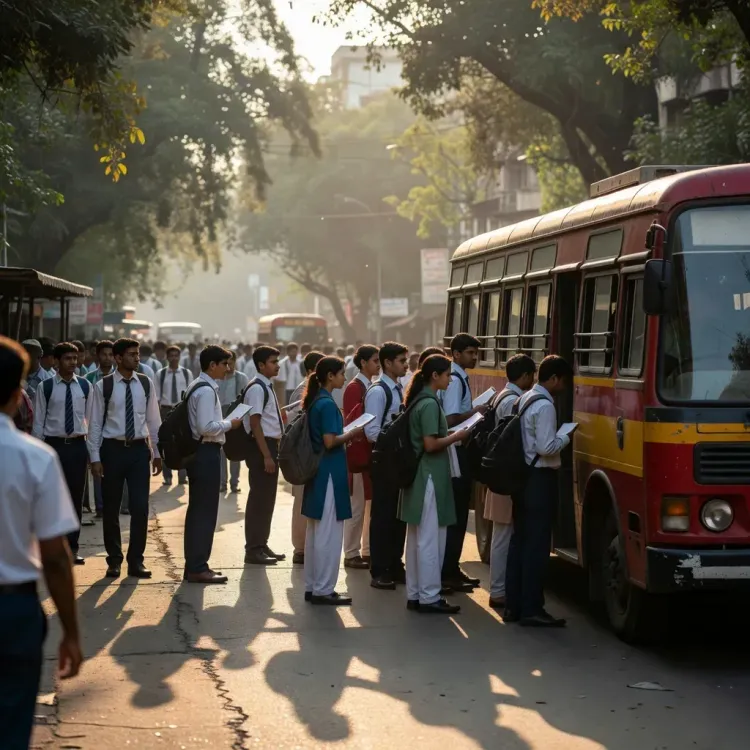
Synopsis
AAP convenor Arvind Kejriwal announced on 29 May 2026 that the Delhi government has made buses free for NEET aspirants, following a similar measure by the AAP-governed Punjab government — part of a broader party pattern of targeted transport subsidies for students and exam candidates.
Key Takeaways
Delhi government has announced free bus travel for NEET aspirants, effective as of 29 May 2026 .
The move follows an identical initiative already in place under the Punjab government , both governed by AAP .
AAP convenor Arvind Kejriwal made the announcement via a post on X , framing it as a coordinated welfare push across AAP -ruled states.
NEET is conducted by the National Testing Agency and is the sole gateway to undergraduate medical admissions in India .
The initiative extends AAP 's established pattern of targeted transport subsidies, which began with free bus travel for women in Delhi in 2019 .
Eligibility criteria, duration, and route details of the Delhi scheme are yet to be formally notified.
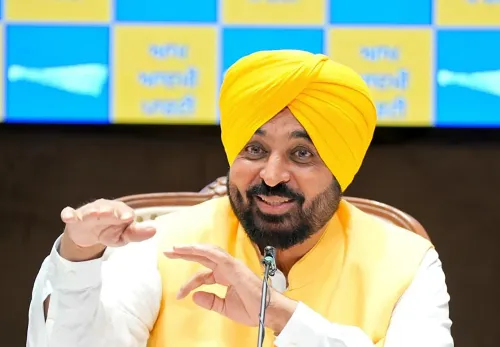
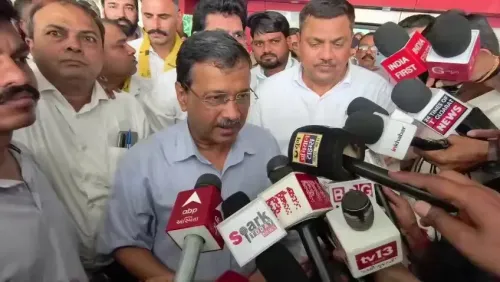
AAP convenor Arvind Kejriwal announced on Friday, 29 May 2026 that the Delhi government has extended free bus travel to NEET aspirants, following a similar move already in place under the Punjab government. The post, shared on X, positions the initiative as a coordinated welfare push by Aam Aadmi Party-governed states to ease the financial burden on medical entrance exam candidates.
Context
Kejriwal wrote in Hindi: 'Punjab sarkar ke baad ab Delhi sarkar ne bhi NEET students ke liye buses free ki' — 'After the Punjab government, now the Delhi government has also made buses free for NEET students.' The announcement frames the Delhi move as a deliberate follow-through on a model first piloted in Punjab, where AAP has governed since 2022.
NEET — the National Eligibility cum Entrance Test — is conducted annually by the National Testing Agency and serves as the sole gateway to undergraduate medical admissions across India. Hundreds of thousands of aspirants, many from lower- and middle-income households, travel significant distances to reach exam centres, making transport costs a meaningful out-of-pocket expense.
Policy Backdrop
AAP's record on subsidised transport stretches back to 2019, when the Delhi government introduced free bus travel for women under the Pink Ticket scheme — a flagship welfare measure that became a template for targeted mobility support. Concessional or free travel for senior citizens and students has since been extended in both Delhi and Punjab under successive AAP administrations.
The party has consistently framed public transport subsidies as an investment in human capital, arguing that removing friction costs — commuting fares, in particular — directly improves access to education and competitive examination preparation for families that cannot absorb such expenses.
Stakeholders and Impact
NEET aspirants in Delhi stand to benefit directly, particularly those relying on Delhi Transport Corporation (DTC) buses to reach coaching centres or examination venues. The measure mirrors the Punjab government's earlier transport concession for the same category of students, suggesting a coordinated AAP strategy across both states it governs.
For lower-income families investing heavily in medical entrance preparation — coaching fees, study materials, and repeated exam attempts — even a marginal reduction in daily commuting costs can be consequential. The announcement is also likely to resonate politically ahead of any forthcoming election cycle in either state.
What's Next
Operational details — including eligibility criteria, the duration of the free-travel window, the specific routes covered, and coordination mechanisms with DTC — are yet to be formally notified. Observers will watch whether the scheme is time-bound to the NEET examination period or extended through the broader academic calendar. The Punjab model's scope and funding structure may serve as a reference point for how Delhi rolls out implementation.
If formalised and communicated effectively to aspirants, the initiative could set a precedent for other state governments to introduce similar exam-linked transport concessions — broadening the policy conversation around reducing the total cost of competitive exam participation in India.
Point of View
Lower-middle-income voters who form a core part of the party's base. By publicly linking the two governments' actions, Kejriwal reinforces the narrative that AAP governance delivers replicable, tangible benefits rather than isolated schemes. The timing, ahead of what could be a competitive electoral cycle, suggests the party is keen to cement its identity as the architect of student-friendly policy in the states it controls. Whether the scheme's operational details match the political announcement will determine its actual impact on NEET aspirants.
NationPress
13 Oct 2026
Frequently Asked Questions
Has Delhi made bus travel free for NEET students?
Yes. AAP convenor Arvind Kejriwal announced on 29 May 2026 that the Delhi government has made bus travel free for NEET aspirants, following a similar initiative by the Punjab government.
Which states have free buses for NEET students under AAP?
Both Delhi and Punjab, governed by the Aam Aadmi Party, have announced free bus travel for NEET aspirants. Punjab introduced the measure first, with Delhi following as announced on 29 May 2026.
What is the NEET exam and who conducts it?
NEET — the National Eligibility cum Entrance Test — is conducted annually by the National Testing Agency and is the mandatory entrance examination for undergraduate medical admissions across India.
What other free transport schemes has the Delhi government introduced?
The Delhi government introduced free bus travel for women in 2019 under the Pink Ticket scheme. The NEET student initiative extends this pattern of targeted transport subsidies to competitive exam aspirants.
What are the eligibility criteria for free Delhi buses for NEET students?
Formal eligibility criteria, covered routes, and the duration of the free-travel scheme had not been officially notified at the time of Kejriwal's 29 May 2026 announcement. Details are expected to follow from the Delhi government.