Delhi-NCR's Air Quality Remains 'Poor' Despite Rainfall Relief

Synopsis
New Delhi's recent rainfall offered brief respite from summer heat but did little to improve air quality, which remains predominantly in the 'Poor' category. This article explores the ongoing pollution challenges facing the capital region.
Key Takeaways
Delhi-NCR continues to face air quality challenges despite recent rainfall.
The AQI remains primarily in the 'Poor' category across the region.
Western Disturbance contributed to the unseasonal rain.
CAQM has activated Stage-I of the GRAP due to high AQI levels.
Health risks are associated with prolonged exposure to poor air quality.
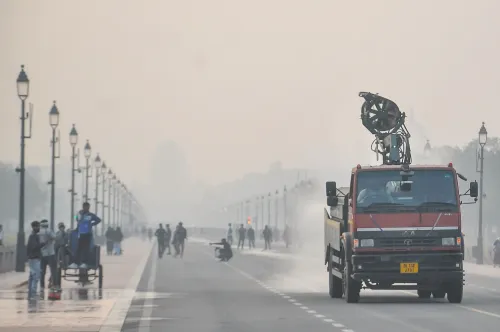
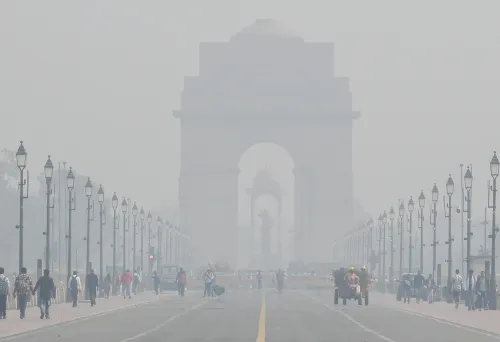
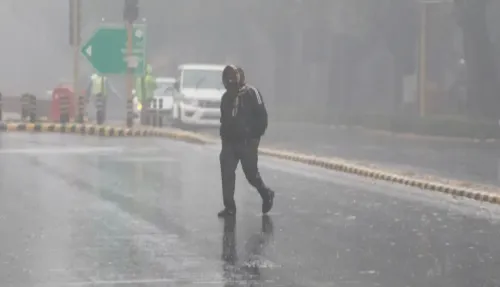
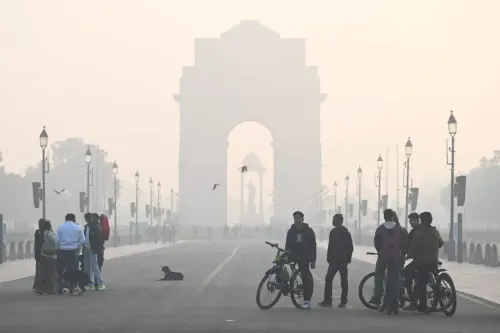
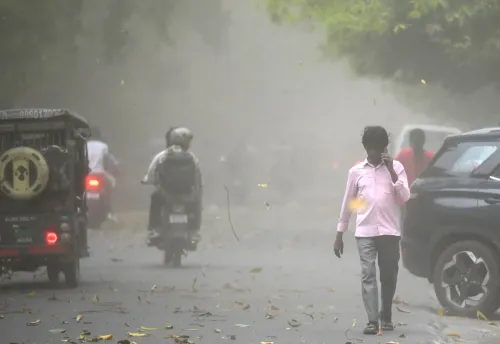
New Delhi, April 18 (NationPress) Following a surprising downpour in the Delhi-NCR region, residents experienced a momentary break from the escalating heat of the summer. However, air quality levels predominantly remained in the 'Poor' category on Saturday, with some areas reporting 'Moderate' conditions, as per official statistics.
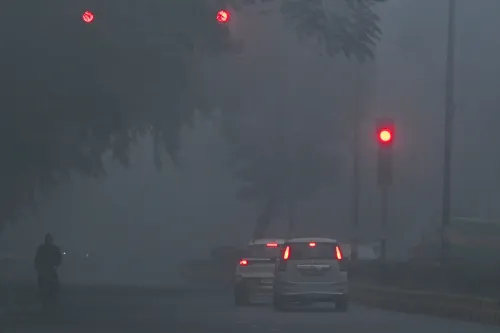
The rain, which was accompanied by overcast and hazy skies, provided a fleeting relief from the high temperatures.
Nonetheless, it did not lead to a considerable reduction in pollution levels across the area.
This shift in weather is linked to a Western Disturbance, a meteorological occurrence known for bringing unseasonal rains to northern India during the winter and pre-summer months.
Information from the Central Pollution Control Board (CPCB) indicated varying Air Quality Index (AQI) figures from different monitoring stations in Delhi.
Anand Vihar recorded a significant AQI of 265, followed by Wazirpur at 260 and Mundka at 233, all classified as 'Poor'. Other regions, including Jahangirpuri (211) and Narela (209), also displayed poor air quality.
Conversely, several areas reported 'Moderate' AQI levels, such as Ashok Vihar (186), Bawana (178), DTU (158), IIT Delhi (158), and Dwarka Sector-8 (192).
Relatively better air quality was noted in locations like Sonia Vihar (117) and JNU (125), though these figures still exceeded the 'Satisfactory' range.
Earlier, on April 16, the Commission for Air Quality Management (CAQM) had activated Stage-I of the Graded Response Action Plan (GRAP) immediately after Delhi's average AQI climbed to 226, firmly placing it within the 'Poor' category.
The GRAP is a four-tier emergency framework aimed at combatting air pollution in Delhi-NCR, based on AQI levels. Stage-I is initiated when AQI falls between 201 and 300 ('Poor'), followed by Stage-II (301–400, 'Very Poor'), Stage-III (401–450, 'Severe'), and Stage-IV (above 450, 'Severe+'), which enforces the strictest measures.
According to the CPCB, AQI is gauged on a scale from 0 to 500 and categorized into six levels based on their health impact.
An AQI between 0–50 is deemed 'Good', while 51–100 is classified as 'Satisfactory'. The 'Moderate' category (101–200) may induce breathing discomfort in sensitive groups.
The 'Poor' category (201–300) can cause breathing issues for most individuals with extended exposure. 'Very Poor' (301–400) poses health risks even to healthy individuals, while 'Severe' levels (401–500) are considered dangerous for the entire population.
Point of View
It's critical to highlight the ongoing air quality challenges in Delhi-NCR. Despite the rainfall providing some relief, the persistent 'Poor' air quality is a significant concern for public health and environmental policies.
NationPress
19 Sept 2026
Frequently Asked Questions
What is the current air quality status in Delhi-NCR?
As of now, air quality levels in Delhi-NCR predominantly remain in the 'Poor' category, with some areas showing 'Moderate' conditions.
What caused the recent rain in Delhi?
The recent rainfall is attributed to a Western Disturbance, a meteorological event that often brings unexpected rain to northern India.
What is the Graded Response Action Plan (GRAP)?
The GRAP is a four-stage emergency framework designed to combat air pollution in Delhi-NCR, implemented based on AQI levels.
What does an AQI of 265 indicate?
An AQI of 265 falls within the 'Poor' category, which can lead to breathing discomfort for most people with prolonged exposure.
What are the health implications of 'Very Poor' air quality?
Air quality in the 'Very Poor' category poses health risks even to healthy individuals, necessitating preventive measures.