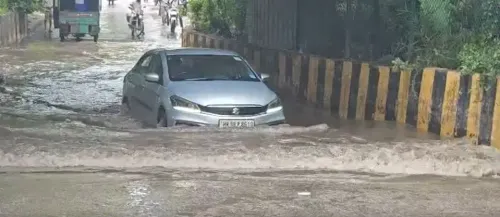
Delhi-NCR rain floods MB Road, 9 houses collapse on 7 August
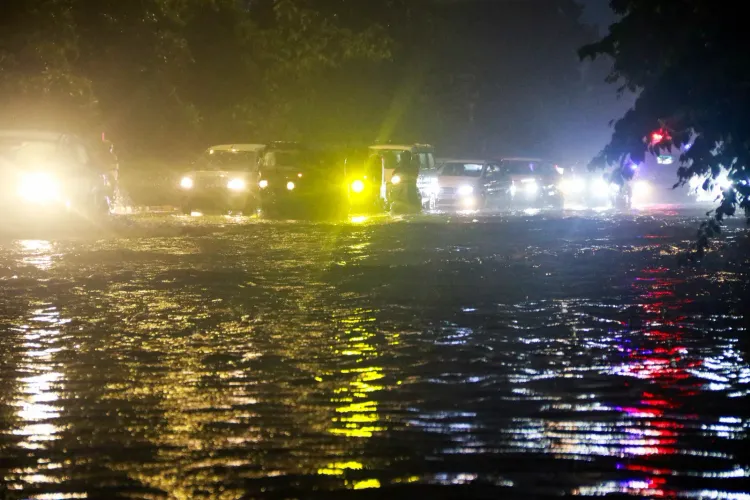
Synopsis
Nine houses collapsed, an ambulance was trapped for half an hour in a flooded Noida underpass, and water levels on MB Road hit four feet — Delhi-NCR's 7 August downpour was not just a traffic story but a governance one, exposing drainage infrastructure that has failed to keep pace with monsoon intensity year after year.
Key Takeaways
Torrential rain struck Delhi-NCR on 7 August , causing widespread waterlogging across major roads and colonies.
MB Road near the Air Force Station saw water levels of nearly four feet , leaving vehicles stranded.
The Delhi Fire Service responded to 9 house collapses and 16 fallen-tree incidents ; no injuries were reported.
An ambulance was stuck for over 30 minutes in a flooded underpass near Mahamaya Flyover in Noida .
Rainwater entered the Civil Hospital basement in Gurugram , forcing suspension of services there.
Faridabad's Sector 17 recorded the highest rainfall at 119.4 mm ; the IMD forecast easing from Saturday.
Torrential rain lashed Delhi and the National Capital Region (NCR) on Friday, 7 August, triggering severe waterlogging across key arterials, nine house collapses, and multiple emergency evacuations. The India Meteorological Department (IMD) warned that moderate to heavy showers would continue through the day before easing from Saturday, with only light rainfall expected over the following two days.
Worst-Hit Zones
South Delhi's MB Road, near the Air Force Station, recorded some of the most acute flooding, with water levels rising to nearly four feet. Vehicles were left stranded and traffic came to a near-standstill. Adjacent localities — Okhla Mor, Khanpur, Deoli, Ambedkar Nagar, and Sangam Vihar — also reported severe inundation. Several motorcycles and autorickshaws reportedly stalled after entering flooded stretches. Air Force trucks were deployed to assist movement in the worst-affected sections.
Traffic slowed significantly across major corridors including ITO, Patel Road, Rohtak Road, Wazirabad Road, Kirti Nagar, Shaheen Bagh, the Delhi-Jaipur Highway, and areas around Badarpur Border Metro Station. Flooded subways and submerged stretches compounded difficulties for daily commuters.
Emergency Response
The Delhi Fire Service recorded nine house collapses and sixteen fallen-tree incidents through the day. In one rescue, firefighters evacuated three women after a tree crashed onto their residence. No injuries were reported in any of the incidents, according to officials.
Rainfall Figures
Safdarjung logged 59.2 mm of rainfall by Friday morning, while Lodhi Road received 60.4 mm and Ridge recorded 57 mm. Lower totals were recorded at Ayanagar and Palam. By evening, several NCR locations had crossed 100 mm, with Faridabad's Sector 17 topping the charts at 119.4 mm.
Impact Across NCR
The disruption extended beyond Delhi. In Noida, waterlogged roads caused heavy congestion, and an ambulance remained stuck for over 30 minutes in a flooded underpass near Mahamaya Flyover — underscoring the life-safety risks posed by inadequate drainage infrastructure. In Gurugram, rainwater entered the basement of the Civil Hospital, forcing authorities to suspend services operating there.
What Comes Next
Authorities have advised residents across the NCR to avoid non-essential travel as flooding is expected to persist through Friday night. The IMD forecast points to a gradual easing from Saturday, offering some relief to a region where monsoon waterlogging has become an annual crisis rather than an exception.
Point of View
Delhi-NCR generates the same headlines — submerged underpasses, stalled ambulances, collapsed walls — and every post-monsoon season produces the same municipal promises of drainage upgrades. The Noida ambulance episode is not an outlier; it is a recurring indictment of urban infrastructure planning that has not kept pace with either rainfall intensity or population density. The real question is not how much it rained on 7 August, but why a city of this scale still has no reliable flood-response protocol that prevents emergency vehicles from being immobilised. Until accountability is attached to waterlogging outcomes — not just relief operations — the cycle will repeat.
NationPress
22 Sept 2026
Frequently Asked Questions
How bad was the waterlogging in Delhi on 7 August?
Waterlogging was severe across large parts of Delhi-NCR on 7 August, with MB Road near the Air Force Station recording water levels of nearly four feet. Major routes including ITO, Rohtak Road, and the Delhi-Jaipur Highway also saw significant flooding, paralysing traffic for hours.
Were there any casualties in the Delhi rain on 7 August?
No injuries were reported, according to the Delhi Fire Service. However, the service did record nine house collapses and sixteen fallen-tree incidents, and carried out at least one rescue — evacuating three women after a tree fell on their home.
Which area recorded the highest rainfall in the NCR on 7 August?
Faridabad's Sector 17 recorded the highest rainfall in the NCR at 119.4 mm by evening on 7 August. Within Delhi, Lodhi Road logged 60.4 mm and Safdarjung recorded 59.2 mm by Friday morning.
What happened at the Gurugram Civil Hospital during the rain?
Rainwater entered the basement of the Civil Hospital in Gurugram, forcing authorities to suspend services operating in that section. The incident highlighted the vulnerability of critical public infrastructure to monsoon flooding.
When will the rain ease in Delhi-NCR?
The India Meteorological Department forecast that moderate to heavy showers would persist through 7 August before easing from Saturday. Only light rainfall is expected over the two days following that.